渥

渥 U+6E25, 渥
CJK UNIFIED IDEOGRAPH-6E25
← 渤
[U+6E24]
CJK Unified Ideographs 渦 →
[U+6E26]

Translingual

Han character

渥 (Kangxi radical 85, 水+9, 12 strokes, cangjie input 水尸一土 (ESMG) or XX水尸一 (XXESM), four-corner 37114, composition ⿰氵屋)

References

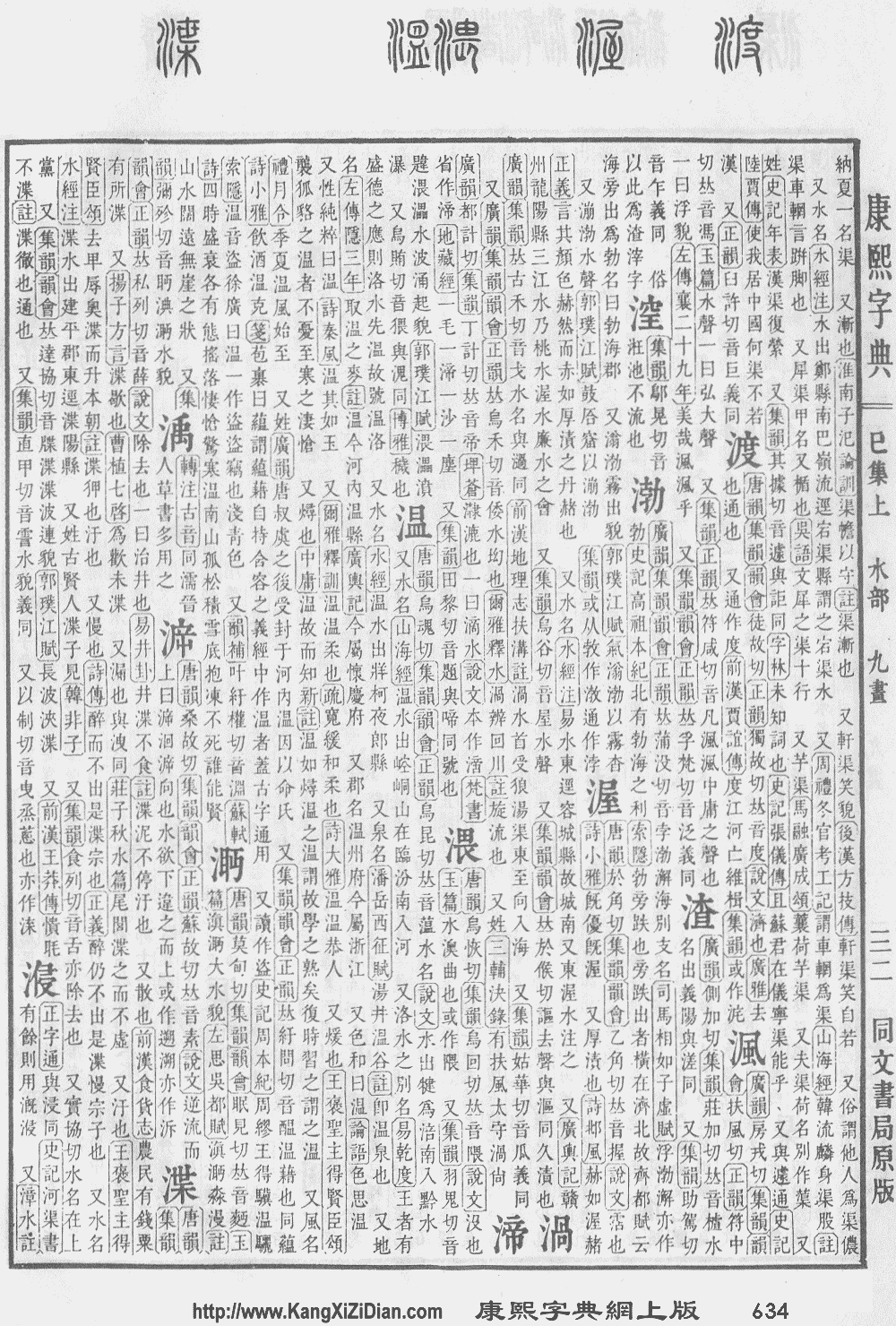
  • KangXi: page 634, character 6
  • Dai Kanwa Jiten: character 17770
  • Dae Jaweon: page 1041, character 3
  • Hanyu Da Zidian (first edition): volume 3, page 1689, character 6
  • Unihan data for U+6E25

Chinese

simp. and trad.
渥

Glyph origin

Phono-semantic compound (形聲, OC *qroːɡ) : semantic 水 (“water”) + phonetic 屋 (OC *qoːɡ).

Pronunciation


Note: The zero initial /∅-/ is commonly pronounced with a ng-initial /ŋ-/ in some varieties of Cantonese, including Hong Kong Cantonese.

Rime
Character 渥
Reading # 1/1
Initial (聲) 影 (34)
Final (韻) 江 (10)
Tone (調) Checked (Ø)
Openness (開合) Open
Division (等) II
Fanqie 於角切
Reconstructions
Zhengzhang
Shangfang
/ʔˠʌk̚/
Pan
Wuyun
/ʔᵚɔk̚/
Shao
Rongfen
/ʔɔk̚/
Edwin
Pulleyblank
/ʔaɨwk̚/
Li
Rong
/ʔɔk̚/
Wang
Li
/ɔk̚/
Bernard
Karlgren
/ʔɔk̚/
Expected
Mandarin
Reflex
yue
Expected
Cantonese
Reflex
ok3
Baxter–Sagart system 1.1 (2014)
Character 渥
Reading # 1/1
Modern
Beijing
(Pinyin)
wò
Middle
Chinese
‹ ʔæwk ›
Old
Chinese
/*qˁrok/ (or *ʔˁrok ?)
English moisten, smear

Notes for Old Chinese notations in the Baxter–Sagart system:

* Parentheses "()" indicate uncertain presence;
* Square brackets "[]" indicate uncertain identity, e.g. *[t] as coda may in fact be *-t or *-p;
* Angle brackets "<>" indicate infix;
* Hyphen "-" indicates morpheme boundary;

* Period "." indicates syllable boundary.
Zhengzhang system (2003)
Character 渥
Reading # 1/1
No. 13069
Phonetic
component
屋
Rime
group
屋
Rime
subdivision
0
Corresponding
MC rime
渥
Old
Chinese
/*qroːɡ/

Definitions

渥

  1. (literary) to moisten; to soak
  2. (literary) deep; rich; strong; thick
  3. (archaic) glossy; dyed
  4. (literary) to enrich

Compounds

  • 渥丹
  • 渥恩
  • 渥惠
  • 渥汗
  • 渥然
  • 渥眄
  • 隆渥

Japanese

Kanji

渥

(“Jinmeiyō” kanji used for names)

  1. moisten, make moist
  2. kind, cordial
  3. glossy

Readings

  • Go-on: あく (aku)
  • Kan-on: あく (aku)
  • Kun: あつい (atsui, 渥い)

Korean

Hanja

渥 (eum 악 (ak))

  1. This term needs a translation to English. Please help out and add a translation, then remove the text {{rfdef}}.

Vietnamese

Han character

渥: Hán Nôm readings: ốc

  1. This term needs a translation to English. Please help out and add a translation, then remove the text {{rfdef}}.
This article is issued from Wiktionary. The text is licensed under Creative Commons - Attribution - Sharealike. Additional terms may apply for the media files.