爯
See also: 尔
| ||||||||
Translingual
Han character
爯 (Kangxi radical 87, 爪+5, 9 strokes, cangjie input 月土月 (BGB), composition ⿱爫冉)
References
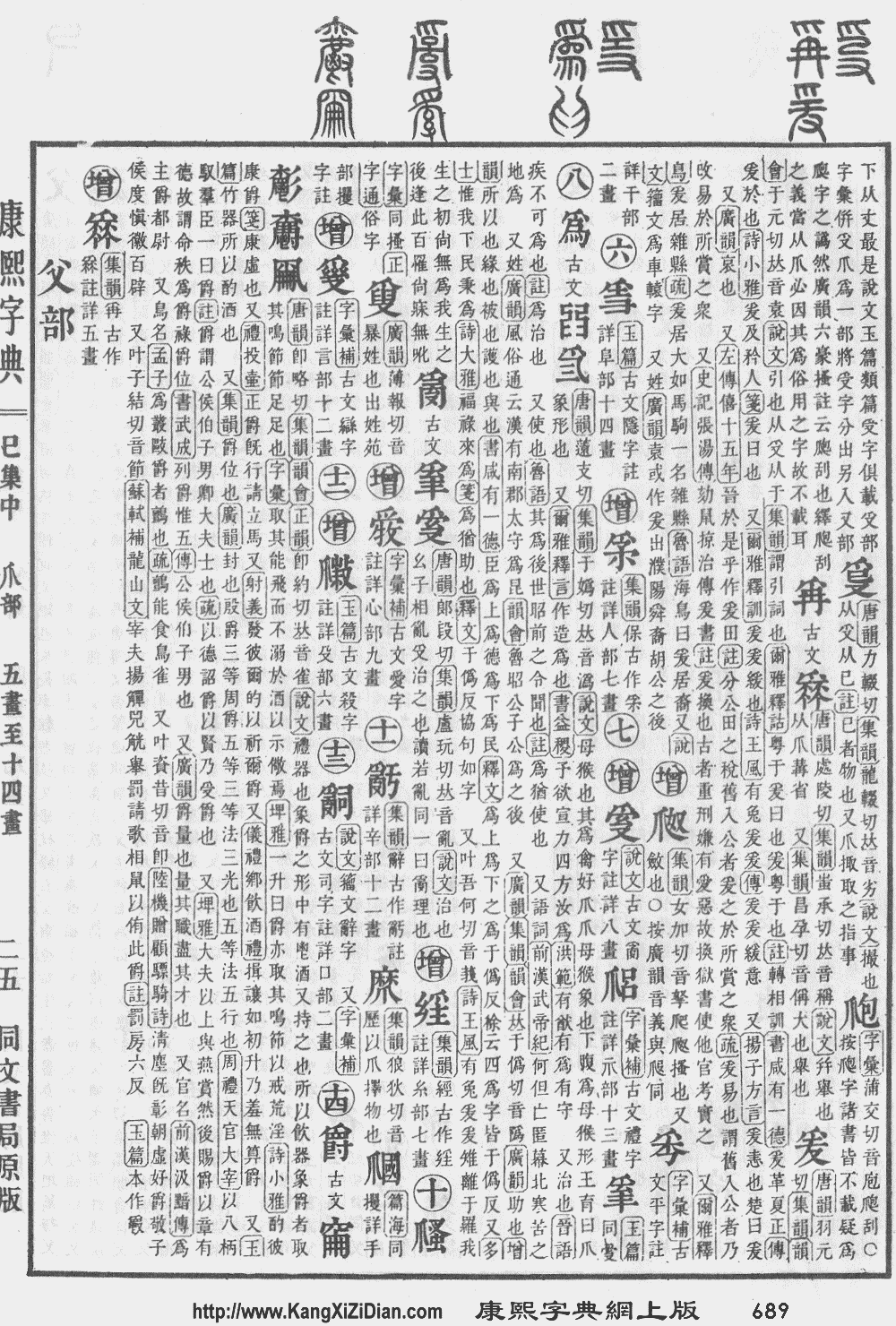
- KangXi: page 689, character 3
- Dai Kanwa Jiten: character 19671
- Dae Jaweon: page 1102, character 7
- Hanyu Da Zidian (first edition): volume 3, page 2032, character 5
- Unihan data for U+722F
Chinese
Glyph origin
| Historical forms of the character 爯 | ||||||||||||
|---|---|---|---|---|---|---|---|---|---|---|---|---|
| Shang | Western Zhou | Warring States | Shuowen Jiezi (compiled in Han) | |||||||||
| Bronze inscriptions | Oracle bone script | Bronze inscriptions | Chu slip and silk script | Qin slip script | Small seal script | |||||||
 |
 |
 |
 |
 |
 | |||||||
|||||
|
References: Mostly from Richard Sears' Chinese Etymology site (authorisation),
| ||||||||||||


Characters in the same phonetic series (爯) (Zhengzhang, 2003)
Japanese
Kanji
爯
- This term needs a translation to English. Please help out and add a translation, then remove the text
{{rfdef}}.
Korean
Hanja
爯 • (ching) (hangeul 칭, revised ching, McCune–Reischauer ch'ing)
- This term needs a translation to English. Please help out and add a translation, then remove the text
{{rfdef}}.
This article is issued from Wiktionary. The text is licensed under Creative Commons - Attribution - Sharealike. Additional terms may apply for the media files.