爲
| ||||||||
Translingual
| Stroke order | |||
|---|---|---|---|
 | |||
Han character
爲 (Kangxi radical 87, 爪+8, 12 strokes, cangjie input 月竹弓火 (BHNF), four-corner 20227 or 20327, composition ⿱爫⿵⿰丿⿳㇇㇇𠃌灬)
References
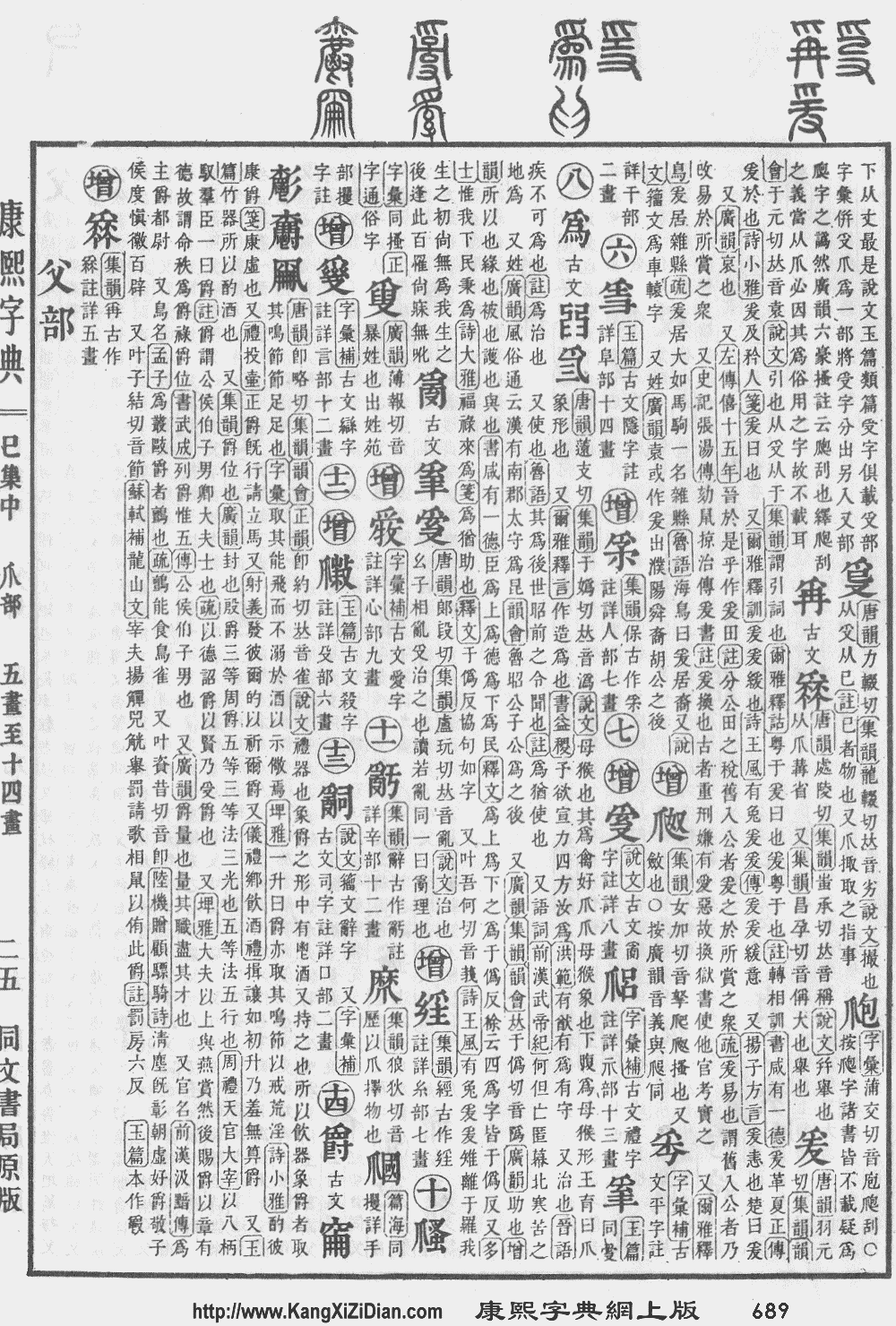
- KangXi: page 689, character 13
- Dai Kanwa Jiten: character 19686
- Dae Jaweon: page 1102, character 16
- Hanyu Da Zidian (first edition): volume 3, page 2033, character 21
- Unihan data for U+7232
Chinese
Japanese
| 為 | |
| 爲 |
Kanji
(“Jinmeiyō” kanji used for names, kyūjitai kanji, shinjitai form 為)
- This term needs a translation to English. Please help out and add a translation, then remove the text
{{rfdef}}.
Readings
Usage notes
Rarely used except for historical surnames such as 爲ケ谷 (ためがや), nowadays written 為谷.
Korean
Middle Korean
Verb
爲 (ho-)
- Idu script spelling of ᄒᆞ (ho-, “to do”, also a light verb deriving verbs and adjectives)
Old Korean
Verb
爲 (*HO(Y)-)
- to do
- Synonym: 爲只 (*SIk-)
- a light verb attached to various non-verbs to derive verbs and adjectives.
- (after a locative particle) to be at
- c. 1250, Interpretive gugyeol glosses to the Humane King Sutra, page 11:22:
Reconstruction notes
Various inflected or derived verbal forms which were written phonetically, e.g. 乎 or 兮, testify beyond doubt that this word had initial */h-/ and is the ancestor of Middle Korean ᄒᆞ다〮 (Yale: hò-tá). It is usually transcribed as *HO- after the Middle Korean reflex, but the Middle Korean irregular infinitive ᄒᆞ〮야〮 (Yale: hóy-á) implies that the earlier form was actually *hoy- (Vovin 2010, p.27). Whether the attested Old Korean forms transcribed older *hoy- or later *ho- is unclear due to the phonological opaqueness of the orthography.
Descendants
References
- 황선엽 (Hwang Seon-yeop) et al. (2009) 석독구결사전/釋讀口訣辭典 [Dictionary of interpretive gugyeol], Bakmunsa, →ISBN, pages 411—549
Vietnamese
Han character
爲: Hán Việt readings: vị[1], vì[2]
爲: Nôm readings: vay[2], ví[2][1], vĩ, voi, vơ, vờ, vi
Conjunction
爲 • (vì)
- chữ Hán form of vì (“because”).
- 1741, Đặng Trần Côn (鄧陳琨), Đoàn Thị Điểm (段氏點), transl., Chinh phụ ngâm (征婦吟) [The Song of a Soldier's Wife], line 4:
爲 埃 𨢟 孕 朱 𢧚 餒 尼 - (please add an English translation of this quote)
-
References
- Trần (2004).
- Nguyễn et al. (2009).