牝
See also: 牡
| ||||||||
Translingual
Han character
牝 (Kangxi radical 93, 牛+2, 6 strokes, cangjie input 竹手心 (HQP), four-corner 21510, composition ⿰牛匕)
Derived characters
- 𪊯, 𪀻(𬸋)
References
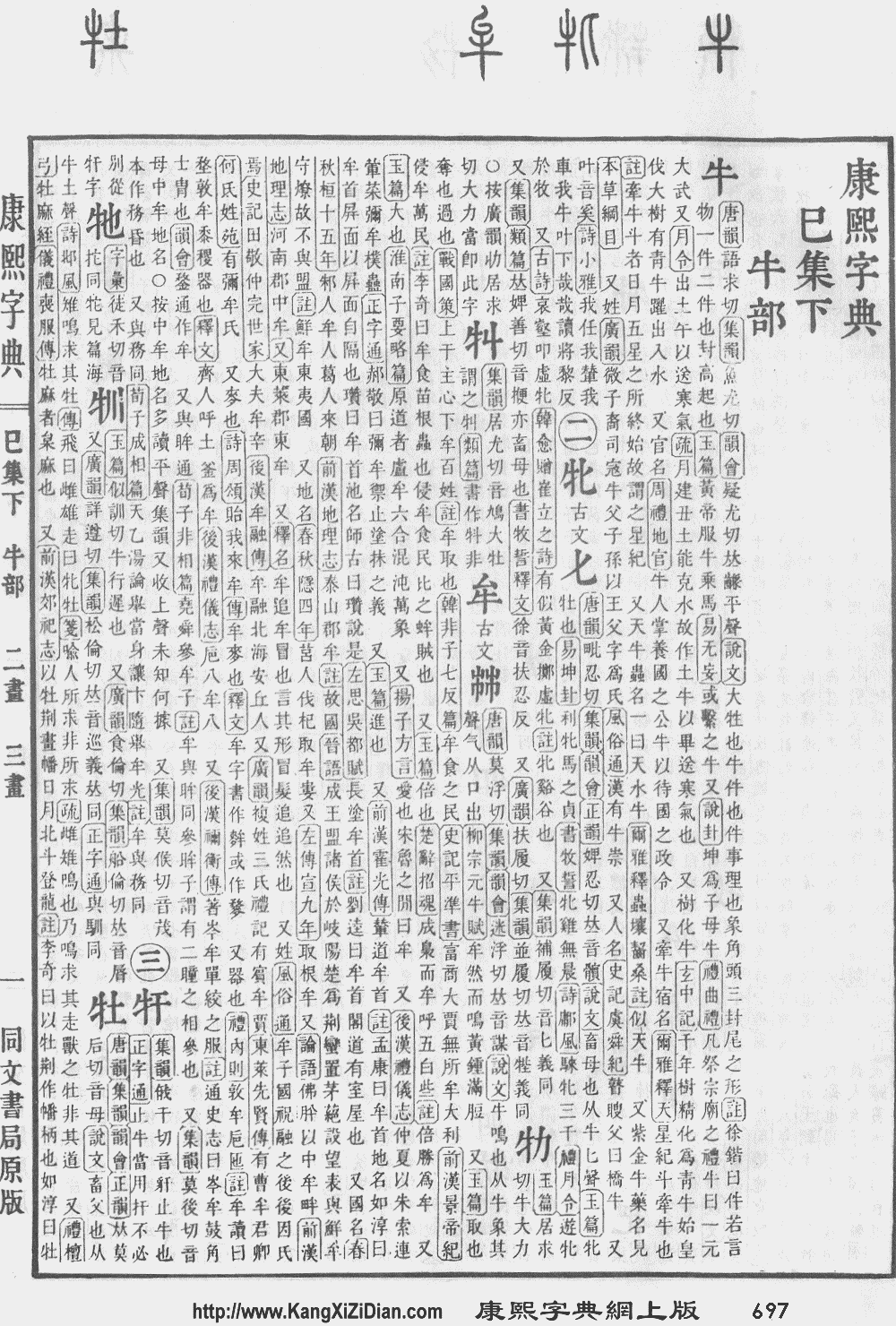
- KangXi: page 697, character 2
- Dai Kanwa Jiten: character 19925
- Dae Jaweon: page 1109, character 1
- Hanyu Da Zidian (first edition): volume 3, page 1800, character 4
- Unihan data for U+725D
Chinese
| trad. | 牝 | |
|---|---|---|
| simp. # | 牝 | |
| alternative forms | 匕 𪊯 𤘥 | |
Glyph origin
| Historical forms of the character 牝 | ||
|---|---|---|
| Shang | Shuowen Jiezi (compiled in Han) | Liushutong (compiled in Ming) |
| Oracle bone script | Small seal script | Transcribed ancient scripts |
 |
 |
 |
Characters in the same phonetic series (匕) (Zhengzhang, 2003)
Phono-semantic compound (形聲, OC *bilʔ, *binʔ) : semantic 牛 (“cattle”) + phonetic 匕 (OC *pilʔ).
Etymology
From Proto-Sino-Tibetan *pwi(y)-n (“female, mother, big, molar”) (STEDT, Schuessler (2007)). Cognate with Mizo pui (“(suffix or particle) full-grown female, mother (generally used of animals)”), ha-pui (“molar”); Jingpho wi ~ yi (“female”); etc.
Pronunciation
Definitions
牝
- (of an animal) female
- 秉心塞淵、騋牝三千。 [Pre-Classical Chinese, trad.]
- From: The Classic of Poetry, c. 11th – 7th centuries BCE, translated based on James Legge's version
- Bǐng xīn sèyuān, láipìn sānqiān. [Pinyin]
- 'Maintaining in his heart a profound devotion to his duties; his tall mares [/ female horses] amounted to three thousand.'.
秉心塞渊、𱅕牝三千。 [Pre-Classical Chinese, simp.]
- (literary) female genitalia
- gorge; valley
- type of keyhole in ancient times
Synonyms
Dialectal synonyms of 陰戶 (“vulva; female genitalia”) [map]
Compounds
References
- Dictionary of Chinese Character Variants (教育部異體字字典), A02488
- “牝”, in 漢語多功能字庫 (Multi-function Chinese Character Database), 香港中文大學 (the Chinese University of Hong Kong), 2014–
Japanese
Kanji
牝
- This term needs a translation to English. Please help out and add a translation, then remove the text
{{rfdef}}.
Korean
Hanja
牝 • (bin) (hangeul 빈, revised bin, McCune–Reischauer pin, Yale pin)
- This term needs a translation to English. Please help out and add a translation, then remove the text
{{rfdef}}.
Vietnamese
Han character
牝: Hán Nôm readings: tẫn
- This term needs a translation to English. Please help out and add a translation, then remove the text
{{rfdef}}.
This article is issued from Wiktionary. The text is licensed under Creative Commons - Attribution - Sharealike. Additional terms may apply for the media files.