狆
| ||||||||
Translingual
Han character
狆 (Kangxi radical 94, 犬+4, 7 strokes, cangjie input 大竹中 (KHL), four-corner 45206, composition ⿰犭中)
- Bouyei people
- Japanese Chin
References
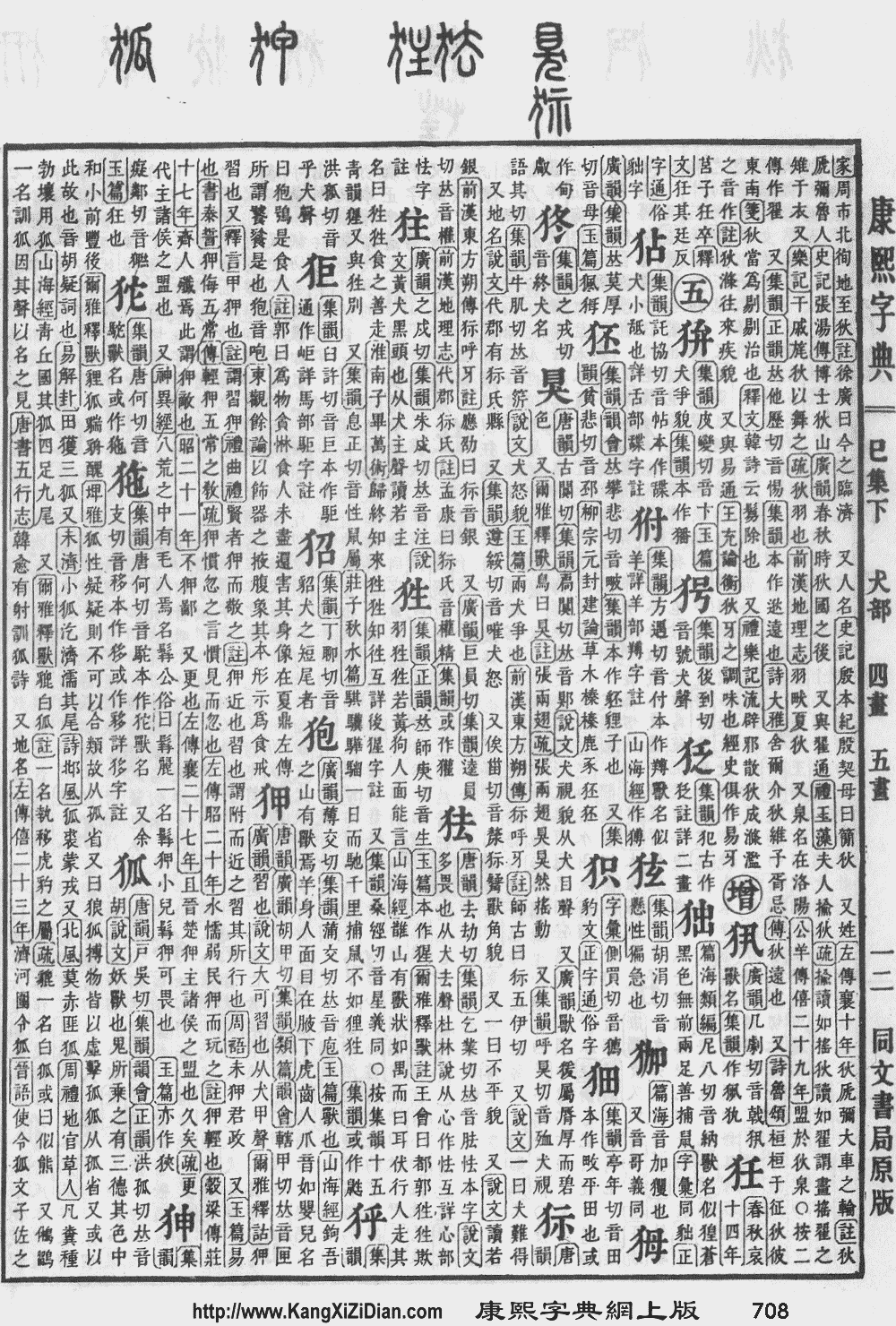
- KangXi: not present, would follow page 708, character 2
- Dai Kanwa Jiten: character 20293
- Dae Jaweon: page 1120, character 9
- Hanyu Da Zidian (first edition): volume 2, page 1336, character 5
- Unihan data for U+72C6
Chinese
| simp. and trad. |
狆 | |
|---|---|---|
Pronunciation
Definitions
狆
- (historical) Bouyei (ethnic group)
- Synonym: 布依 (Bùyī)
- Japanese Chin, a breed of dog originated in Japan
Japanese
Glyph origin
Appeared from the Edo period. A 国字 (kokuji, “Japanese-coined character”), invented independently of Chinese 狆 (zhòng, “Bouyei people”).
Kanji
狆
- name of an ethnic group had been living in Yunnan and Guizhou
- Japanese Chin, a breed of dog
Readings
- Go-on: ちゅう (chū)←ちゆう (tyū, historical)
- Kan-on: ちゅう (chū)←ちゆう (tyū, historical)
- Kun: ちん (chin, 狆)←ちん (tin, historical)
Etymology
| Kanji in this term |
|---|
| 狆 |
| ちん Hyōgaiji |
| kun’yomi |

狆 (Japanese Chin)
According one theory, short for 小さい犬 (chīsai inu, “small dog”).
Derived terms
- 狆穴子 (chin-anago)
- 狆くしゃ (chinkusha)
- 狆ころ (chinkoro)
- 狆猫婆 (chin neko babā)
Korean
This article is issued from Wiktionary. The text is licensed under Creative Commons - Attribution - Sharealike. Additional terms may apply for the media files.