獵
| ||||||||
| ||||||||
Translingual
| Traditional | 獵 |
|---|---|
| Shinjitai | 猟 |
| Simplified | 猎 |
Han character
獵 (Kangxi radical 94, 犬+15, 18 strokes, cangjie input 大竹女女女 (KHVVV), four-corner 42216, composition ⿰犭巤)
Derived characters
- 𧄵
References
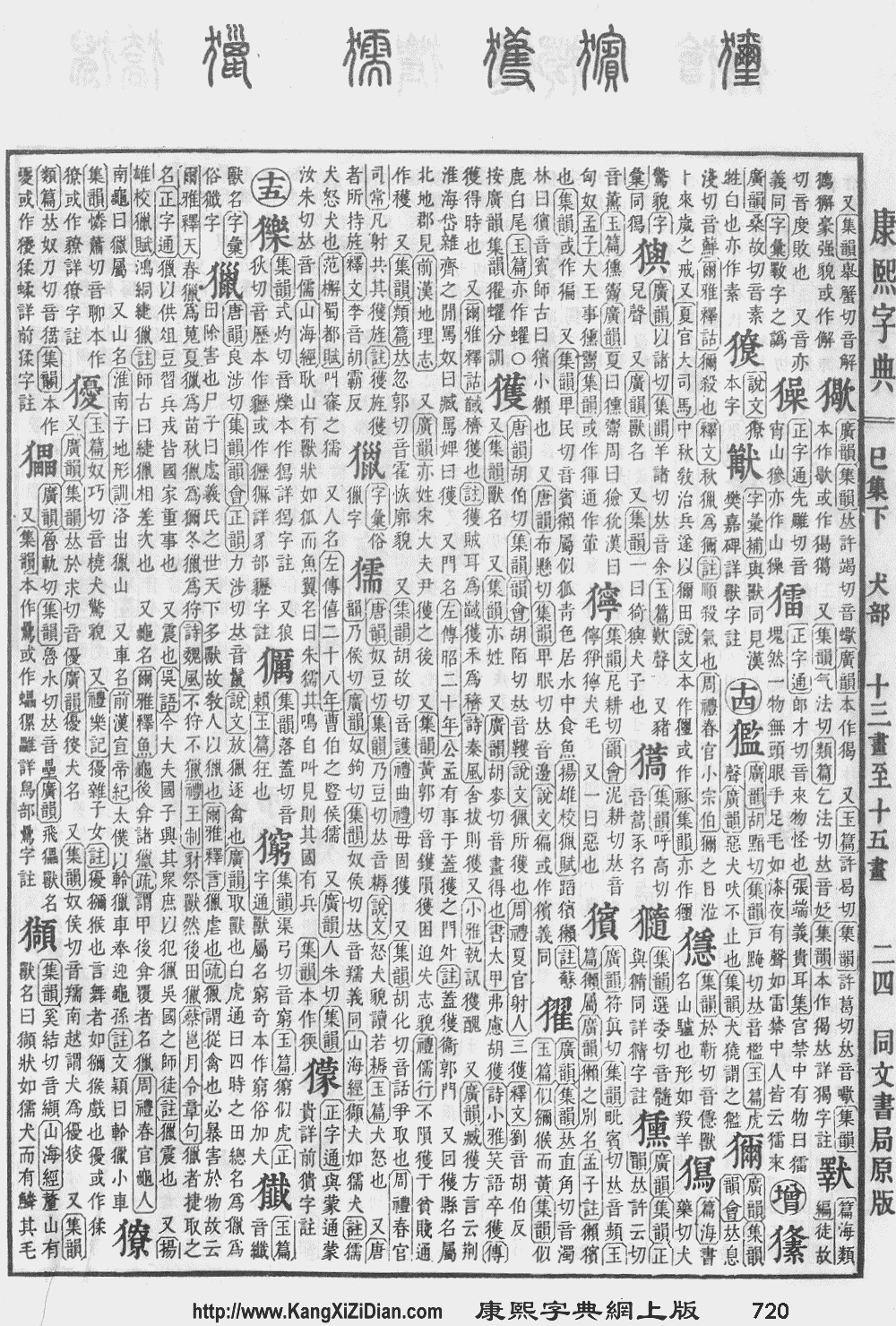
- KangXi: page 720, character 27
- Dai Kanwa Jiten: character 20768
- Dae Jaweon: page 1132, character 13
- Hanyu Da Zidian (first edition): volume 2, page 1376, character 7
- Unihan data for U+7375
- Unihan data for U+F9A7
Chinese
| trad. | 獵 | |
|---|---|---|
| simp. | 猎* | |
| alternative forms | 獦 | |
Glyph origin
Characters in the same phonetic series (巤) (Zhengzhang, 2003)
Phono-semantic compound (形聲, OC *rab) : semantic 犭 + phonetic 巤 (OC *rab).
Etymology
- to hunt
- Zheng Xuan comments that "là [臘 (lɑp)] is a designation for the sacrifice made of animals which have been caught in a hunt liè (ljap)" (cited in Bodde, 1975 & Schuessler, 2007), thus considering 臘 (OC *raːb) & 獵 (OC *rab) cognates.
- See 臘 for etymology.
- turtle, tortoise
- From Proto-Sino-Tibetan *k-lip (“turtle, tortoise”) (STEDT, Schuessler, 2007). See there for cognates.
Pronunciation
Definitions
獵
- to hunt (animals)
- to hunt for; to pursue; to search for
- Used in 獵獵/猎猎.
- (obsolete) tortoise; turtle
- 南龜曰獵屬 [Classical Chinese, trad.]
- From: Rites of Zhou, circa 3rd century BCE
- nán guī yuē liè shǔ [Pinyin]
- The Southern kind of turtle is called liè
南龟曰猎属 [Classical Chinese, simp.]
- Alternative form of 躐 (liè, “to trample”).
Compounds
Japanese
| 猟 | |
| 獵 |
Korean
Etymology
From Middle Chinese 獵 (MC liᴇp̚).
| Historical Readings | ||
|---|---|---|
| Dongguk Jeongun Reading | ||
| Dongguk Jeongun, 1448 | Recorded as Middle Korean 렵〮 (Yale: lyép) in Dongguk Jeongun (東國正韻 / 동국정운), 1448. | |
| Middle Korean | ||
| Text | Eumhun | |
| Gloss (hun) | Reading | |
| Hunmong Jahoe, 1527 | 산ᄒᆡᇰᄒᆞᆯ[1] 렵〮 | Recorded as Middle Korean 렵〮 (lyép) (Yale: lyép) in Hunmong Jahoe (訓蒙字會 / 훈몽자회), 1527. |
| ||
Pronunciation
- (SK Standard/Seoul) IPA(key): [ɾjʌ̹p̚] ~ [jʌ̹p̚]
- Phonetic hangul: [렵/엽]
Compounds
Vietnamese
Han character
獵: Hán Nôm readings: liệp
- This term needs a translation to English. Please help out and add a translation, then remove the text
{{rfdef}}.
This article is issued from Wiktionary. The text is licensed under Creative Commons - Attribution - Sharealike. Additional terms may apply for the media files.