畺
| ||||||||
Translingual
Han character
畺 (Kangxi radical 102, 田+8, 13 strokes, cangjie input 一田一一 (MWMM), composition ⿳⿱一田⿱一田一)
Derived characters
References
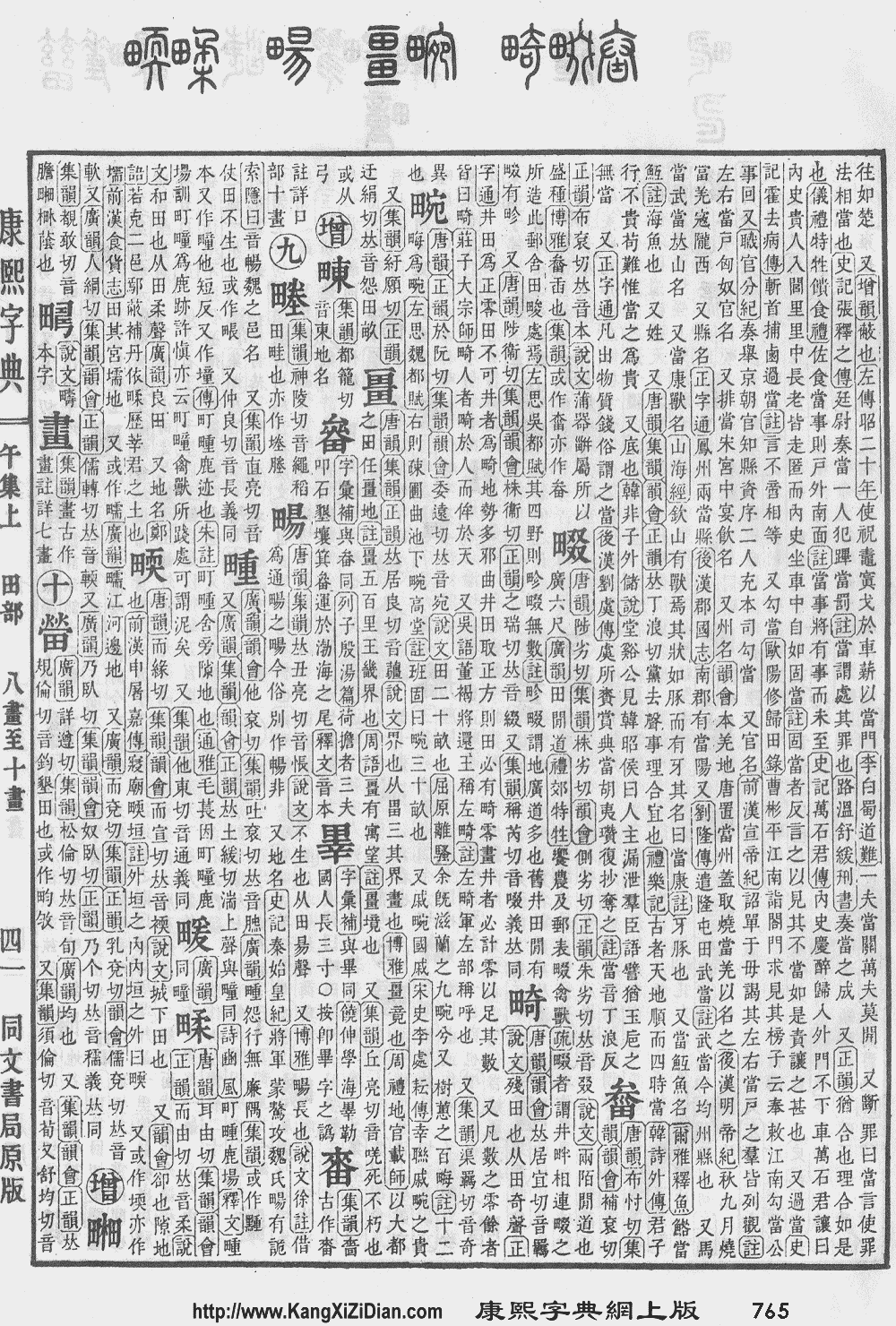
- KangXi: page 765, character 5
- Dai Kanwa Jiten: character 21895
- Dae Jaweon: page 1176, character 5
- Hanyu Da Zidian (first edition): volume 4, page 2545, character 11
- Unihan data for U+757A
Chinese
Glyph origin
Characters in the same phonetic series (畺) (Zhengzhang, 2003)
Ideogrammic compound (會意) : 三 + 畕 (“fields”) — divided fields. This character was replaced by 疆 and survives today as a phonetic component.
Etymology 1
| For pronunciation and definitions of 畺 – see 疆 (“boundary; border; frontier; territory; etc.”). (This character, 畺, is the second-round simplified and variant form of 疆.) |
Notes:
|
Etymology 2
| For pronunciation and definitions of 畺 – see 韁 (“bridle; reins; etc.”). (This character, 畺, is the second-round simplified form of 韁.) |
Notes:
|
Japanese
Korean
Vietnamese
This article is issued from Wiktionary. The text is licensed under Creative Commons - Attribution - Sharealike. Additional terms may apply for the media files.