礫
See also: 砾
| ||||||||
Translingual
| Traditional | 礫 |
|---|---|
| Shinjitai (extended) |
䃯 |
| Simplified | 砾 |
Han character
礫 (Kangxi radical 112, 石+15, 20 strokes, cangjie input 一口女戈木 (MRVID), four-corner 12694, composition ⿰石樂)
References
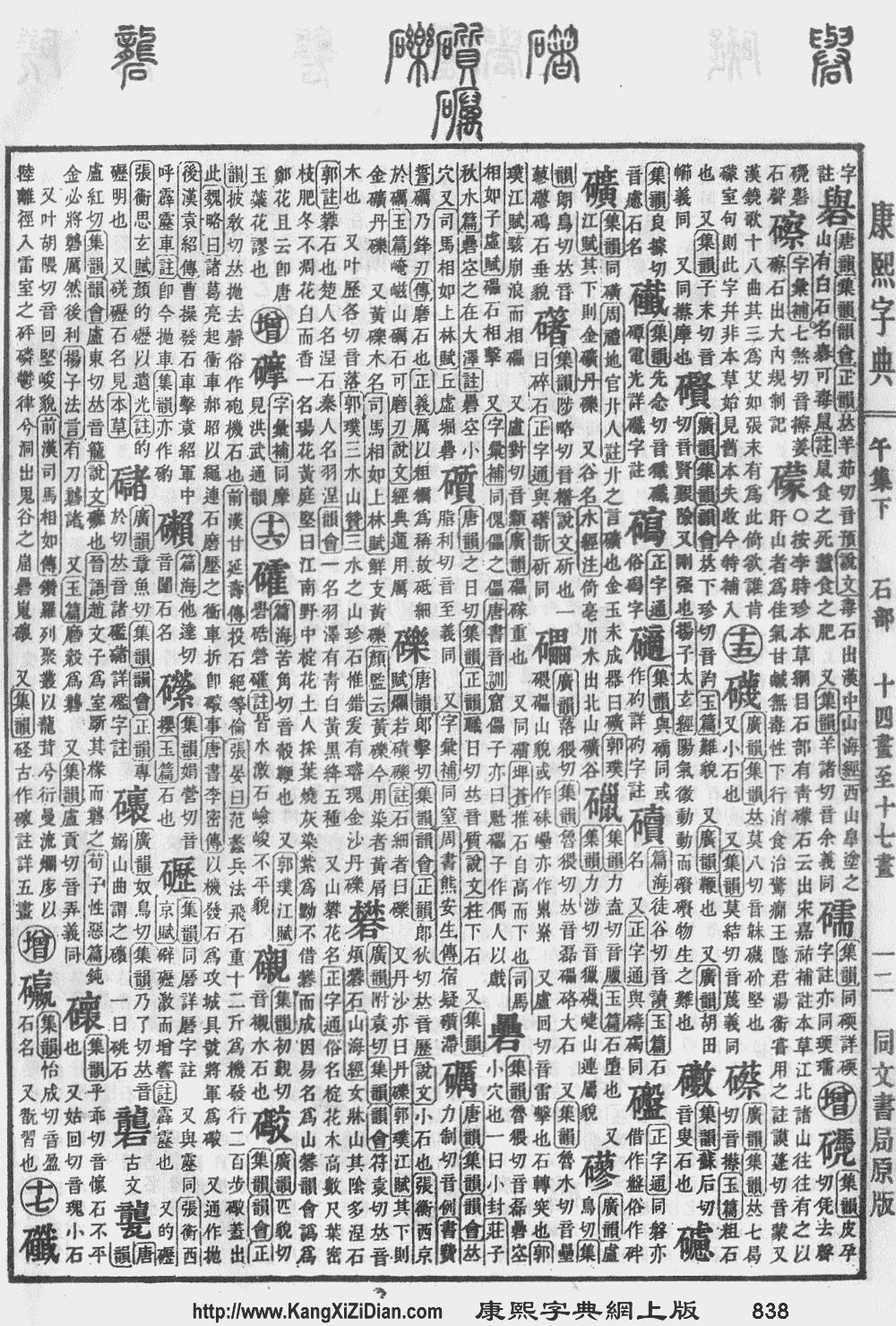
- KangXi: page 838, character 24
- Dai Kanwa Jiten: character 24572
- Dae Jaweon: page 1255, character 26
- Hanyu Da Zidian (first edition): volume 4, page 2463, character 4
- Unihan data for U+792B
Chinese
| trad. | 礫 | |
|---|---|---|
| simp. | 砾 | |
| 2nd round simp. | 劯 | |
Glyph origin
Characters in the same phonetic series (樂) (Zhengzhang, 2003)
Phono-semantic compound (形聲, OC *reːwɢ) : semantic 石 (“stone”) + phonetic 樂 (OC *ŋraːwɢs, *raːwɢ, *ŋraːwɢ)
Etymology
From Proto-Tibeto-Burman *b-rak. Cognate with Drung ɑ³¹ pɹɑʔ⁵⁵ luŋ⁵⁵ (“rock”)
Pronunciation 1
Compounds
Pronunciation 2
Definitions
礫
- Only used in 卓礫/卓砾.
Pronunciation 3
References
- “礫”, in 漢語多功能字庫 (Multi-function Chinese Character Database), 香港中文大學 (the Chinese University of Hong Kong), 2014–
Japanese
| 䃯 | |
| 礫 |
Compounds
Noun
礫 • (reki)
Derived terms
- 礫耕栽培 (rekikōsaibai)
- 礫砂漠 (reki sabaku)
- 火山礫 (kazan reki)
Etymology 2
| Kanji in this term |
|---|
| 礫 |
| つぶて Hyōgaiji |
| kun’yomi |
From Old Japanese.
(This etymology is missing or incomplete. Please add to it, or discuss it at the Etymology scriptorium.)
Alternative forms
- 飛礫
Pronunciation
Derived terms
Derived terms
- 石礫 (ishitsubute)
- 紙礫 (kamitsubute)
- 雁礫 (gantsubute)
- 空礫 (soratsubute)
- 天狗礫 (tengutsubute)
- 梨の礫 (nashi no tsubute)
- 梨も礫も打たぬ (nashi mo tsubute mo utanu)
- 人礫 (hitotsubute)
- 向かい礫 (mukaitsubute)
- 雪礫 (yukitsubute)
Proverbs
- 暗夜の礫 (an'ya no tsubute)
- 闇の夜の礫 (yami no yo no tsubute), 闇夜の礫 (yamiyo no tsubute)
Etymology 3
| Kanji in this term |
|---|
| 礫 |
| たぶて Hyōgaiji |
| irregular |
From Old Japanese.
Possibly an apophonic form of or a shift from tsubute above.
Noun
礫 • (tabute)
- (obsolete) a small stone or pebble, especially one used for throwing
- c. 759, Man'yōshū (book 8, poem 1522), text here
- 多夫手二毛投越都倍吉天漢敝太而礼婆可母安麻多須辨奈吉 [Man'yōgana]
- たぶてにも投げ越しつべき天の川隔てればかもあまたすべなき [Modern spelling]
- tabute ni mo nagekoshitsu beki Ama-no-gawa hedatereba ka mo amata subenaki
- (please add an English translation of this example)
- c. 759, Man'yōshū (book 8, poem 1522), text here
Etymology 4
| Kanji in this term |
|---|
| 礫 |
| こいし Hyōgaiji |
| kun’yomi |
Etymology 5
| Kanji in this term |
|---|
| 礫 |
| たびいし Hyōgaiji |
| irregular |
(This etymology is missing or incomplete. Please add to it, or discuss it at the Etymology scriptorium.)
Derived terms
- 礫瓦 (tabishikawara)
Korean
Etymology
From Middle Chinese 礫 (MC lek̚). Recorded as Middle Korean 륵〮 (lúk) (Yale: luk) in Hunmong Jahoe (訓蒙字會 / 훈몽자회), 1527.
This article is issued from Wiktionary. The text is licensed under Creative Commons - Attribution - Sharealike. Additional terms may apply for the media files.