虢

虢 U+8662, 虢
CJK UNIFIED IDEOGRAPH-8662
← 虡
[U+8661]
CJK Unified Ideographs 虣 →
[U+8663]

Translingual

Han character

虢 (Kangxi radical 141, 虍+9, 15 strokes, cangjie input 月戈卜心弓 (BIYPN) or 月戈卜心山 (BIYPU), four-corner 21317, composition ⿰寽虎)

Derived characters

  • 𢸗, 㶁, 𧭣

References

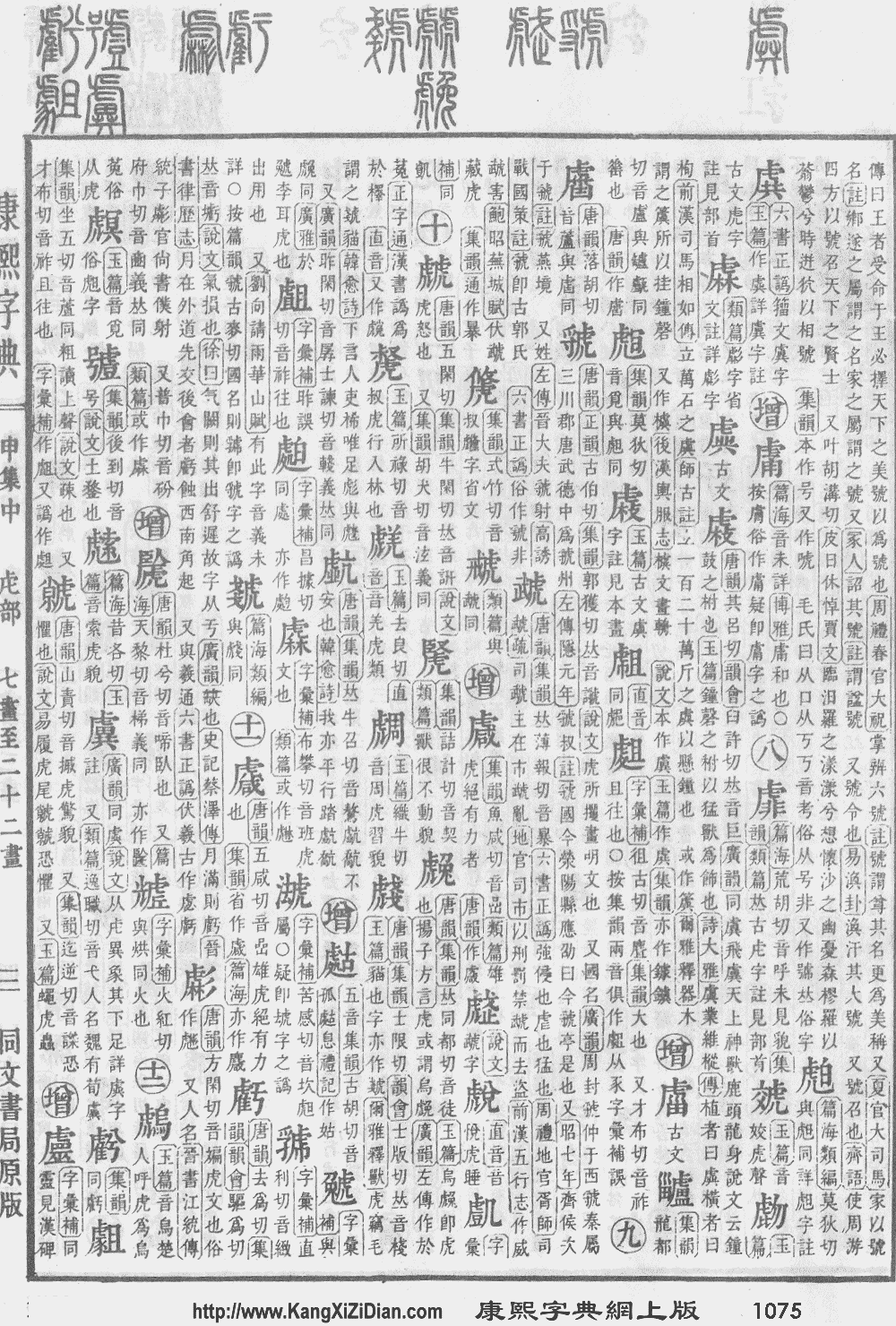
  • KangXi: page 1075, character 17
  • Dai Kanwa Jiten: character 32742
  • Dae Jaweon: page 1543, character 18
  • Hanyu Da Zidian (first edition): volume 4, page 2828, character 7
  • Unihan data for U+8662

Chinese

trad. 虢
simp. # 虢
alternative forms 郭
𣂭
𧇧

Glyph origin

Historical forms of the character 虢
Western Zhou
Bronze inscriptions

Ideogrammic compound (會意) : 攴 + 虎 or 爪 + 攴 + 虎.

One theory considers this character a pictogram (象形) : two hands (寽 (lǜ)) opening tiger (虎)'s fur, thus an original glyph of 鞹 (kuò). (Lin Yiguang)

Shuowen: Phono-semantic compound (形聲, OC *kʷraːɡ) : phonetic 寽 (OC *rud) + semantic 虎 (“tiger”). However, this is not generally considered likely.

Pronunciation


Rime
Character 虢
Reading # 1/1
Initial (聲) 見 (28)
Final (韻) 庚 (114)
Tone (調) Checked (Ø)
Openness (開合) Closed
Division (等) II
Fanqie 古伯切
Reconstructions
Zhengzhang
Shangfang
/kˠwæk̚/
Pan
Wuyun
/kʷᵚak̚/
Shao
Rongfen
/kuak̚/
Edwin
Pulleyblank
/kwaɨjk̚/
Li
Rong
/kuɐk̚/
Wang
Li
/kwɐk̚/
Bernard
Karlgren
/kwɐk̚/
Expected
Mandarin
Reflex
guo
Expected
Cantonese
Reflex
gwak1
Baxter–Sagart system 1.1 (2014)
Character 虢
Reading # 1/1
Modern
Beijing
(Pinyin)
guó
Middle
Chinese
‹ kwæk ›
Old
Chinese
/*[k]ʷˁrak/
English (place name)

Notes for Old Chinese notations in the Baxter–Sagart system:

* Parentheses "()" indicate uncertain presence;
* Square brackets "[]" indicate uncertain identity, e.g. *[t] as coda may in fact be *-t or *-p;
* Angle brackets "<>" indicate infix;
* Hyphen "-" indicates morpheme boundary;

* Period "." indicates syllable boundary.
Zhengzhang system (2003)
Character 虢
Reading # 1/1
No. 4764
Phonetic
component
虢
Rime
group
鐸
Rime
subdivision
0
Corresponding
MC rime
格
Old
Chinese
/*kʷraːɡ/

Definitions

虢

  1. (historical) Name of several ancient feudal states that existed during the Western Zhou period (1050 to 770 B.C.E.) situated in modern-day Shaanxi and Hunan provinces and founded by relatives of the royal Ji family of the Zhou dynasty
  2. a surname

Compounds

  • 暮虢朝虞
  • 假途滅虢/假途灭虢
  • 虢滅虞亡/虢灭虞亡

Japanese

Kanji

虢

(uncommon “Hyōgai” kanji)

  1. name of ancient feudal State in Shaanxi and Hunan

Readings

  • On (unclassified): かく (kaku); きゃく (kyaku)

Vietnamese

Han character

虢: Hán Việt readings: quắc

  1. This term needs a translation to English. Please help out and add a translation, then remove the text {{rfdef}}.
This article is issued from Wiktionary. The text is licensed under Creative Commons - Attribution - Sharealike. Additional terms may apply for the media files.