譎
See also: 谲
| ||||||||
Translingual
Han character
譎 (Kangxi radical 149, 言+12, 19 strokes, cangjie input 卜口弓竹月 (YRNHB), four-corner 07627, composition ⿰訁矞)
References
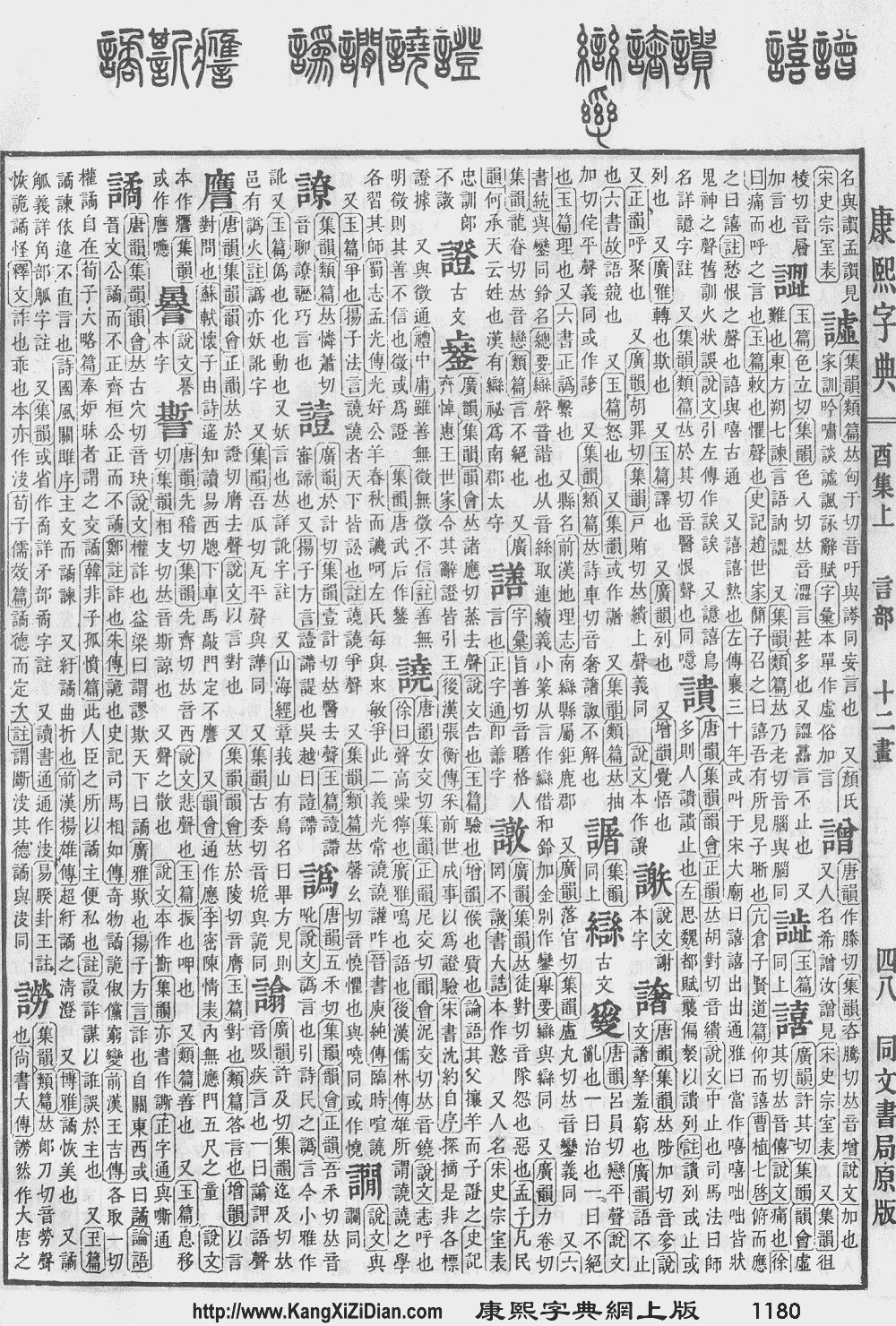
- KangXi: page 1180, character 25
- Dai Kanwa Jiten: character 35956
- Dae Jaweon: page 1644, character 10
- Hanyu Da Zidian (first edition): volume 6, page 4022, character 2
- Unihan data for U+8B4E
Chinese
| trad. | 譎 | |
|---|---|---|
| simp. | 谲 | |
Glyph origin
| Historical forms of the character 譎 |
|---|
| Shuowen Jiezi (compiled in Han) |
| Small seal script |
 |
Characters in the same phonetic series (矞) (Zhengzhang, 2003)
Pronunciation
Definitions
譎
- This term needs a translation to English. Please help out and add a translation, then remove the text
{{rfdef}}.
Japanese
Kanji
譎
- This term needs a translation to English. Please help out and add a translation, then remove the text
{{rfdef}}.
Readings
(Can we verify(+) this pronunciation?)
- Go-on: けち (kechi)←くゑち (kweti, historical)
- Kan-on: けつ (ketsu)←くゑつ (kwetu, historical)
- On: きつ (kitsu)
- Kun: あやしい (ayashī, 譎しい); いつわる (itsuwaru, 譎る)←いつはる (itufaru, 譎る, historical)
Compounds
- 譎詐 (kissa)
- 譎怪 (kekkai)
- 譎諫 (kekkan)
- 譎欺 (ketsugi)
- 譎奇 (kekki)
- 譎詭 (kekki)
- 譎計 (kekkei)
- 譎言 (ketsugen)
- 譎詐 (kessa)
- 譎数 (kessū)
- 譎妄 (ketsubō)
- 譎謀 (ketsubō)
- 譎妄 (ketsumō)
- 怪譎 (kaiketsu)
- 奸譎, 姦譎 (kankitsu)
- 奸譎, 姦譎 (kanketsu)
- 奇譎 (kiketsu)
- 詭譎 (kiketsu)
- 欺譎 (giketsu)
- 権譎 (kenketsu)
- 詐譎 (saketsu)
- 誕譎 (tanketsu)
Korean
Hanja
譎 • (hyul) (hangeul 휼, revised hyul, McCune–Reischauer hyul, Yale hyul)
- This term needs a translation to English. Please help out and add a translation, then remove the text
{{rfdef}}.
Vietnamese
This article is issued from Wiktionary. The text is licensed under Creative Commons - Attribution - Sharealike. Additional terms may apply for the media files.