軛

See also: 轭
軛 U+8EDB, 軛
CJK UNIFIED IDEOGRAPH-8EDB
← 軚
[U+8EDA]
CJK Unified Ideographs 軜 →
[U+8EDC]

Translingual

Han character

軛 (Kangxi radical 159, 車+4, 11 strokes, cangjie input 十十一尸山 (JJMSU), four-corner 51012, composition ⿰車厄)

References

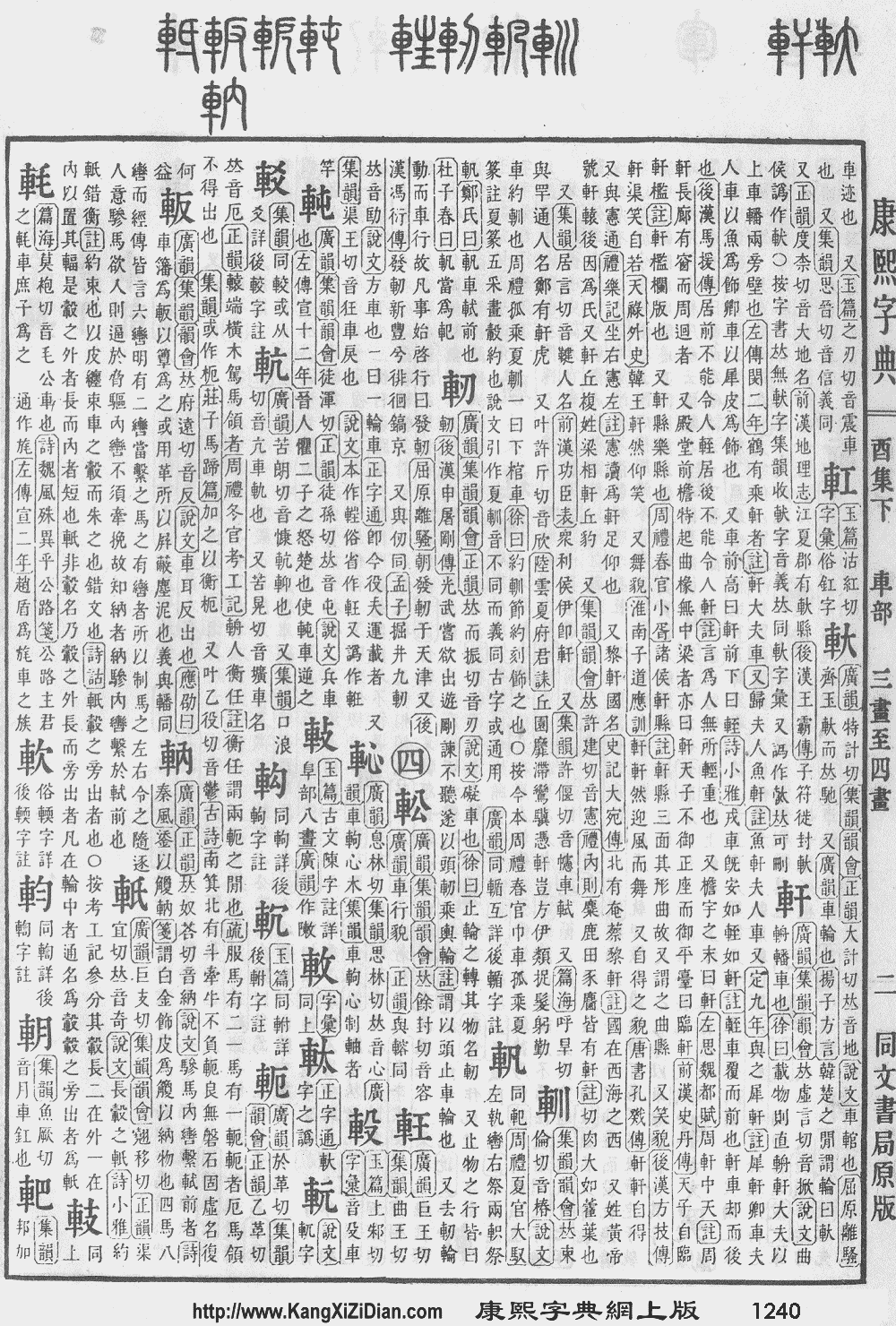
  • KangXi: page 1240, character 20
  • Dai Kanwa Jiten: character 38207
  • Dae Jaweon: page 1716, character 16
  • Hanyu Da Zidian (first edition): volume 5, page 3517, character 8
  • Unihan data for U+8EDB

Chinese

trad. 軛
simp. 轭
alternative forms 軶

Glyph origin

Ideogrammic compound (會意) and phono-semantic compound (形聲, OC *qreːɡ) : semantic 車 (“chariot”) + phonetic 厄 (OC *qreːɡ, “yoke”) – specialized form of 厄.

Etymology

Probably from Proto-Sino-Tibetan *ʔik (“to strangle”), whence also 縊 (OC *qleːɡs, *qleɡs, “to strangle”).

Pronunciation


Note: The zero initial /∅-/ is commonly pronounced with a ng-initial /ŋ-/ in some varieties of Cantonese, including Hong Kong Cantonese.
Note:
  • Xiamen, Quanzhou:
    • eh - vernacular;
    • ek/iak - literary.
Note:
  • nga4 - vernacular;
  • nge6 - literary.

Rime
Character 軛
Reading # 1/1
Initial (聲) 影 (34)
Final (韻) 耕 (119)
Tone (調) Checked (Ø)
Openness (開合) Open
Division (等) II
Fanqie 於革切
Reconstructions
Zhengzhang
Shangfang
/ʔˠɛk̚/
Pan
Wuyun
/ʔᵚæk̚/
Shao
Rongfen
/ʔɐk̚/
Edwin
Pulleyblank
/ʔəɨjk̚/
Li
Rong
/ʔɛk̚/
Wang
Li
/æk̚/
Bernard
Karlgren
/ʔæk̚/
Expected
Mandarin
Reflex
e
Expected
Cantonese
Reflex
ak1
Baxter–Sagart system 1.1 (2014)
Character 軛
Reading # 1/1
Modern
Beijing
(Pinyin)
è
Middle
Chinese
‹ ʔɛk ›
Old
Chinese
/*qˁ<r>[i]k/
English part of a yoke

Notes for Old Chinese notations in the Baxter–Sagart system:

* Parentheses "()" indicate uncertain presence;
* Square brackets "[]" indicate uncertain identity, e.g. *[t] as coda may in fact be *-t or *-p;
* Angle brackets "<>" indicate infix;
* Hyphen "-" indicates morpheme boundary;

* Period "." indicates syllable boundary.
Zhengzhang system (2003)
Character 軛
Reading # 1/1
No. 2711
Phonetic
component
戹
Rime
group
錫
Rime
subdivision
0
Corresponding
MC rime
戹
Old
Chinese
/*qreːɡ/
Notes 原從戹

Definitions

軛

  1. yoke
  2. to restrain; to control

Compounds

  • 犁軛/犁轭
  • 狖軛鼯軒/狖轭鼯轩
  • 琱軛/雕轭
  • 羈軛/羁轭
  • 衡軛/衡轭
  • 複共軛的/复共轭的
  • 負軛/负轭
  • 車軛/车轭
  • 軛束/轭束
  • 軛縛/轭缚
  • 輪軛/轮轭
  • 轅軛/辕轭
  • 銜軛/衔轭
  • 鞅軛/鞅轭
  • 頓軛/顿轭
  • 馬軛/马轭

Descendants

References

Japanese

Kanji

軛

(uncommon “Hyōgai” kanji)

Readings

  • On (unclassified): あく (aku), やく (yaku)
  • Kun: くびき (kubiki)

Etymology

Kanji in this term
軛
くびき
Hyōgaiji
kun’yomi
For pronunciation and definitions of 軛 – see the following entry.
【くびき】
[noun] yoke (wooden bar)
Alternative spellings
軛, 衡, 頸木
(This term, 軛, is an alternative spelling of the above term.)
This article is issued from Wiktionary. The text is licensed under Creative Commons - Attribution - Sharealike. Additional terms may apply for the media files.