錫
See also: 锡
| ||||||||
Translingual
Han character
錫 (Kangxi radical 167, 金+8, 16 strokes, cangjie input 金日心竹 (CAPH), four-corner 86127, composition ⿰釒易)
Derived characters
References
- KangXi: page 1312, character 5
- Dai Kanwa Jiten: character 40573
- Dae Jaweon: page 1813, character 3
- Hanyu Da Zidian (first edition): volume 6, page 4219, character 3
- Unihan data for U+932B
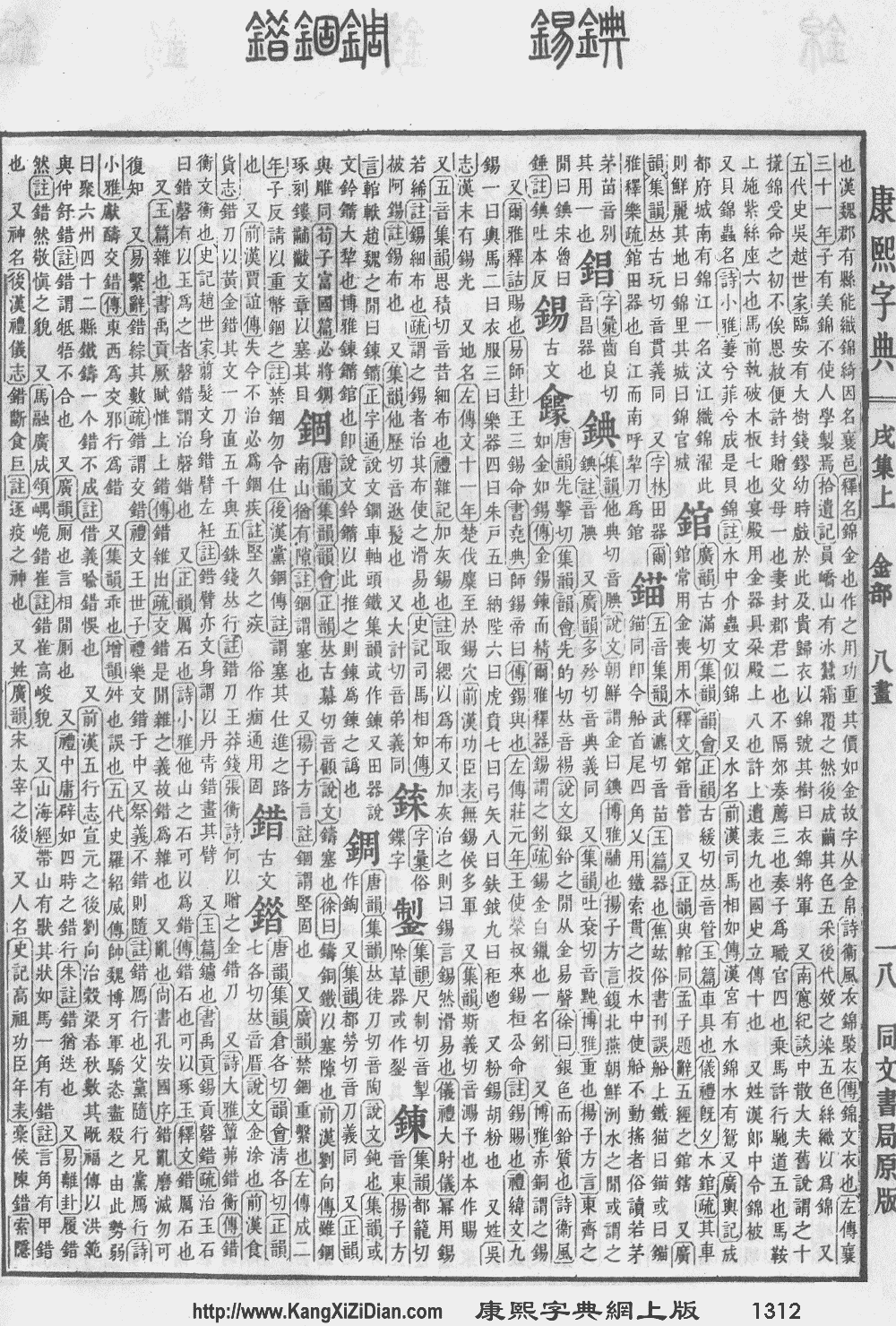
Chinese
| trad. | 錫 | |
|---|---|---|
| simp. | 锡 | |
| 2nd round simp. | 钖 | |
| alternative forms | 㒪 | |
Glyph origin
| Historical forms of the character 錫 | ||||
|---|---|---|---|---|
| Shang | Western Zhou | Warring States | Shuowen Jiezi (compiled in Han) | Liushutong (compiled in Ming) |
| Oracle bone script | Bronze inscriptions | Chu slip and silk script | Small seal script | Transcribed ancient scripts |
 |
 |
 |
 |
 |
Etymology 1
| Chemical element | |
|---|---|
| Sn | |
| Previous: 銦/铟 (yīn) (In) | |
| Next: 銻/锑 (tī) (Sb) | |
Pronunciation
Synonyms
Dialectal synonyms of 錫 (“tin”) [map]
Compounds
Pronunciation
Definitions
錫
- † Alternative form of 賜/赐 (“to bestow; to confer”).
- 孝子不匱,永錫爾類。 [Pre-Classical Chinese, trad.]
- From: The Classic of Poetry, c. 11th – 7th centuries BCE, translated based on James Legge's version
- Xiàozǐ bù kuì, yǒng xī ěr lèi. [Pinyin]
- For such filial piety, without ceasing,
There will ever be conferred blessing on you.
孝子不匮,永锡尔类。 [Pre-Classical Chinese, simp.]
Pronunciation
Japanese
Compounds
Compounds
- 塩化錫 (enkasuzu)
- 挂錫 (kashaku), 掛錫 (kashaku), 挂錫 (keshaku), 掛錫 (keshaku)
- 砂錫 (sasuzu)
- 錫紵 (shakujo), 錫紵 (shakucho)
- 錫杖 (shakujō), 錫杖 (sakujō): khakkhara; Buddhist monk's "sounding staff"
- 錫僧 (shakusō)
- 錫を飛ばす (shaku o tobasu)
- 巡錫 (junshaku)
- 錫石 (suzuishi): cassiterite
- 錫色 (suzuiro)
- 錫婚式 (suzukonshiki): tin anniversary
- 錫師 (suzushi)
- 錫箔 (suzuhaku): tinfoil
- 錫ペスト (suzupesuto): tin pest
- 駐錫 (chūshaku)
- 天錫 (tenshaku)
- トリフェニル錫 (torifenirusuzu)
- 飛錫 (hishaku)
- 無錫 (Mushaku): Wuxi
- 野錫 (yashaku)
- 有機錫 (yūkisuzu)
- 流錫 (ryūshaku)
- 留錫 (ryūshaku)
- 硫錫鉱 (ryūshakukō)
Etymology 1
| Kanji in this term |
|---|
| 錫 |
| すず Jinmeiyō |
| kun’yomi |
Etymology 2
| Kanji in this term |
|---|
| 錫 |
| しゃく Jinmeiyō |
| on’yomi |
Korean
Hanja
錫 • (seok) (hangeul 석, revised seok, McCune–Reischauer sŏk, Yale sek)
- This term needs a translation to English. Please help out and add a translation, then remove the text
{{rfdef}}.
Vietnamese
Han character
錫: Hán Nôm readings: thiếc, tích, xích
- This term needs a translation to English. Please help out and add a translation, then remove the text
{{rfdef}}.
References
This article is issued from Wiktionary. The text is licensed under Creative Commons - Attribution - Sharealike. Additional terms may apply for the media files.