青山
Chinese
| green (blue, black); Qinghai province (abbrev.) | mountain; hill | ||
|---|---|---|---|
| trad. (青山) | 青 | 山 | |
| simp. #(青山) | 青 | 山 | |
Etymology
- “psycho”; “psychiatric hospital”
- From 青山醫院 (Castle Peak Hospital), the first psychiatric hospital in Hong Kong.
Pronunciation
Noun
青山
- green mountains; mountains with lush forests
- (Hong Kong Cantonese, derogatory, slang) psycho
- (Hong Kong Cantonese, slang) psychiatric hospital
- 青山走犯 [Cantonese] ― cing1 saan1 zau2 faan6-2 [Jyutping] ― a psychopath (literally, “an escaped criminal from the Castle Peak hospital”)
Synonyms
Derived terms
|
Japanese
Etymology 1
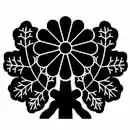
青山 (Aoyama): the Aoyama family crest.
| Kanji in this term | |
|---|---|
| 青 | 山 |
| あお Grade: 1 |
やま Grade: 1 |
| kun’yomi | |
| Alternative spelling |
|---|
| 靑山 (kyūjitai) |
Compound of 青 (ao, “blue or green; lush with life”) + 山 (yama, “mountain”).
Noun
青山 • (aoyama) ←あをやま (awoyama)?
- a green lush mountain or mountainous area
- a type of fancy kamaboko (fishcake) used in ceremonies
Proper noun
青山 • (Aoyama) ←あをやま (awoyama)?
- a Japanese habitational surname
- a place in the north of Minato-ku, Tōkyō
- So named as the land was deeded to Aoyama Tadanari (青山忠成, d. 1613; Wikipedia article) by Tokugawa Ieyasu (徳川家康, d. 1616; Wikipedia article).
- various other places in Japan
Derived terms
Derived terms
- 青山菊 (aoyamagiku): the Aoyama chrysanthemum, a family crest
Etymology 2
| Kanji in this term | |
|---|---|
| 青 | 山 |
| せい Grade: 1 |
さん > ざん Grade: 1 |
| on’yomi | |
| Alternative spelling |
|---|
| 靑山 (kyūjitai) |
From Middle Chinese 青山 (tsheng srɛn, literally “green or blue + mountain or hill”). Compare modern Min Nan reading chheng-san, or Mandarin reading qīngshān.
The 山 character is read san ordinarily. The san changes to zan as an instance of rendaku (連濁).
Noun
青山 • (seizan)
- a green lush mountain or mountainous area
- (metaphoric) a grave or one's final resting place
- alternate name for the 琵琶 (biwa), a four-stringed lute brought to Japan from Tang Dynasty China
Idioms
Idioms
- 青山一髪 (seizan ippatsu): "lush mountains, a single hair" → the mountains are so far away that they recede into the distance, seeming only as tall as a single hair is wide
- 人間到る処青山有り (ningen itaru tokoro seizan ari); 人間至る所青山有り (jinkan itaru tokoro seizan ari): "wherever people go, there are green mountains", "wherever you go in the world, there are green mountains" → get out and see the world, don't be a homebody
This article is issued from Wiktionary. The text is licensed under Creative Commons - Attribution - Sharealike. Additional terms may apply for the media files.