去
| ||||||||
Translingual
| Stroke order | |||
|---|---|---|---|
 | |||
| Stroke order | |||
|---|---|---|---|
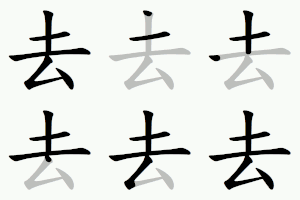 | |||
Han character
去 (Kangxi radical 28, 厶+3, 5 strokes, cangjie input 土戈 (GI), four-corner 40731, composition ⿱土厶)
References
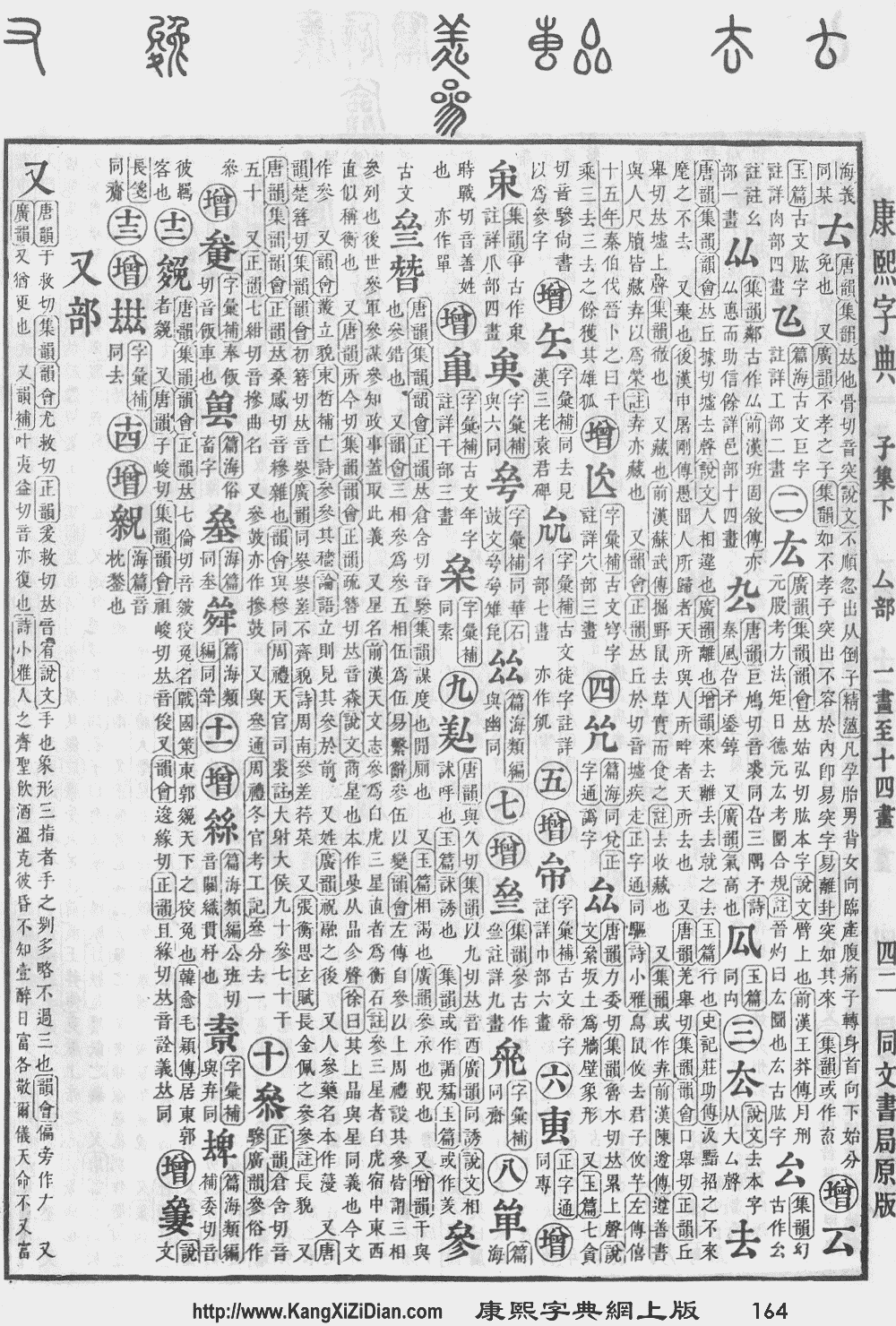
- KangXi: page 164, character 10
- Dai Kanwa Jiten: character 3070
- Dae Jaweon: page 372, character 7
- Hanyu Da Zidian (first edition): volume 1, page 384, character 8
- Unihan data for U+53BB
Chinese
| simp. and trad. |
去 | |
|---|---|---|
| alternative forms | 㚎 弆 厺 克 dialectal | |
Glyph origin
| Historical forms of the character 去 | ||||||
|---|---|---|---|---|---|---|
| Shang | Spring and Autumn | Warring States | Shuowen Jiezi (compiled in Han) | Liushutong (compiled in Ming) | ||
| Oracle bone script | Bronze inscriptions | Bronze inscriptions | Chu slip and silk script | Qin slip script | Small seal script | Transcribed ancient scripts |
 |
 |
 |
 |
 |
 |
 |
Ideogrammic compound (會意) : 大 (“man”) + 口 (“mouth, object”). Top figure simplified to 土, unrelated to 士 (“scholar, gentleman”), while bottom simplified to 厶. There are various interpretations of the combination of “man” and “mouth, object”. One is that the ideograph represented a man with a hole marked in his crotch, with the idea of “anus” (i.e. getting rid of) (Schuessler, 2007). Another is that it represented a man departing from a cave or city.
Alternatively, it may be the original character of 呿 (OC *kʰal, *kʰas, *kʰab, “to open one's mouth”), the meaning given by the combination of 大 (“big”) and 口 (“mouth”). The meaning “to depart” would be an extension of the meaning “to open one's mouth”, as the lips depart from each other when one's mouth is open.
Shuowen Jiezi interprets the character as a phono-semantic compound (形聲, OC *kʰaʔ, *kʰas) : semantic 大 (“man”) + phonetic 𠙴 ().
In addition, 去 is also the original character of 盍 (OC *ɡaːb, “to cover”). The 大 could be a cover on top of an object 口.
Etymology
There were two pronunciations in Middle Chinese. The rising tone pronunciation originally meant “to put away, to eliminate” (causative of “to go away”), and the falling tone “to go away, to leave, to depart” (anticausative). The merger of the two pronunciations already happened in Old Chinese and most extant dialects do not observe this distinction now.
This word is of Sino-Tibetan origin with the basic meaning of "to get rid of". Compare Tibetan སྐྱག (skyag, “to spend, to lay out; dung, excrement”), རྐྱག (rkyag, “dirt, excrement”), Burmese ကျ (kya., “to fall, to become low”), ချ (hkya., “to put down, to bring down, to lower”).
Pronunciation 1
Definitions
去
- to leave; to depart from
- 去世 ― qùshì ― to pass away
- 鳥乃去矣,后稷呱矣。 [Pre-Classical Chinese, trad.]
- From: The Classic of Poetry, c. 11th – 7th centuries BCE, translated based on James Legge's version
- Niǎo nǎi qù yǐ, Hòujì guā yǐ. [Pinyin]
- When the bird went away, Hou-ji began to wail.
鸟乃去矣,后稷呱矣。 [Pre-Classical Chinese, simp.]
- to go to; to leave for
- (before or after a verb) to go in order to do something
- (between two verbs) to; in order to
- Used after a verb of motion to indicate movement away from the speaker.
- to send; to dispatch
- to play (a part, a character); to act
- (euphemistic) to pass away; to die
- last; past
- 去年 ― qùnián ― last year
- 66th tetragram of the Taixuanjing; "departure" (𝍇)
- Short for 去聲/去声 (qùshēng).
- (literary) to be separated by; to be apart by
- (neologism) what the hell; what; damn; fuck
- 我去 ― wǒqù ― what the hell
Synonyms
| Variety | Location | Words |
|---|---|---|
| Classical Chinese | 死, 亡, 歿, 卒 | |
| Formal (Written Standard Chinese) | 死, 死亡, 亡故, 喪生, 喪命, 去世 †, 過世 †, 逝世 †, 離世 †, 下世 †, 不在 †, 過去 †, 仙逝 †, 歸天 †, 歸西 †, 升天 †, 作古 †, 長眠 †, 閉眼 †, 故去 †, ‡, 故世 †, ‡, 一命嗚呼 | |
| Mandarin | Beijing | 死, 故去 †, 老 †, ‡, 毛兒提 Hui |
| Taiwan | 死, 過世 † | |
| Harbin | 死, 老 †, ‡, 伸腿兒 ¤, 伸腿 ¤, 蹬腿兒 ¤, 奔兒咕 ¤, 桿兒屁 §, 桿兒細 §, 吹燈拔蠟 | |
| Yantai (Muping) | 死, 老 †, ‡, 上西天 § | |
| Jinan | 死, 歿, 過去 †, 老 †, ‡, 不在 †, ‡, 王八 §, 完蛋, 完錢, 完活, 無常 Hui, 歸主 Hui, 歸真 Hui | |
| Luoyang | 死, 過去, 過世, 下世, 亡故, 不在, 升天, 去世 †, 老 †, ‡, 擱那兒 ¤ | |
| Wanrong | 死, 歿, 老 †, ‡ | |
| Xi'an | 死, 不在 †, 老 †, ‡, 無常 Hui | |
| Yinchuan | 死, 走 †, 歿 Hui, 歸真 Hui, 冒提 Hui, 口喚 Hui, 無常 Hui, 完 Hui | |
| Lanzhou | 死, 過世 †, 緩下 †, 躺下 † | |
| Xining | 歿 | |
| Ürümqi | 死, 過世 †, 不在 † | |
| Wuhan | 死, 過身 †, 去 †, 老 †, ‡, 去回 ¤, 翹辮子 ¤, 翹 ¤, 瓜碼子 ¤, 瓜 ¤, 西皮 | |
| Chengdu | 死, 過去 †, 不在 †, 去 †, 過世 †, 老 †, ‡, 撬桿兒 §, 撬桿 §, 翹辮子 §, 見馬克思, 歸天, 去陰國, 爬高煙囪, 落氣, 冰凊, 沒脈 | |
| Guiyang | 死, 過世 †, 成神 †, ‡, 百年歸天 †, ‡, 嗚呼 ¤ | |
| Liuzhou | 死, 沒得脈, 過世 †, 過身 †, 沒在 †, 哦嚄 | |
| Yangzhou | 死, 不在 †, 走 †, 家去吃去 ¤, 家去 ¤, 翹辮子 ¤, 翹 ¤, 駝條 § | |
| Nanjing | 死, 過世 †, 歸天 †, ‡, 不在 †, 嗝兒得 ¤, 翹辮子 ¤ | |
| Hefei | 死, 不在 †, 老 † | |
| Singapore | 死, 死掉, 死翹翹, 過世 †, 去世 †, 上天堂 †, 賣鹹鴨蛋 † | |
| Cantonese | Guangzhou | 死, 過身 †, 過世 †, 老 †, ‡, 百年歸老 †, ‡, 去別有天 †, ¤, 去大煙筒 †, ¤, 瓜 ¤, 瓜老襯 ¤, 收檔 ¤, 攞竇 ¤, 進竇 §, 瓜竇, 直, 瓜直, 死直, 攤直, 雙腳撐直, 伸直腳, 拉柴, 瓜柴, 褸席, 歸西, 歸天, 食黃泥, 入黃泥窿, 入窿, 玩完, 嫌米貴, 一 argot |
| Hong Kong | 死, 過身 †, 走 †, 香 †, 去 †, 唔喺度 †, 百年歸老 †, 賣鹹鴨蛋 †, 兩腳一伸 †, 仙遊 †, 拜拜 †, 去閻羅王處報到 †, 瓜 ¤, 瓜老襯 ¤, 拉柴, 瓜柴, 釘蓋, 釘, 直, 歸西, 玩完 | |
| Hong Kong (San Tin Weitou) | 過身 | |
| Hong Kong (Kam Tin Weitou) | 過身 | |
| Hong Kong (Ting Kok) | 過身, 死 | |
| Hong Kong (Tung Ping Chau) | 過身 | |
| Macau | 過身, 去 | |
| Guangzhou (Panyu) | 過身, 死 | |
| Guangzhou (Huashan, Huadu) | 死 | |
| Guangzhou (Conghua) | 過身, 死 | |
| Guangzhou (Zengcheng) | 去歸, 過身 | |
| Foshan | 過身, 死 | |
| Foshan (Shatou, Nanhai) | 死, 過身 | |
| Foshan (Shunde) | 過身 | |
| Foshan (Sanshui) | 過身 | |
| Foshan (Mingcheng, Gaoming) | 死 | |
| Zhongshan (Shiqi) | 過身 | |
| Zhuhai (Qianshan) | 死 | |
| Zhuhai (Doumen, Shangheng Tanka) | 過身, 死 | |
| Zhuhai (Doumen) | 死, 過身 | |
| Jiangmen (Baisha) | 過身, 死 | |
| Jiangmen (Xinhui) | 死, 過身 | |
| Taishan | 死, 善, 去 | |
| Kaiping (Chikan) | 死, 登仙 | |
| Enping (Niujiang) | 過身, 死 | |
| Heshan (Yayao) | 死 | |
| Dongguan | 死, 老 †, 去返 †, 去舊時嗰處 †, 視埋眼 †, 伸直腳 †, 入罌 †, 拉柴 §, 去大煙筒 § | |
| Shenzhen (Shajing, Bao'an) | 死, 過身 | |
| Yangjiang | 死, 過輩 †, 老 †, ‡, 老大 †, ‡ | |
| Singapore (Guangfu) | 死, 過身 † | |
| Gan | Nanchang | 死, 過世 †, 老 † |
| Lichuan | 死 | |
| Pingxiang | 死, 過 †, 走路 †, 老 †, ‡, 去 | |
| Hakka | Meixian | 死, 老, 過身 †, 老壽 †, ‡ |
| Huizhou (Huicheng Bendihua) | 過身 | |
| Dongguan (Qingxi) | 過身, 死 | |
| Shenzhen (Shatoujiao) | 死, 過身 | |
| Zhongshan (Nanlang Heshui) | 死 | |
| Conghua (Lütian) | 死, 過身 | |
| Yudu | 死, 過世 †, 過套 †, 過身 †, 轉去 †, 轉該背 †, 歸仙 †, 轉老外婆裡 ¤ | |
| Miaoli (N. Sixian) | 死, 過身 †, 往生 † | |
| Pingtung (Neipu; S. Sixian) | 死, 過身 †, 往生 † | |
| Hsinchu County (Zhudong; Hailu) | 死, 過身 †, 往生 † | |
| Taichung (Dongshi; Dabu) | 死, 過身 †, 往生 † | |
| Hsinchu County (Qionglin; Raoping) | 死, 過身 †, 往生 † | |
| Yunlin (Lunbei; Zhao'an) | 死, 過身 † | |
| Hong Kong | 過身, 老 | |
| Huizhou | Jixi | 死, 過世 †, 過輩 †, 過身 †, 不在 †, 過老 §, 過邊 §, 進棺材 §, 進風水 §, 翹扁 §, ¤ |
| Jin | Taiyuan | 死, 沒啦 †, 走 †, 過去 †, 老 †, ‡, 老客 †, ‡ |
| Xinzhou | 死, 回老家 †, 硬 §, 㞗朝天 of a man, vulgar, 倒蕎麥皮 | |
| Min Bei | Jian'ou | 死, 過身 †, 老 †, ‡ |
| Min Dong | Fuzhou | 死, 過去 †, 過世 †, 過後 †, 歸西 †, 百歲 †, 老去 †, ‡, 堯街去 ¤, 堯生去 ¤, 溜翹 ¤, 殂 ¤, 去算米數 ¤, 去外媽食齋 ¤, 去外媽 ¤, 去䁐廬山 ¤, 去厝去 ¤, 睏長暝眠 ¤, 翹齋 ¤, 揭兜去 ¤, 拔直去 ¤, 上天去 ¤, 生去 ¤, 𣪟去 ¤, 䁐松柏樹 ¤, 䁐松柏 ¤, 轉祖 § |
| Min Nan | Xiamen | 死, 過身 †, 過氣 †, 百歲 †, 百年 †, 百歲年老 †, 行去 †, 無去 †, 㾀 †, 老去 †, ‡, 老咯 †, ‡, 蟯 ¤, 蟯歹 ¤, 蟯癱 ¤, 行雞 ¤, 馬滴 § |
| Quanzhou | 死, 過身 †, 過氣 †, 百歲 †, 百年 †, 無去 †, 老去 †, ‡, 老咯 †, ‡, 行雞 ¤, 馬滴 § | |
| Zhangzhou | 死, 過身 †, 過氣 †, 百歲 †, 百年 †, 百歲年老 †, 行去 †, 無去 †, 起身 †, 老去 †, ‡, 老咯 †, ‡, 蟯 ¤, 蟯歹 ¤, 蟯癱 ¤, 行雞 ¤, 誆牽 §, 㾀 §, 㾀歹 §, 馬滴 § | |
| Taipei | 死去, 老 †, 過身 † | |
| New Taipei (Sanxia) | 死去, 老去 †, 往生 †, 過身 † | |
| Kaohsiung | 死去, 老去 †, 行去 †, 往生 †, 無佇咧 †, 過身 †, 轉去 † | |
| Yilan | 死去, 老去 †, 往生 †, 無佇咧 †, 過身 †, 過往 † | |
| Changhua (Lukang) | 死去, 老 †, 無去 †, 過身 †, 轉去 † | |
| Taichung | 死去, 往生 †, 過身 † | |
| Tainan | 死去, 老去 †, 行去 †, 往生 †, 無佇咧 †, 過身 †, 轉去 † | |
| Hsinchu | 曲去, 去咯 †, 往生 †, 過身 †, 老去 † | |
| Kinmen | 死去, 往生 †, 過身 †, 行去 † | |
| Penghu (Magong) | 死去, 往生 †, 過身 †, 老去 † | |
| Singapore (Hokkien) | 死, 馬滴, 死翹翹, 過身 †, 百年 †, 百歲 †, 過氣 †, 起車 †, 老去 †, 老咯 †, 行去 †, 蟯去 †, 吭跤翹, 交登記 † | |
| Manila (Hokkien) | 死, 死去, 過面 †, 過身 † | |
| Chaozhou | 死, 過身 † | |
| Jieyang | 過身, 吭跤翹, 吭翹 | |
| Singapore (Teochew) | 死, 過身 | |
| Leizhou | 死, 過世 †, 過輩 †, 過目焗 ¤, 直筒 §, 刮薯減米 § | |
| Haikou | 死, 過層 †, ‡, 老 †, ‡, 貓使 § | |
| Singapore (Hainanese) | 死 | |
| Zhongshan Min | Shaxi (Longdu) | 死 |
| Southern Pinghua | Nanning (Tingzi) | 死, 瓜老襯, 過世, 歸西 |
| Wu | Shanghai | 死, 故 †, 過世 †, 嘸沒 †, 一腳去 †, 翹辮子 §, ¤, 彈老三 §, 翹老三 § |
| Shanghai (Chongming) | 死, 老 †, 故 †, 翹辮子 ¤ | |
| Suzhou | 死, 壞, 去, 過世 †, 翹辮子 § | |
| Danyang | 死 | |
| Hangzhou | 死, 故 †, 過世 †, 翹辮兒 ¤, 到龍駒塢去 | |
| Ningbo | 死, 翹辮子 §, 過世 †, 嘸沒 †, 死脫 §, 燂茶, 山裡去, 吃豆腐羹, 嘸沒來的 † | |
| Wenzhou | 死, 冇 †, 過輩 †, ‡, 蹻 ¤ | |
| Jinhua | 死, 過世 †, 過輩 †, 弗在 †, 老 †, ‡ | |
| Xiang | Changsha | 死, 過 †, 去 †, 瓜, 彈, 彈四郎 |
| Loudi | 死, 過世 †, 故 †, 上岸 † | |
| Shuangfeng | 死, 過世 †, 故 † | |
| Note | † - euphemistic; ‡ - usually of the elderly; ¤ - humorous; § - derogatory/disrespectful | |
Pronunciation 2
Definitions
去
- to remove; to get rid of
- 去掉 ― qùdiào ― to remove
- 脫去/脱去 ― tuōqù ― to throw off
- 拆去 ― chāiqù ― to remove, to take off
- 去蝦腸/去虾肠 ― qù xiācháng ― to remove the intestines from shrimp
- 去頭白蝦/去头白虾 ― qùtóu báixiā ― headless white shrimp
- 去中心化 ― qùzhōngxīnhuà ― decentralization
- 不窋末年,夏后氏政衰,去稷不務,不窋以失其官而犇戎狄之間。 [Classical Chinese, trad.]
- From: The Records of the Grand Historian, by Sima Qian, c. 91 BCE
- Bùzhú mònián, Xiàhòushì zhèng shuāi, qù jì bù wù, Bùzhú yǐ shī qí guān ér bēn róngdí zhī jiān. [Pinyin]
- In Buzhu's later years, the Xia dynasty's government declined; so he forsook millet (agriculture) and did not serve. Buzhu, therefore, lost his offce and fled to the Rong's and Di's midst.
不窋末年,夏后氏政衰,去稷不务,不窋以失其官而犇戎狄之间。 [Classical Chinese, simp.]
- to discard
Pronunciation 3
| For pronunciation and definitions of 去 – see 弆 (“to hoard, to hide away”). (This character, 去, is a variant form of 弆.) |
Pronunciation 4
| For pronunciation and definitions of 去 – see 驅 (“to run quickly; to expel; to disperse; etc.”). (This character, 去, is a variant form of 驅.) |
Compounds
- 一來二去/一来二去 (yīlái'èrqù)
- 一去不返 (yīqùbùfǎn)
- 下不去
- 三不去
- 下去 (xiàqù)
- 上去 (shàngqù)
- 下得去
- 不去
- 不去手
- 不告而去
- 不如歸去/不如归去
- 不知去向 (bùzhīqùxiàng)
- 人來客去/人来客去
- 人去樓空/人去楼空
- 以戰去戰/以战去战
- 以殺去殺/以杀去杀
- 何去何從/何去何从 (héqùhécóng)
- 來千去萬/来千去万
- 來去/来去 (láiqù)
- 來去分明/来去分明
- 來去匆匆/来去匆匆
- 來去自如/来去自如
- 來回來去/来回来去 (láihuíláiqù)
- 來情去意/来情去意
- 來蹤去影/来踪去影
- 來蹤去跡/来踪去迹
- 來龍去脈/来龙去脉 (láilóngqùmài)
- 克克拉去考勒 (Kèkèlāqùkǎolè)
- 兜來兜去/兜来兜去
- 出去 (chūqù)
- 刮骨去毒
- 前去 (qiánqù)
- 務實去華/务实去华
- 勝殘去殺/胜残去杀
- 化去
- 去世 (qùshì)
- 去事
- 去任
- 去住
- 去住無門/去住无门
- 去你的 (qù nǐ de)
- 去來/去来
- 去偽存真/去伪存真 (qùwěicúnzhēn)
- 去函
- 去勢/去势 (qùshì)
- 去危就安
- 去向 (qùxiàng)
- 去國/去国
- 去天尺五
- 去官 (qùguān)
- 去寒
- 去就
- 去就之分
- 去年 (qùnián)
- 去後/去后 (qùhòu)
- 去得
- 去掉 (qùdiào)
- 去日
- 去暑 (qùshǔ)
- 去暗投明
- 去本就末
- 去根 (qùgēn)
- 去梯言
- 去極端化/去极端化 (qùjíduānhuà)
- 去歲/去岁 (qùsuì)
- 去殺勝殘/去杀胜残
- 去污
- 去泰去甚
- 去火 (qùhuǒ)
- 去甚去泰
- 去留 (qùliú)
- 去病
- 去粗取精 (qùcūqǔjīng)
- 去聲/去声 (qùshēng)
- 去職/去职 (qùzhí)
- 去蕪存菁/去芜存菁 (qùwúcúnjīng)
- 去處/去处 (qùchù)
- 去路 (qùlù)
- 去邪從正/去邪从正
- 去邪歸正/去邪归正
- 去鄉/去乡
- 去除 (qùchú)
- 去雜去劣/去杂去劣
- 否去泰來/否去泰来
- 回去 (huíqù)
- 大事去矣
- 大勢已去/大势已去 (dàshìyǐqù)
- 大去
- 大江東去/大江东去
- 失去 (shīqù)
- 姘出去
- 家去
- 左來右去/左来右去
- 已去
- 平上去入
- 弄來弄去/弄来弄去
- 想來想去/想来想去
- 扭來扭去/扭来扭去
- 抹去 (mǒqù)
- 拔去一丁
- 拔葵去織/拔葵去织
- 拂衣而去
- 拂袖而去 (fúxiù'érqù)
- 捐殘去殺/捐残去杀
- 捕蛇去齒/捕蛇去齿
- 挺過去/挺过去
- 推來推去/推来推去 (tuīláituīqù)
- 掛冠而去/挂冠而去
- 掐頭去尾/掐头去尾
- 掉頭而去/掉头而去
- 揮之不去/挥之不去 (huīzhībùqù)
- 揚長而去/扬长而去 (yángcháng'érqù)
- 摘心去肝
- 撒手歸去/撒手归去
- 攪來攪去/搅来搅去
- 放眼望去
- 故去 (gùqù)
- 春來秋去/春来秋去
- 春去秋來/春去秋来
- 晃來晃去/晃来晃去
- 時來暫去/时来暂去
- 暮去朝來/暮去朝来
- 有來有去/有来有去
- 朝來暮去/朝来暮去
- 東來西去/东来西去
- 歸去/归去 (guīqù)
- 歸去來兮/归去来兮
- 歸去來辭/归去来辞
- 死去活來/死去活来
- 沒去就/没去就
- 浮來暫去/浮来暂去
- 淘去
- 減去/减去
- 滾來滾去/滚来滚去
- 滾出去/滚出去 (gǔn chūqu)
- 生來死去/生来死去
- 番來覆去/番来覆去
- 病去
- 盡去/尽去
- 直去直來/直去直来
- 看不下去
- 眉來眼去/眉来眼去 (méiláiyǎnqù)
- 眉來語去/眉来语去
- 相去 (xiāngqù)
- 相去不遠/相去不远
- 相去咫尺
- 相去天淵/相去天渊
- 相去懸殊/相去悬殊
- 相去無幾/相去无几
- 相去萬里/相去万里
- 省慾去奢/省欲去奢
- 眼去眉來/眼去眉来
- 破壁飛去/破壁飞去
- 算來算去/算来算去
- 絲來線去/丝来线去
- 絕裾而去/绝裾而去
- 翻來吊去/翻来吊去
- 翻來翻去/翻来翻去
- 翻來覆去/翻来覆去 (fānláifùqù)
- 臨去秋波/临去秋波
- 茹魚去蠅/茹鱼去蝇
- 衡陽雁去/衡阳雁去
- 褪去
- 覆去翻來/覆去翻来
- 言來語去/言来语去
- 說不下去/说不下去
- 說不過去/说不过去 (shuōbuguòqù)
- 說來說去/说来说去
- 說得過去/说得过去 (shuōdeguòqù)
- 豁出去
- 豬毋大,大對狗去/猪毋大,大对狗去 (ti m̄ tōa, tōa tùi káu khì)
- 賊去關門/贼去关门
- 走來走去/走来走去 (zǒuláizǒuqù)
- 踅來踅去/踅来踅去
- 踱來踱去/踱来踱去
- 進去/进去
- 過不去/过不去 (guòbùqù)
- 過去/过去 (guòqù)
- 過去式/过去式 (guòqùshì)
- 過得去/过得去 (guòdeqù)
- 過意不去/过意不去 (guòyìbùqù)
- 除凶去害
- 除去 (chúqù)
- 除殘去穢/除残去秽
- 除汙去垢/除污去垢
- 陰去/阴去 (yīnqù)
- 陳言務去/陈言务去
- 陽去/阳去 (yángqù)
- 雁去魚來/雁去鱼来
- 離去/离去 (líqù)
- 霍去病
- 顛來倒去/颠来倒去
- 高來高去/高来高去
- 鳳去樓空/凤去楼空
- 鳳去秦樓/凤去秦楼
- 鳳去臺空/凤去台空
See also
| The tones (of Chinese) in Chinese · 聲調/声调 (shēngdiào) (layout · text) | ||||||||||
|---|---|---|---|---|---|---|---|---|---|---|
| 平仄 (píngzè) | 平 平聲/平声 (píngshēng) |
仄 (zè) 仄聲/仄声 (zèshēng) | ||||||||
| 平上去入 四聲/四声 (sìshēng) 古四聲/古四声 |
平 平聲/平声 (píngshēng) |
上 上聲/上声 |
去 (qù) 去聲/去声 (qùshēng) |
入 (rù) 入聲/入声 (rùshēng) | ||||||
| 標調方法/标调方法 (biāodiào fāngfǎ) 標調法/标调法 |
四角標調法/四角标调法 | ꜀◌ | ꜂◌ | ◌꜄ | ◌꜆ | |||||
| [Term?] | ◌〪 | ◌〫 | ◌〬 | ◌〭 | ||||||
| 傍點/傍点 | ∅ | ◌〮 | ◌〯 | ∅ | ||||||
| ∅ | -X | -H | -p -t -k (-ʔ) | |||||||
| 四聲八調/四声八调 | 陰平/阴平 (yīnpíng) | 陽平/阳平 (yángpíng) | 陰上/阴上 (yīnshǎng) | 陽上/阳上 (yángshǎng) | 陰去/阴去 (yīnqù) | 陽去/阳去 (yángqù) | 陰入/阴入 (yīnrù) | 陽入/阳入 (yángrù) | ||
| 陰/阴 (yīn) | 陽/阳 (yáng) | |||||||||
| 標調方法/标调方法 (biāodiào fāngfǎ) 標調法/标调法 |
四角標調法/四角标调法 | ꜀◌ | ꜁◌ | ꜂◌ | ꜃◌ | ◌꜄ | ◌꜅ | ◌꜆ | ◌꜇ | |
| The tones (of Standard Mandarin) in Chinese · 聲調/声调 (shēngdiào) (layout · text) | ||||||||||
|---|---|---|---|---|---|---|---|---|---|---|
| 四聲/四声 (sìshēng) | 陰平/阴平 (yīnpíng) 第一聲/第一声 |
陽平/阳平 (yángpíng) 第二聲/第二声 |
上聲/上声 第三聲/第三声 |
去聲/去声 (qùshēng) 第四聲/第四声 |
輕聲/轻声 (qīngshēng) | |||||
References
- “去”, in 漢語多功能字庫 (Multi-function Chinese Character Database), 香港中文大學 (the Chinese University of Hong Kong), 2014–
- “Entry #1405”, in 臺灣閩南語常用詞辭典 [Dictionary of Frequently-Used Taiwan Minnan] (in Chinese and Min Nan), Ministry of Education, R.O.C., 2011.
Korean
Vietnamese
Han character
Compounds
References
- Hồ (1976).
- Trần (1999).