鯥

鯥 U+9BE5, 鯥
CJK UNIFIED IDEOGRAPH-9BE5
← 鯤
[U+9BE4]
CJK Unified Ideographs 鯦 →
[U+9BE6]

Translingual

Han character

鯥 (Kangxi radical 195, 魚+8, 19 strokes, cangjie input 弓火土金土 (NFGCG), four-corner 24314, composition ⿰魚坴)

References

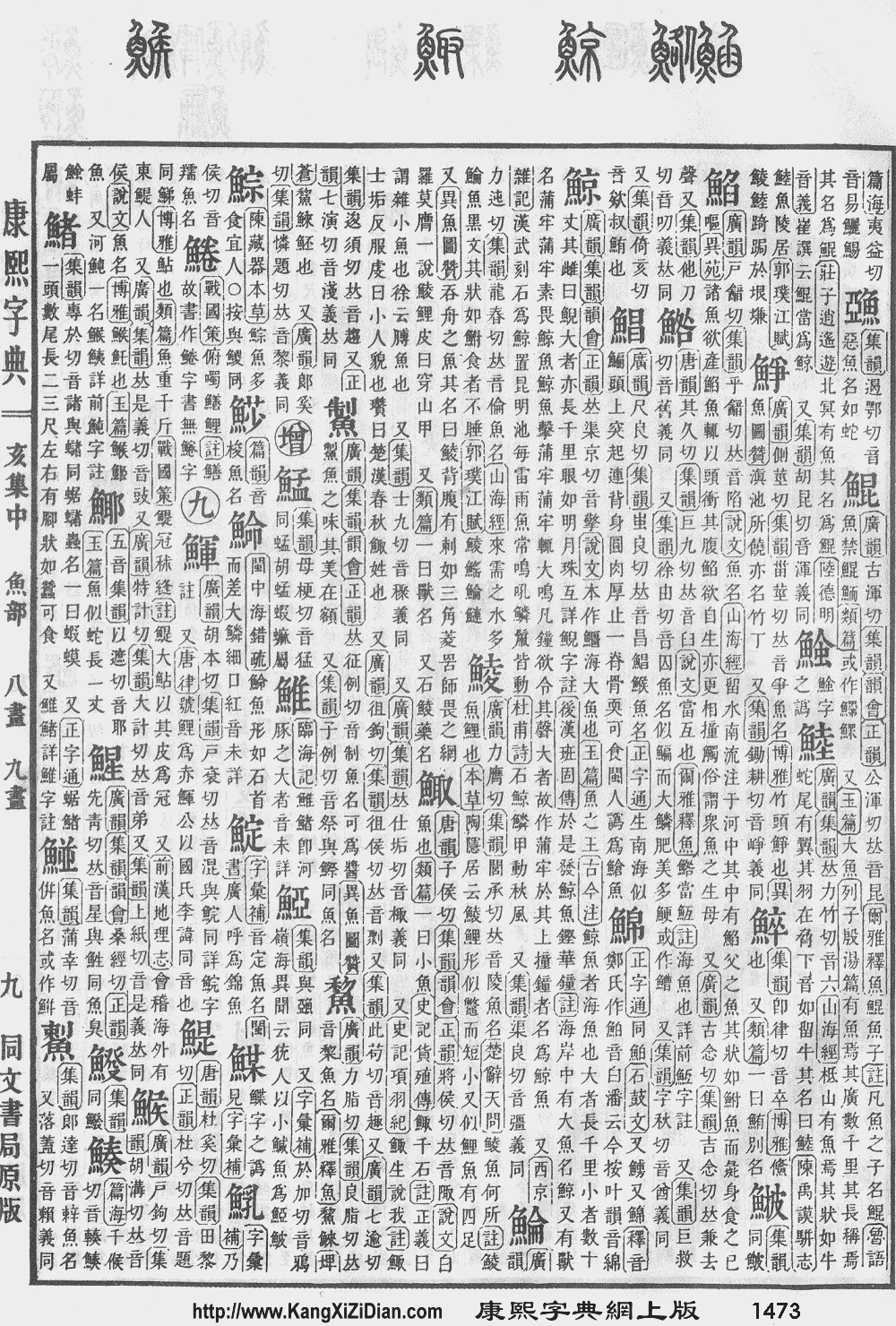
  • KangXi: page 1473, character 4
  • Dai Kanwa Jiten: character 46249
  • Dae Jaweon: page 2005, character 2
  • Hanyu Da Zidian (first edition): volume 7, page 4694, character 8
  • Unihan data for U+9BE5

Chinese

trad. 鯥
simp. 𱇶

Glyph origin

Pronunciation


Rime
Character 鯥
Reading # 1/1
Initial (聲) 來 (37)
Final (韻) 東 (4)
Tone (調) Checked (Ø)
Openness (開合) Open
Division (等) III
Fanqie 力竹切
Reconstructions
Zhengzhang
Shangfang
/lɨuk̚/
Pan
Wuyun
/liuk̚/
Shao
Rongfen
/liuk̚/
Edwin
Pulleyblank
/luwk̚/
Li
Rong
/liuk̚/
Wang
Li
/lĭuk̚/
Bernard
Karlgren
/li̯uk̚/
Expected
Mandarin
Reflex
lù
Expected
Cantonese
Reflex
luk6
Zhengzhang system (2003)
Character 鯥
Reading # 1/1
No. 8536
Phonetic
component
坴
Rime
group
覺
Rime
subdivision
1
Corresponding
MC rime
六
Old
Chinese
/*ruɡ/
Notes 見山海經

Definitions

鯥

  1. This term needs a translation to English. Please help out and add a translation, then remove the text {{rfdef}}.

Japanese

Glyph origin

A 国字 (kokuji, “Japanese-coined character”), combining the fish radical 魚 with 陸 (mutsu, “six”) or 睦 (mutsu-, “in good relations”) to represent むつ (mutsu, “gnomefish”).

Kanji

鯥

(uncommon “Hyōgai” kanji)

Readings

  • Go-on: ろく (roku)
  • Kan-on: りく (riku)
  • Kun: むつ (mutsu, 鯥)

Etymology

Kanji in this term
鯥
むつ
Hyōgaiji
kun’yomi
For pronunciation and definitions of 鯥 – see the following entry.
【むつムツ】
[noun] gnomefish (Scombrops boops)
Alternative spellings
鯥, 鱫, むつ
(This term, 鯥, is an alternative spelling of the above term.)
This article is issued from Wiktionary. The text is licensed under Creative Commons - Attribution - Sharealike. Additional terms may apply for the media files.