睦

睦 U+7766, 睦
CJK UNIFIED IDEOGRAPH-7766
← 睥
[U+7765]
CJK Unified Ideographs 睧 →
[U+7767]

Translingual

Han character

睦 (Kangxi radical 109, 目+8, 13 strokes, cangjie input 月山土金土 (BUGCG), four-corner 64014, composition ⿰目坴)

  1. friendly, amiable, peaceful

Derived characters

  • 𬞝

References

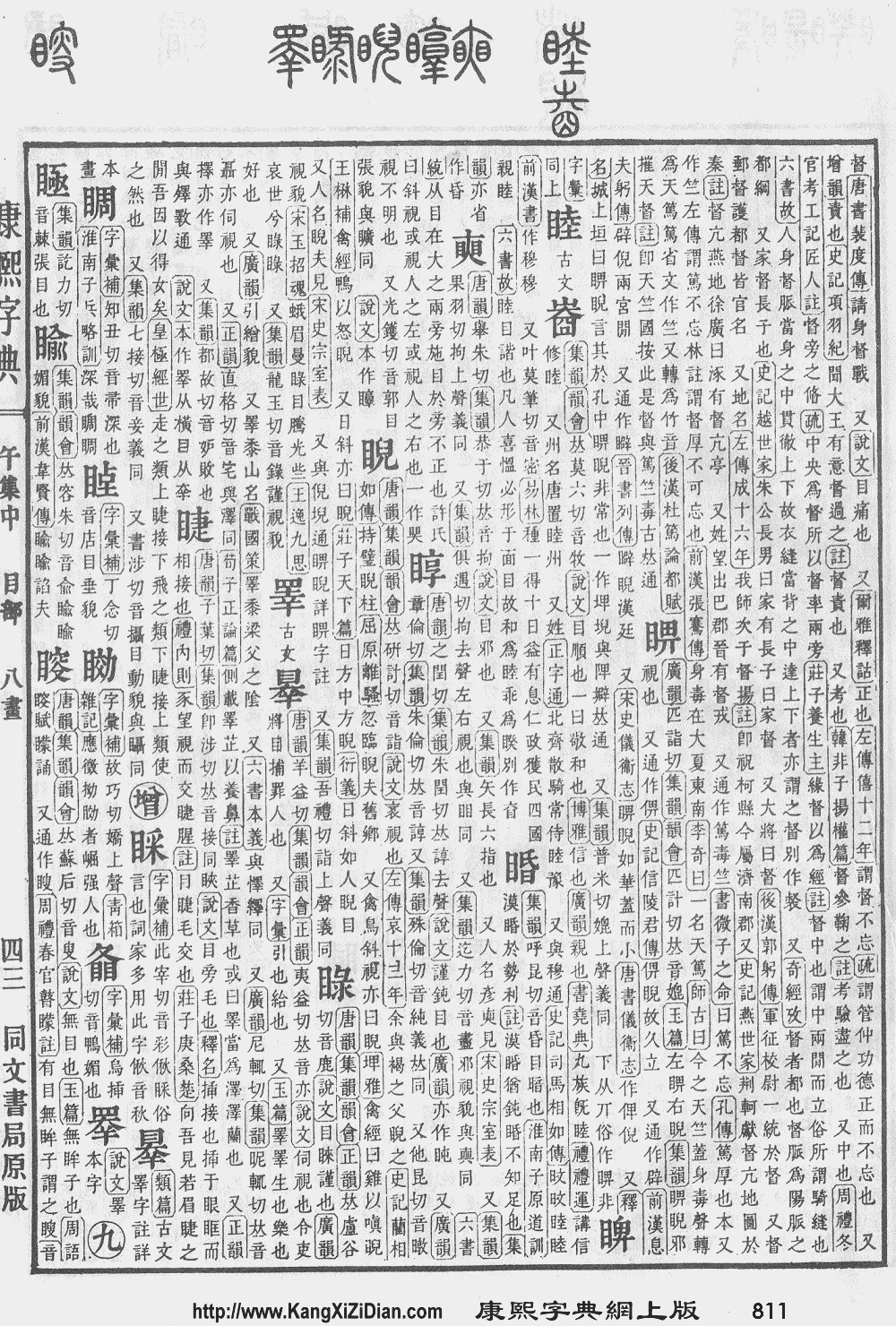
  • KangXi: page 811, character 3
  • Dai Kanwa Jiten: character 23460
  • Dae Jaweon: page 1226, character 3
  • Hanyu Da Zidian (first edition): volume 4, page 2494, character 4
  • Unihan data for U+7766

Chinese

trad. 睦
simp. # 睦

Glyph origin

Phono-semantic compound (形聲, OC *mluɡ) : semantic 目 (“eyes”) + phonetic 坴 (OC *m·ruɡ).

Pronunciation


Rime
Character 睦
Reading # 1/1
Initial (聲) 明 (4)
Final (韻) 東 (4)
Tone (調) Checked (Ø)
Openness (開合) Open
Division (等) III
Fanqie 莫六切
Reconstructions
Zhengzhang
Shangfang
/mɨuk̚/
Pan
Wuyun
/miuk̚/
Shao
Rongfen
/miuk̚/
Edwin
Pulleyblank
/muwk̚/
Li
Rong
/miuk̚/
Wang
Li
/mĭuk̚/
Bernard
Karlgren
/mi̯uk̚/
Expected
Mandarin
Reflex
mù
Expected
Cantonese
Reflex
muk6
Baxter–Sagart system 1.1 (2014)
Character 睦
Reading # 1/1
Modern
Beijing
(Pinyin)
mù
Middle
Chinese
‹ mjuwk ›
Old
Chinese
/*mr[uk]/
English concord

Notes for Old Chinese notations in the Baxter–Sagart system:

* Parentheses "()" indicate uncertain presence;
* Square brackets "[]" indicate uncertain identity, e.g. *[t] as coda may in fact be *-t or *-p;
* Angle brackets "<>" indicate infix;
* Hyphen "-" indicates morpheme boundary;

* Period "." indicates syllable boundary.
Zhengzhang system (2003)
Character 睦
Reading # 1/1
No. 8531
Phonetic
component
坴
Rime
group
幽
Rime
subdivision
1
Corresponding
MC rime
目
Old
Chinese
/*mluɡ/
Notes 古文從囧圥聲

Definitions

睦

  1. harmonious

Compounds

  • 雍睦
  • 敦親睦鄰/敦亲睦邻
  • 潘楊之睦/潘杨之睦
  • 睦誼/睦谊
  • 睦鄰/睦邻 (mùlín)

Japanese

Kanji

睦

(common “Jōyō” kanji)

  1. harmony

Readings

Etymology

Kanji in this term
睦
むつ
Grade: S
kun’yomi
For pronunciation and definitions of 睦 – see the following entry.
【むつ】
[prefix] in good relations
(This term, 睦, is an alternative spelling of the above term.)

Korean

Hanja

睦 (eumhun 화목할 목 (hwamokhal mok))

  1. Hanja form? of 목 (“friendly, amiable, peaceful”).

Vietnamese

Han character

睦: Hán Việt readings: mục[1][2][3][4][5]
睦: Nôm readings: mục[1][2]

  1. chữ Hán form of mục (“harmony”).
  2. chữ Hán form of Mục (“a surname”).

References

  1. Nguyễn (2014).
  2. Trần (2004).
  3. Trần (1999).
  4. Nguyễn (1974).
  5. Thiều Chửu (1942).
This article is issued from Wiktionary. The text is licensed under Creative Commons - Attribution - Sharealike. Additional terms may apply for the media files.