齣
See also: 出
| ||||||||
Translingual
| Traditional | 齣 |
|---|---|
| Shinjitai (extended) |
𫠚 |
| Simplified | 出 |
Han character
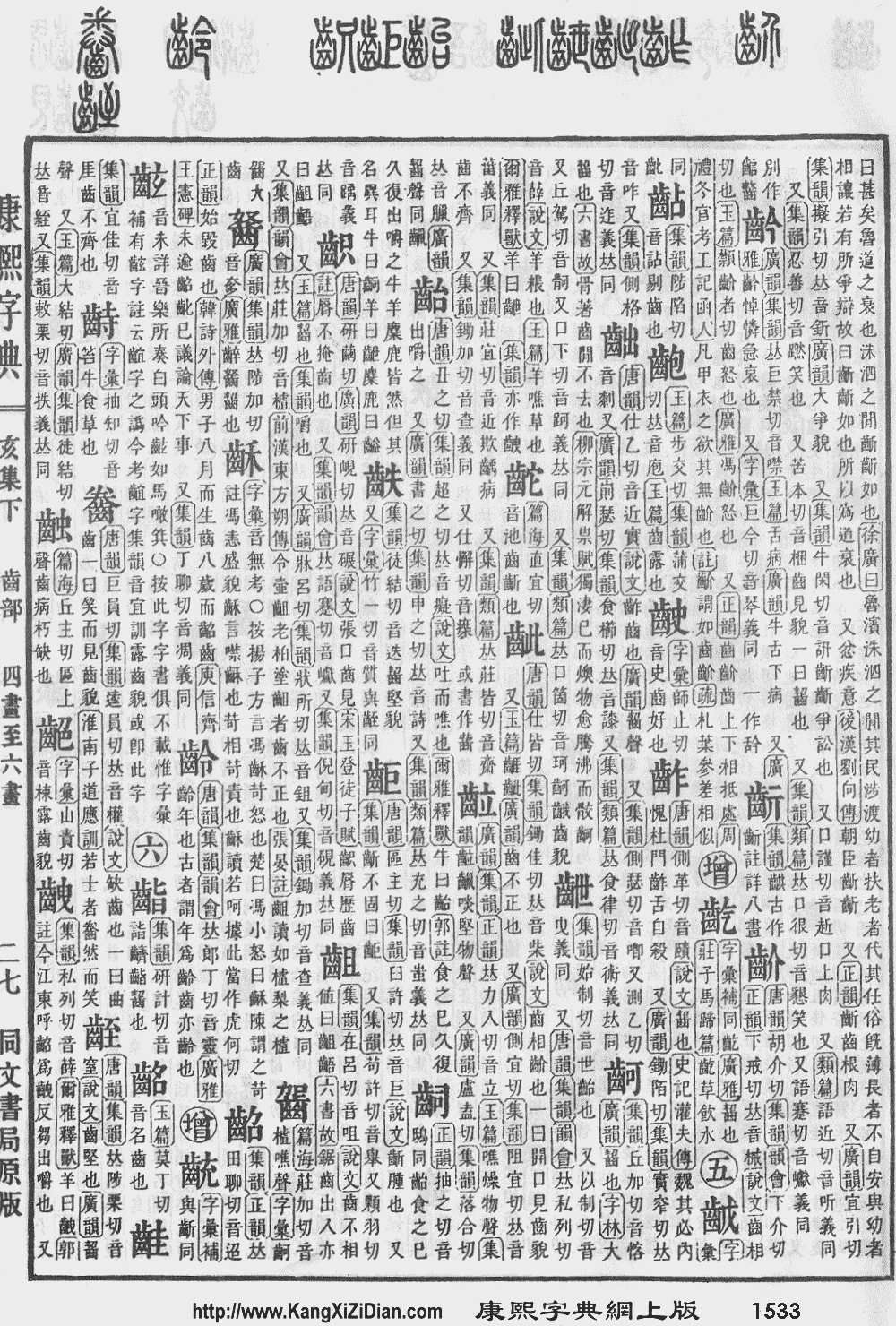
齣 (Kangxi radical 211, 齒+5, 20 strokes, cangjie input 卜山心口 (YUPR), four-corner 27720, composition ⿰齒句)
References
- KangXi: not present, would follow page 1533, character 28
- Dai Kanwa Jiten: character 48638
- Dae Jaweon: page 2071, character 37
- Hanyu Da Zidian (first edition): volume 7, page 4791, character 9
- Unihan data for U+9F63
Chinese
| trad. | 齣/出* | |
|---|---|---|
| simp. | 出* | |
| nonstandard simp. | 𱌮 | |
Glyph origin
Phono-semantic compound (形聲) : semantic 齒 (“tooth”) + phonetic 句 (OC *koː, *koːs, *kos, *ɡo).
Pronunciation
Japanese
| 𫠚 | |
| 齣 |
Etymology 1
| Kanji in this term |
|---|
| 齣 |
| こま Hyōgaiji |
| kun’yomi |
Probably cognate with 小間, 細 (koma, “small; a small piece of something”).
Pronunciation
Noun
齣 • (koma)
Etymology 2
| Kanji in this term |
|---|
| 齣 |
| せき Hyōgaiji |
| on’yomi |
May be from Middle Chinese, or may be a shift in reading from setsu below.
Noun
齣 • (seki)
Usage notes
The seki reading appears to be somewhat more common for this sense.[3]
Etymology 3
| Kanji in this term |
|---|
| 齣 |
| せつ Hyōgaiji |
| on’yomi |
From Middle Chinese 齣. Compare modern Hakka and Min Nan readings chhut, Cantonese ceot1.
Usage notes
The seki reading appears to be somewhat more common for this sense.[3]
References
- 2006, 大辞林 (Daijirin), Third Edition (in Japanese), Tōkyō: Sanseidō, →ISBN
- 1997, 新明解国語辞典 (Shin Meikai Kokugo Jiten), Fifth Edition (in Japanese), Tōkyō: Sanseidō, →ISBN
- 1988, 国語大辞典(新装版) (Kokugo Dai Jiten, Revised Edition) (in Japanese), Tōkyō: Shogakukan
Korean
Hanja
齣 • (cheok) (hangeul 척, revised cheok, McCune–Reischauer ch'ŏk, Yale chek)
- This term needs a translation to English. Please help out and add a translation, then remove the text
{{rfdef}}.
Vietnamese
This article is issued from Wiktionary. The text is licensed under Creative Commons - Attribution - Sharealike. Additional terms may apply for the media files.