젓가락
Korean
FWOTD – 13 August 2014
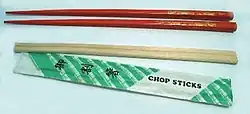
젓가락
Etymology
From 저(箸) (jeo, “chopstick”) + ㅅ (-s-) + 가락 (garak, “rod”). First attested in the Gugeupganibang eonhae (救急簡易方諺解 / 구급간이방언해), 1489, as Middle Korean 졋가락 (Yale: cyeskalak).
Pronunciation
- (SK Standard/Seoul) IPA(key): [t͡ɕʌ̹t̚k͈a̠ɾa̠k̚] ~ [t͡ɕʌ̹k͈a̠ɾa̠k̚]
- Phonetic hangul: [젇까락/저까락]
| Romanizations | |
|---|---|
| Revised Romanization? | jeotgarak |
| Revised Romanization (translit.)? | jeosgalag |
| McCune–Reischauer? | chŏtkarak |
| Yale Romanization? | ceskalak |
South Gyeongsang (Busan) pitch accent: 젓가락의 / 젓가락에 / 젓가락까지
Syllables in red take high pitch. This word always takes high pitch on the second syllable, and lowers the pitch of subsequent suffixes.
Noun
젓가락 • (jeotgarak)
- chopsticks
- Synonym: (Pyongan ginseng-harvesters' cant) 형데무투 (hyeongdemutu)
- 젓가락으로 먹다 ― jeotgarak-euro meokda ― to eat with chopsticks
- 2014, 중국의 도둑 클래스, 젓가락으로 스마트폰 훔치고 `끝`
- 사진 속에는 자전거를 타고 가는 여성의 뒤를 따라가며 젓가락으로 스마트폰을 훔치는 남성이 담겨 있다.
- sajin sog-e-neun jajeon'geo-reul tago ganeun yeoseong-ui dwi-reul ttaragamyeo jeotgarak-euro seumateupon-eul humchineun namseong-i damgyeo itda.
- The picture shows the thief following the woman riding the bicycle and using chopsticks to snatch the smartphone from her.
- mouthful (a unit used to count the amount of food that one can pick up with chopsticks)
Derived terms
Derived terms
- 젓가락질 (jeotgarakjil, “using chopsticks, handling chopsticks”)
This article is issued from Wiktionary. The text is licensed under Creative Commons - Attribution - Sharealike. Additional terms may apply for the media files.