< Reconstruction:Proto-Slavic
Reconstruction:Proto-Slavic/čemerъ

Proto-Slavic

Etymology
Inherited from Proto-Balto-Slavic [Term?], Proto-Indo-European *kemer-. Cognates include Lithuanian kemeras (“Eupatorium cannabinum”), Latvian cemeriņš (“Helleborus”), Greek χάμαρος (chámaros, “Aconitum”).
Noun
- false hellebore (any plant of the genus Veratrum)
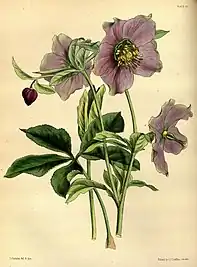
- hellebore (any plant of the genus Helleborus)
- → venom, poison from these plants
- → disease caused by these plants
- → (East and South Slavic) venom, poison
- → (East and South Slavic) anger, wrath, bitterness
Declension
Declension of *čemerъ (hard o-stem)
| Singular | Dual | Plural | |
|---|---|---|---|
| Nominative | *čemerъ | *čemera | *čemeri |
| Accusative | *čemerъ | *čemera | *čemery |
| Genitive | *čemera | *čemeru | *čemerъ |
| Locative | *čemerě | *čemeru | *čemerěxъ |
| Dative | *čemeru | *čemeroma | *čemeromъ |
| Instrumental | *čemerъmь, *čemeromь* | *čemeroma | *čemery |
| Vocative | *čemere | *čemera | *čemeri |
* -ъmь in North Slavic, -omь in South Slavic.
Derived terms
nouns
- *čemerica f (“Veratrum, Helleborus”)
- *čemerika f (“Veratrum, Helleborus”)
verbs
adjectives
Related terms
- *čemerь
Descendants
- East Slavic:
- South Slavic:
- West Slavic:
- Non-Slavic:
- → Lithuanian: čemerỹs
- → Hungarian: csömör
- → Romanian: cemer (dialectal)
References
- Trubachyov, Oleg, editor (1977), “*čemerъ/*čemera”, in Этимологический словарь славянских языков [Etymological Dictionary of Slavic Languages] (in Russian), issue 4 (*čaběniti – *děľa), Moscow: Nauka, page 52
- Sławski, Franciszek, editor (1976), “čemerъ”, in Słownik prasłowiański [Proto-Slavic Dictionary] (in Polish), volume 2 (caca – davьnota), Wrocław: National Ossoliński Institute, page 138
Further reading
- Vasmer, Max (1964–1973), “че́мер”, in Этимологический словарь русского языка [Etymological Dictionary of the Russian Language] (in Russian), transl. and suppl. by Oleg Trubachyov, Moscow: Progress
This article is issued from Wiktionary. The text is licensed under Creative Commons - Attribution - Sharealike. Additional terms may apply for the media files.