歺
See also: 歹
| ||||||||
| ||||||||
Translingual
| Stroke order | |||
|---|---|---|---|
 | |||
Han character
歺 (Kangxi radical 78, 歹+1, 5 strokes, cangjie input 卜弓戈 (YNI), composition ⿱⺊夕)
References
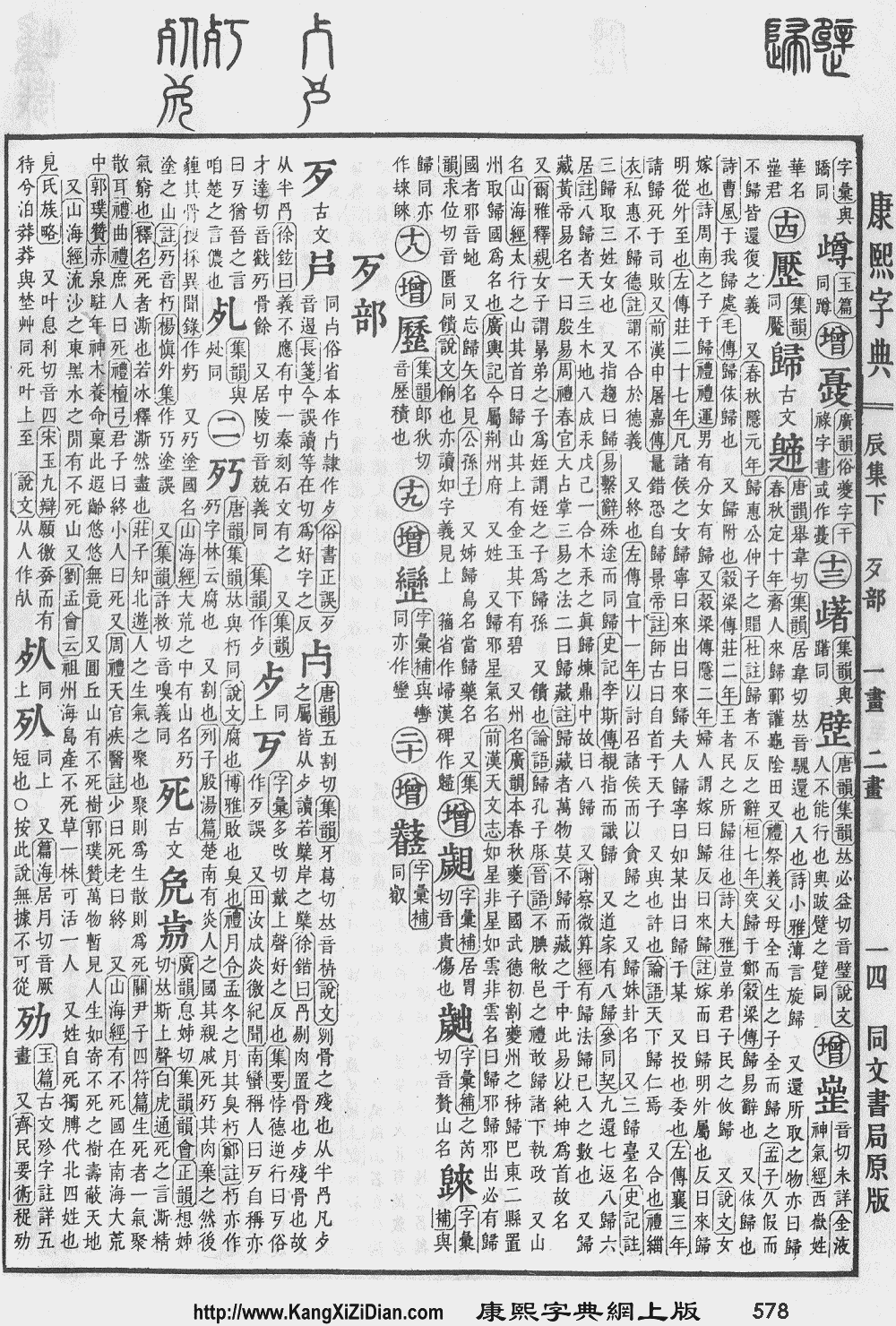
- KangXi: page 578, character 18
- Dai Kanwa Jiten: character 16362
- Dae Jaweon: page 970, character 2
- Hanyu Da Zidian (first edition): volume 2, page 1379, character 15
- Unihan data for U+6B7A
Chinese
Etymology 1
| For pronunciation and definitions of 歺 – see 歹 (“bone remnants”). (This character, 歺, is a variant form of 歹.) |
Etymology 2

| For pronunciation and definitions of 歺 – see 餐 (“to eat; meal; etc.”). (This character, 歺, is the second-round simplified form of 餐.) |
Notes:
|
Usage notes
May still be used as a shorthand.
Japanese
This article is issued from Wiktionary. The text is licensed under Creative Commons - Attribution - Sharealike. Additional terms may apply for the media files.