死
| ||||||||
Translingual
Han character
| Stroke order | |||
|---|---|---|---|
 | |||
死 (Kangxi radical 78, 歹+2, 6 strokes, cangjie input 一弓心 (MNP), four-corner 10212, composition ⿸歹匕 or ⿱一⿰夕匕)
Derived characters
References
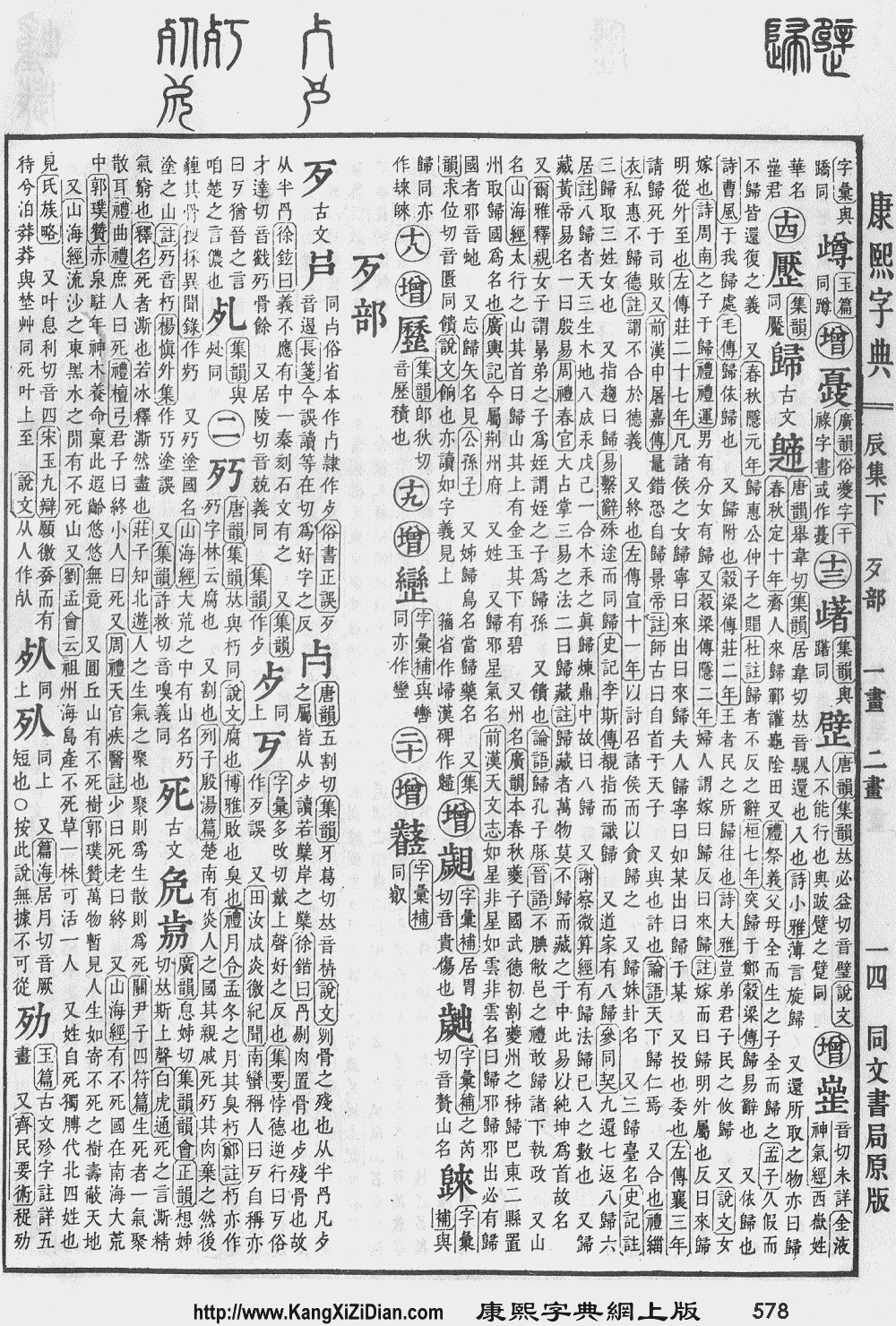
- KangXi: page 578, character 22
- Dai Kanwa Jiten: character 16365
- Dae Jaweon: page 970, character 7
- Hanyu Da Zidian (first edition): volume 2, page 1380, character 6
- Unihan data for U+6B7B
Chinese
| trad. | 死 | |
|---|---|---|
| simp. # | 死 | |
| alternative forms | ||
Glyph origin
| Historical forms of the character 死 | ||||
|---|---|---|---|---|
| Shang | Western Zhou | Warring States | Shuowen Jiezi (compiled in Han) | Liushutong (compiled in Ming) |
| Oracle bone script | Bronze inscriptions | Chu slip and silk script | Small seal script | Transcribed ancient scripts |
 |
 |
 |
 |
 |
Etymology
From Proto-Sino-Tibetan *səj.
Pronunciation
Definitions
死
- (intransitive) to die
- 必死無疑/必死无疑 ― bì sǐ wúyí ― will die without a doubt
- 食死自己 [Cantonese] ― sik6 sei2 zi6 gei2 [Jyutping] ― to "eat oneself to death" (endanger oneself with eating habits)
- 這人姓王名冕,在諸暨縣鄉村裡住。七歲上死了父親,他母親做點針黹供給他到村學堂裡去讀書。 [Written Vernacular Chinese, trad.]
- From: Wu Jingzi, The Scholars, 1750 CE
- Zhè rén xìng Wáng míng Miǎn, zài Zhūjì Xiàn xiāngcūn lǐ zhù. Qī suì shàng sǐ le fùqīn, tā mǔqīn zuò diǎn zhēnzhǐ gōnggěi tā dào cūn xuétáng lǐ qù dúshū. [Pinyin]
- (please add an English translation of this example)
这人姓王名冕,在诸暨县乡村里住。七岁上死了父亲,他母亲做点针黹供给他到村学堂里去读书。 [Written Vernacular Chinese, simp.]
- † (transitive) to die for the sake of; to sacrifice oneself for; to die together with someone
- 謀人之軍師,敗則死之。 [Classical Chinese, trad.]
- From: The Book of Rites, c. 4th – 2nd century BCE, translated based on James Legge's version
- Móu rén zhī jūn shī, bài zé sǐ zhī. [Pinyin]
- He who has given counsel to another about his army should die with it when it is defeated.
谋人之军师,败则死之。 [Classical Chinese, simp.]- 今亡亦死,舉大計亦死,等死,死國可乎? [Classical Chinese, trad.]
- From: The Records of the Grand Historian, by Sima Qian, c. 91 BCE
- Jīn wáng yì sǐ, jǔ dàjì yì sǐ, děng sǐ, sǐ guó kěhū? [Pinyin]
- At this moment, certain death awaits us no matter whether we escape as fugitives or rouse ourselves to a grand cause. One death is just as good as another; shall we not rather die for our lost fatherland?
今亡亦死,举大计亦死,等死,死国可乎? [Classical Chinese, simp.]- 貪夫徇財,烈士徇名。夸者死權,品庶每生。 [Classical Chinese, trad.]
- From: c. 174 BCE, Jia Yi (賈誼), The Owl (《鵩鳥賦》). Translated by Burton Watson.
- Tānfū xùncái, lièshì xùnmíng. Kuāzhě sǐquán, pǐnshù měishēng. [Pinyin]
- The covetous run after riches,
The impassioned pursue a fair name;
The proud die struggling for power,
While the people long only to live.
贪夫徇财,烈士徇名。夸者死权,品庶每生。 [Classical Chinese, simp.]
- inactive
- (only in compounds) deadly; fatal; killing; to the death
- (colloquial or Min Nan) very; bloody; totally
- (offensive) damned; damn
- (slang, offensive) to disappear; to go; (as in "where the hell did ... go")
- (Cantonese, Min Nan) persistently; stubbornly
- (Cantonese) screwed
- (Cantonese) awful
- (Min Nan) closely; firmly; tightly
Usage notes
- The adjective 死 ("dead, inactive, etc.") cannot be used as a predicative adjective. The sentence *這隻狗死 generally does not mean "This dog is dead". For the meaning "is dead", usually the verb 死 in the perfect aspect ("to have died") is used instead:
- The verb 死 ("to die") lacks a present meaning and denotes either past (in perfect aspect) or future (not in perfect aspect) events. It cannot be modified by the progressive aspect marker 正在 (zhèngzài) or 著/着 (zhe).
Synonyms
- (to die):
Synonyms of 死
|
|
|
Dialectal synonyms of 死 (“to die”) [map]
| Variety | Location | Words |
|---|---|---|
| Classical Chinese | 死, 亡, 歿, 卒 | |
| Formal (Written Standard Chinese) | 死, 死亡, 亡故, 喪生, 喪命, 去世 †, 過世 †, 逝世 †, 離世 †, 下世 †, 不在 †, 過去 †, 仙逝 †, 歸天 †, 歸西 †, 升天 †, 作古 †, 長眠 †, 閉眼 †, 故去 †, ‡, 故世 †, ‡, 一命嗚呼 | |
| Mandarin | Beijing | 死, 故去 †, 老 †, ‡, 毛兒提 Hui |
| Taiwan | 死, 過世 † | |
| Harbin | 死, 老 †, ‡, 伸腿兒 ¤, 伸腿 ¤, 蹬腿兒 ¤, 奔兒咕 ¤, 桿兒屁 §, 桿兒細 §, 吹燈拔蠟 | |
| Yantai (Muping) | 死, 老 †, ‡, 上西天 § | |
| Jinan | 死, 歿, 過去 †, 老 †, ‡, 不在 †, ‡, 王八 §, 完蛋, 完錢, 完活, 無常 Hui, 歸主 Hui, 歸真 Hui | |
| Luoyang | 死, 過去, 過世, 下世, 亡故, 不在, 升天, 去世 †, 老 †, ‡, 擱那兒 ¤ | |
| Wanrong | 死, 歿, 老 †, ‡ | |
| Xi'an | 死, 不在 †, 老 †, ‡, 無常 Hui | |
| Yinchuan | 死, 走 †, 歿 Hui, 歸真 Hui, 冒提 Hui, 口喚 Hui, 無常 Hui, 完 Hui | |
| Lanzhou | 死, 過世 †, 緩下 †, 躺下 † | |
| Xining | 歿 | |
| Ürümqi | 死, 過世 †, 不在 † | |
| Wuhan | 死, 過身 †, 去 †, 老 †, ‡, 去回 ¤, 翹辮子 ¤, 翹 ¤, 瓜碼子 ¤, 瓜 ¤, 西皮 | |
| Chengdu | 死, 過去 †, 不在 †, 去 †, 過世 †, 老 †, ‡, 撬桿兒 §, 撬桿 §, 翹辮子 §, 見馬克思, 歸天, 去陰國, 爬高煙囪, 落氣, 冰凊, 沒脈 | |
| Guiyang | 死, 過世 †, 成神 †, ‡, 百年歸天 †, ‡, 嗚呼 ¤ | |
| Liuzhou | 死, 沒得脈, 過世 †, 過身 †, 沒在 †, 哦嚄 | |
| Yangzhou | 死, 不在 †, 走 †, 家去吃去 ¤, 家去 ¤, 翹辮子 ¤, 翹 ¤, 駝條 § | |
| Nanjing | 死, 過世 †, 歸天 †, ‡, 不在 †, 嗝兒得 ¤, 翹辮子 ¤ | |
| Hefei | 死, 不在 †, 老 † | |
| Singapore | 死, 死掉, 死翹翹, 過世 †, 去世 †, 上天堂 †, 賣鹹鴨蛋 † | |
| Cantonese | Guangzhou | 死, 過身 †, 過世 †, 老 †, ‡, 百年歸老 †, ‡, 去別有天 †, ¤, 去大煙筒 †, ¤, 瓜 ¤, 瓜老襯 ¤, 收檔 ¤, 攞竇 ¤, 進竇 §, 瓜竇, 直, 瓜直, 死直, 攤直, 雙腳撐直, 伸直腳, 拉柴, 瓜柴, 褸席, 歸西, 歸天, 食黃泥, 入黃泥窿, 入窿, 玩完, 嫌米貴, 一 argot |
| Hong Kong | 死, 過身 †, 走 †, 香 †, 去 †, 唔喺度 †, 百年歸老 †, 賣鹹鴨蛋 †, 兩腳一伸 †, 仙遊 †, 拜拜 †, 去閻羅王處報到 †, 瓜 ¤, 瓜老襯 ¤, 拉柴, 瓜柴, 釘蓋, 釘, 直, 歸西, 玩完 | |
| Hong Kong (San Tin Weitou) | 過身 | |
| Hong Kong (Kam Tin Weitou) | 過身 | |
| Hong Kong (Ting Kok) | 過身, 死 | |
| Hong Kong (Tung Ping Chau) | 過身 | |
| Macau | 過身, 去 | |
| Guangzhou (Panyu) | 過身, 死 | |
| Guangzhou (Huashan, Huadu) | 死 | |
| Guangzhou (Conghua) | 過身, 死 | |
| Guangzhou (Zengcheng) | 去歸, 過身 | |
| Foshan | 過身, 死 | |
| Foshan (Shatou, Nanhai) | 死, 過身 | |
| Foshan (Shunde) | 過身 | |
| Foshan (Sanshui) | 過身 | |
| Foshan (Mingcheng, Gaoming) | 死 | |
| Zhongshan (Shiqi) | 過身 | |
| Zhuhai (Qianshan) | 死 | |
| Zhuhai (Doumen, Shangheng Tanka) | 過身, 死 | |
| Zhuhai (Doumen) | 死, 過身 | |
| Jiangmen (Baisha) | 過身, 死 | |
| Jiangmen (Xinhui) | 死, 過身 | |
| Taishan | 死, 善, 去 | |
| Kaiping (Chikan) | 死, 登仙 | |
| Enping (Niujiang) | 過身, 死 | |
| Heshan (Yayao) | 死 | |
| Dongguan | 死, 老 †, 去返 †, 去舊時嗰處 †, 視埋眼 †, 伸直腳 †, 入罌 †, 拉柴 §, 去大煙筒 § | |
| Shenzhen (Shajing, Bao'an) | 死, 過身 | |
| Yangjiang | 死, 過輩 †, 老 †, ‡, 老大 †, ‡ | |
| Singapore (Guangfu) | 死, 過身 † | |
| Gan | Nanchang | 死, 過世 †, 老 † |
| Lichuan | 死 | |
| Pingxiang | 死, 過 †, 走路 †, 老 †, ‡, 去 | |
| Hakka | Meixian | 死, 老, 過身 †, 老壽 †, ‡ |
| Huizhou (Huicheng Bendihua) | 過身 | |
| Dongguan (Qingxi) | 過身, 死 | |
| Shenzhen (Shatoujiao) | 死, 過身 | |
| Zhongshan (Nanlang Heshui) | 死 | |
| Conghua (Lütian) | 死, 過身 | |
| Yudu | 死, 過世 †, 過套 †, 過身 †, 轉去 †, 轉該背 †, 歸仙 †, 轉老外婆裡 ¤ | |
| Miaoli (N. Sixian) | 死, 過身 †, 往生 † | |
| Pingtung (Neipu; S. Sixian) | 死, 過身 †, 往生 † | |
| Hsinchu County (Zhudong; Hailu) | 死, 過身 †, 往生 † | |
| Taichung (Dongshi; Dabu) | 死, 過身 †, 往生 † | |
| Hsinchu County (Qionglin; Raoping) | 死, 過身 †, 往生 † | |
| Yunlin (Lunbei; Zhao'an) | 死, 過身 † | |
| Hong Kong | 過身, 老 | |
| Huizhou | Jixi | 死, 過世 †, 過輩 †, 過身 †, 不在 †, 過老 §, 過邊 §, 進棺材 §, 進風水 §, 翹扁 §, ¤ |
| Jin | Taiyuan | 死, 沒啦 †, 走 †, 過去 †, 老 †, ‡, 老客 †, ‡ |
| Xinzhou | 死, 回老家 †, 硬 §, 㞗朝天 of a man, vulgar, 倒蕎麥皮 | |
| Min Bei | Jian'ou | 死, 過身 †, 老 †, ‡ |
| Min Dong | Fuzhou | 死, 過去 †, 過世 †, 過後 †, 歸西 †, 百歲 †, 老去 †, ‡, 堯街去 ¤, 堯生去 ¤, 溜翹 ¤, 殂 ¤, 去算米數 ¤, 去外媽食齋 ¤, 去外媽 ¤, 去䁐廬山 ¤, 去厝去 ¤, 睏長暝眠 ¤, 翹齋 ¤, 揭兜去 ¤, 拔直去 ¤, 上天去 ¤, 生去 ¤, 𣪟去 ¤, 䁐松柏樹 ¤, 䁐松柏 ¤, 轉祖 § |
| Min Nan | Xiamen | 死, 過身 †, 過氣 †, 百歲 †, 百年 †, 百歲年老 †, 行去 †, 無去 †, 㾀 †, 老去 †, ‡, 老咯 †, ‡, 蟯 ¤, 蟯歹 ¤, 蟯癱 ¤, 行雞 ¤, 馬滴 § |
| Quanzhou | 死, 過身 †, 過氣 †, 百歲 †, 百年 †, 無去 †, 老去 †, ‡, 老咯 †, ‡, 行雞 ¤, 馬滴 § | |
| Zhangzhou | 死, 過身 †, 過氣 †, 百歲 †, 百年 †, 百歲年老 †, 行去 †, 無去 †, 起身 †, 老去 †, ‡, 老咯 †, ‡, 蟯 ¤, 蟯歹 ¤, 蟯癱 ¤, 行雞 ¤, 誆牽 §, 㾀 §, 㾀歹 §, 馬滴 § | |
| Taipei | 死去, 老 †, 過身 † | |
| New Taipei (Sanxia) | 死去, 老去 †, 往生 †, 過身 † | |
| Kaohsiung | 死去, 老去 †, 行去 †, 往生 †, 無佇咧 †, 過身 †, 轉去 † | |
| Yilan | 死去, 老去 †, 往生 †, 無佇咧 †, 過身 †, 過往 † | |
| Changhua (Lukang) | 死去, 老 †, 無去 †, 過身 †, 轉去 † | |
| Taichung | 死去, 往生 †, 過身 † | |
| Tainan | 死去, 老去 †, 行去 †, 往生 †, 無佇咧 †, 過身 †, 轉去 † | |
| Hsinchu | 曲去, 去咯 †, 往生 †, 過身 †, 老去 † | |
| Kinmen | 死去, 往生 †, 過身 †, 行去 † | |
| Penghu (Magong) | 死去, 往生 †, 過身 †, 老去 † | |
| Singapore (Hokkien) | 死, 馬滴, 死翹翹, 過身 †, 百年 †, 百歲 †, 過氣 †, 起車 †, 老去 †, 老咯 †, 行去 †, 蟯去 †, 吭跤翹, 交登記 † | |
| Manila (Hokkien) | 死, 死去, 過面 †, 過身 † | |
| Chaozhou | 死, 過身 † | |
| Jieyang | 過身, 吭跤翹, 吭翹 | |
| Singapore (Teochew) | 死, 過身 | |
| Leizhou | 死, 過世 †, 過輩 †, 過目焗 ¤, 直筒 §, 刮薯減米 § | |
| Haikou | 死, 過層 †, ‡, 老 †, ‡, 貓使 § | |
| Singapore (Hainanese) | 死 | |
| Zhongshan Min | Shaxi (Longdu) | 死 |
| Southern Pinghua | Nanning (Tingzi) | 死, 瓜老襯, 過世, 歸西 |
| Wu | Shanghai | 死, 故 †, 過世 †, 嘸沒 †, 一腳去 †, 翹辮子 §, ¤, 彈老三 §, 翹老三 § |
| Shanghai (Chongming) | 死, 老 †, 故 †, 翹辮子 ¤ | |
| Suzhou | 死, 壞, 去, 過世 †, 翹辮子 § | |
| Danyang | 死 | |
| Hangzhou | 死, 故 †, 過世 †, 翹辮兒 ¤, 到龍駒塢去 | |
| Ningbo | 死, 翹辮子 §, 過世 †, 嘸沒 †, 死脫 §, 燂茶, 山裡去, 吃豆腐羹, 嘸沒來的 † | |
| Wenzhou | 死, 冇 †, 過輩 †, ‡, 蹻 ¤ | |
| Jinhua | 死, 過世 †, 過輩 †, 弗在 †, 老 †, ‡ | |
| Xiang | Changsha | 死, 過 †, 去 †, 瓜, 彈, 彈四郎 |
| Loudi | 死, 過世 †, 故 †, 上岸 † | |
| Shuangfeng | 死, 過世 †, 故 † | |
| Note | † - euphemistic; ‡ - usually of the elderly; ¤ - humorous; § - derogatory/disrespectful | |
Antonyms
- (to die): 活 (huó)
See also
- (intensifier) 鬼 (guǐ)
Compounds
Derived terms from 死
|
|
|
Descendants
Others:
References
- “死”, in 漢語多功能字庫 (Multi-function Chinese Character Database), 香港中文大學 (the Chinese University of Hong Kong), 2014–
- Dictionary of Chinese Character Variants (教育部異體字字典), A02077
Japanese
Etymology
| Kanji in this term |
|---|
| 死 |
| し Grade: 3 |
| on’yomi |
/si/ → /ɕi/
Appears to be a conflation of Middle Chinese 死 (MC sˠiɪX), with an Old Japanese root that happened to have a similar pronunciation to the Middle Chinese and was probably cognate with 去る (saru, “to go, to go away”). Compare modern Mandarin 死 (sǐ).
In kanji compounds, this would be considered as on'yomi; but on its own, this could be considered as either on'yomi or kun'yomi.
Noun
死 • (shi)
- death
- 1925, Ryūnosuke Akutagawa, Aphorisms by a pygmy
- 死に至る病
- Shi ni Itaru Yamai
- The Sickness Unto Death
- Antonym: 生 (sei)
- (law, historical) one of the five punishments under the 律令 (Ritsuryō) system, the methods used are 絞 (kō, “strangling”) and 斬 (zan, “decapitation”)
Derived terms
Affix
死 • (shi)
Derived terms
Derived terms
- 死因 (shīn, “cause of death”)
- 死王 (shiō, “dead king”)
- 死王 (Shiō, “Buddhist king of the dead”)
- 死火 (shika)
- 死花 (shika, “paper flowers used for a funeral”)
- 死貨 (shika)
- 死海 (Shikai)
- 死灰 (shikai, “cold, dead ashes; ashes remaining after cremation”)
- 死界 (shikai, “underworld, world of the dead; blind spot, somewhere out of view”)
- 死骸 (shigai)
- 死角 (shikaku)
- 死学 (shigaku, “field of study that has no practical use”)
- 死活 (shikatsu)
- 死期 (shiki, “time of death, moment of one's death”)
- 死球 (shikyū)
- 死去 (shikyo)
- 死境 (shikyō, “one's place of death; deadly place”)
- 死菌 (shikin, “dead bacterium or inactive virus used as the basis for a vaccine”)
- 死句 (shiku, “plain phrase or line in a poem, containing no implied meanings; ascetic's unsaid words or phrases, due to mental mistakes”)
- 死苦 (shiku, “sufferings of death”)
- 死刑 (shikei)
- 死結 (shiketsu)
- 死期 (shigo)
- 死後 (shigo)
- 死語 (shigo)
- 死罪 (shizai)
- 死屍 (shishi)
- 死者 (shisha)
- 死守 (shishu)
- 死所 (shisho, “place of death, place where one dies”)
- 死傷 (shishō)
- 死生 (shishō)
- 死生 (shisei)
- 死線 (shisen)
- 死相 (shisō)
- 死蔵 (shizō, “putting something away and never using it”)
- 死地 (shichi)
- 死闘 (shitō)
- 死人 (shinin)
- 死者 (shisha)
- 死体 (shitai)
- 死物 (shibutsu)
- 死文 (shibun, “dead law, law that is on the books but never enforced; document that is purely formal and empty of meaning”)
- 死別 (shibetsu)
- 死亡 (shibō)
- 死没 (shibotsu)
- 死命 (shimei)
- 死滅 (shimetsu)
- 死霊 (shiryō)
- 死力 (shiryoku)
- 死霊 (shirei)
- 仮死 (kashi)
- 決死 (kesshi)
- 頓死 (tonshi)
- 二死 (nishi)
- 瀕死 (hinshi)
- 不死 (fushi)
Korean
Etymology
From Middle Chinese 死 (MC sˠiɪX).
| Historical Readings | ||
|---|---|---|
| Dongguk Jeongun Reading | ||
| Dongguk Jeongun, 1448 | ᄉᆞᆼ〯 (Yale: sǒ) | |
| Middle Korean | ||
| Text | Eumhun | |
| Gloss (hun) | Reading | |
| Hunmong Jahoe, 1527 | 주글〮 (Yale: cwùkúl) | ᄉᆞ〯 (Yale: sǒ) |
Pronunciation
- (SK Standard/Seoul) IPA(key): [sʰa̠(ː)]
- Phonetic hangul: [사(ː)]
- Though still prescribed in Standard Korean, most speakers in both Koreas no longer distinguish vowel length.
Compounds
Okinawan
Old Japanese
Etymology
Appears to be a conflation of an s- root cognate with 去る (saru, “to go, go away”) and Middle Chinese 死 (MC sˠiɪX).
Noun
死 (si) (kana し)
- death
- c. 759, Man'yōshū (book 5, preface to poem 897: melancholic poem by Yamanoue no Okura)
- 帛公略說曰:「伏思自勵,以斯長生。生可レ貪也,死可レ畏也。...」
- (please add an English translation of this usage example)
- c. 759, Man'yōshū (book 5, preface to poem 897: melancholic poem by Yamanoue no Okura)
Derived terms
- 死ぬ (sinu)
Descendants
- Japanese: 死 (shi)
This article is issued from Wiktionary. The text is licensed under Creative Commons - Attribution - Sharealike. Additional terms may apply for the media files.