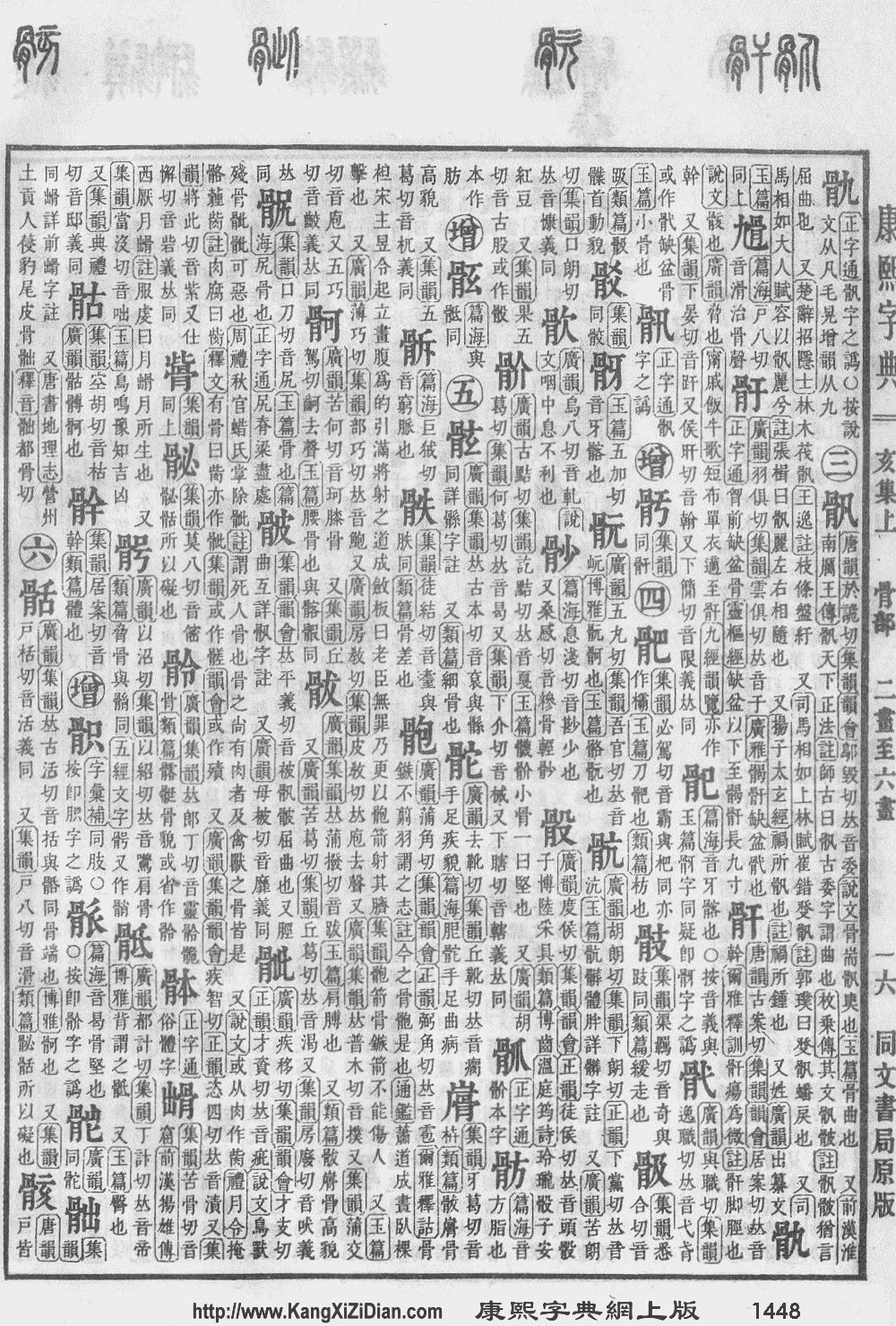
䯊

䯊 U+4BCA, 䯊
CJK UNIFIED IDEOGRAPH-4BCA
← 䯉
[U+4BC9]
CJK Unified Ideographs Extension A 䯋 →
[U+4BCB]

Translingual

Han character

䯊 (Kangxi radical 188, 骨+5, 15 strokes, cangjie input 月月一弓口 (BBMNR), composition ⿰骨可)

References

Chinese

trad. 䯊
simp. # 䯊

Glyph origin

Phono-semantic compound (形聲) : semantic 骨 (“bone”) + phonetic 可 (OC *kʰaːlʔ).

Pronunciation


Note: The zero initial /∅-/ is commonly pronounced with a ng-initial /ŋ-/ in some varieties of Cantonese, including Hong Kong Cantonese.

Rime
Character 䯊
Reading # 1/1
Initial (聲) 溪 (29)
Final (韻) 歌 (94)
Tone (調) Level (Ø)
Openness (開合) Open
Division (等) I
Fanqie 苦何切
Reconstructions
Zhengzhang
Shangfang
/kʰɑ/
Pan
Wuyun
/kʰɑ/
Shao
Rongfen
/kʰɑ/
Edwin
Pulleyblank
/kʰa/
Li
Rong
/kʰɑ/
Wang
Li
/kʰɑ/
Bernard
Karlgren
/kʰɑ/
Expected
Mandarin
Reflex
kē
Expected
Cantonese
Reflex
ho1

Definitions

䯊

  1. pelvis
  2. bone stuck in the throat
  3. kneecap, patella
  4. the five lowest pieces of bone of the spinal column

Japanese

Kanji

䯊

(uncommon “Hyōgai” kanji)

Readings

  • Go-on: く (ku)
  • Kan-on: こ (ko)
  • Kun: かわら (kawara)

Definitions

Kanji in this term
䯊
かわら
Hyōgaiji
kun’yomi
For pronunciation and definitions of 䯊 – see the following entry.
【骨かわら】6
[noun] (archaic, rare) a bone, particularly a covering bone such as a skull or kneecap
(This term, 䯊, is an alternative (rare) spelling of the above term.)
This article is issued from Wiktionary. The text is licensed under Creative Commons - Attribution - Sharealike. Additional terms may apply for the media files.