埿
| ||||||||
Translingual
Han character
埿 (Kangxi radical 32, 土+8, 11 strokes, cangjie input 水心土 (EPG), four-corner 37104, composition ⿱泥土)
References
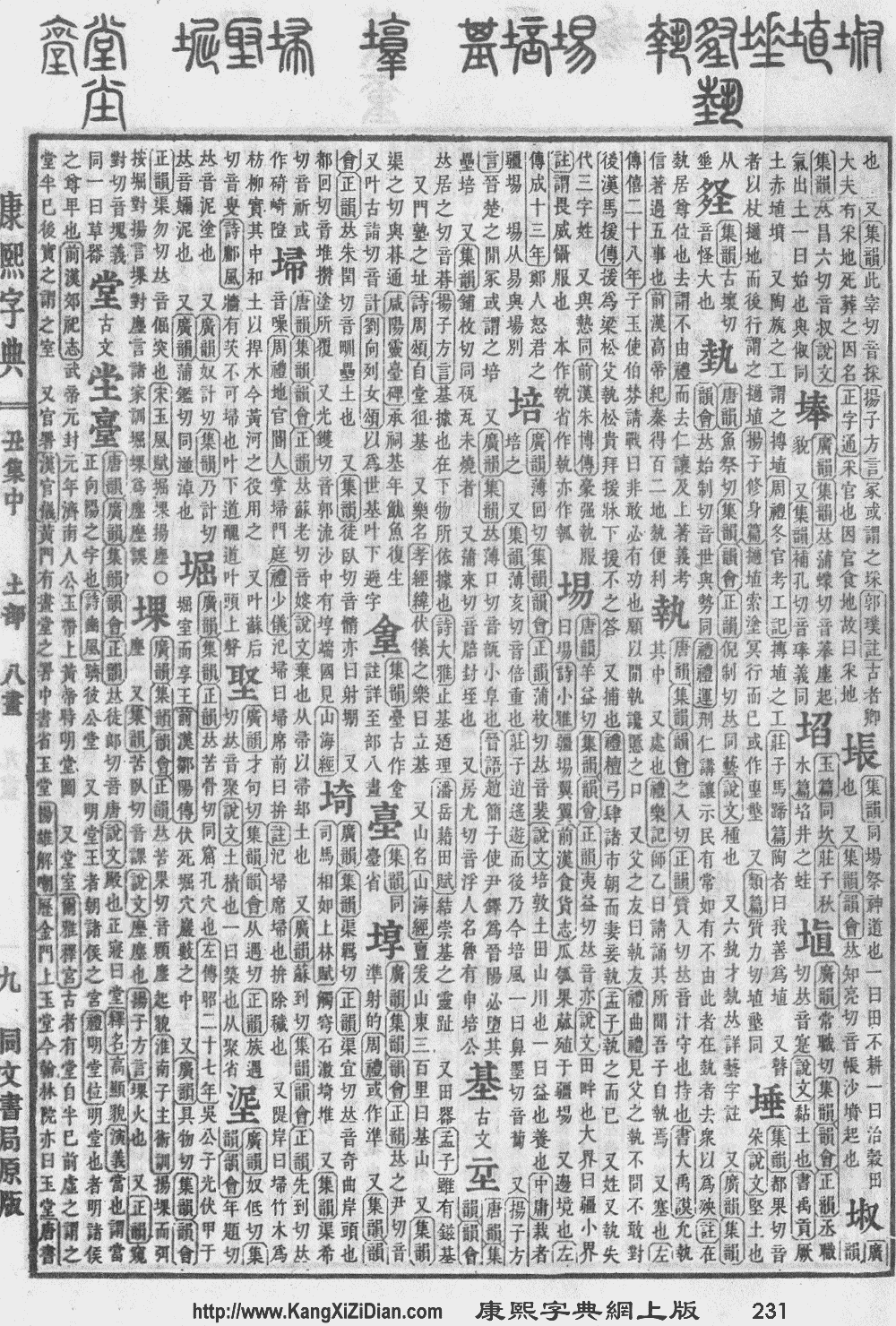
- KangXi: page 231, character 20
- Dai Kanwa Jiten: character 5204
- Dae Jaweon: page 468, character 12
- Hanyu Da Zidian (first edition): volume 1, page 458, character 2
- Unihan data for U+57FF
Chinese
Glyph origin
Japanese
Readings
(Can we verify(+) this pronunciation?)
As a variant/ancient form of 泥:
As a variant form of 湴:
- Go-on: ばん (ban)←ばん (ban, historical)←ばむ (bamu, ancient)
- Kan-on: はん (han)←はん (fan, historical)←はむ (famu, ancient)
Readings shared by both forms:
- Kun: うき (uki, 埿); ひじ (hiji, 埿)←ひぢ (fidi, 埿, historical)
Etymology 1
| Kanji in this term |
|---|
| 埿 |
| ひじ Hyōgaiji |
| kun’yomi |
Derived terms
- 埿土 (uiji)
Etymology 2
| Kanji in this term |
|---|
| 埿 |
| うき Hyōgaiji |
| kun’yomi |
This article is issued from Wiktionary. The text is licensed under Creative Commons - Attribution - Sharealike. Additional terms may apply for the media files.