嫗
See also: 妪
| ||||||||
Translingual
Han character
嫗 (Kangxi radical 38, 女+11, 14 strokes, cangjie input 女尸口口 (VSRR), four-corner 41416, composition ⿰女區)
Descendants
References
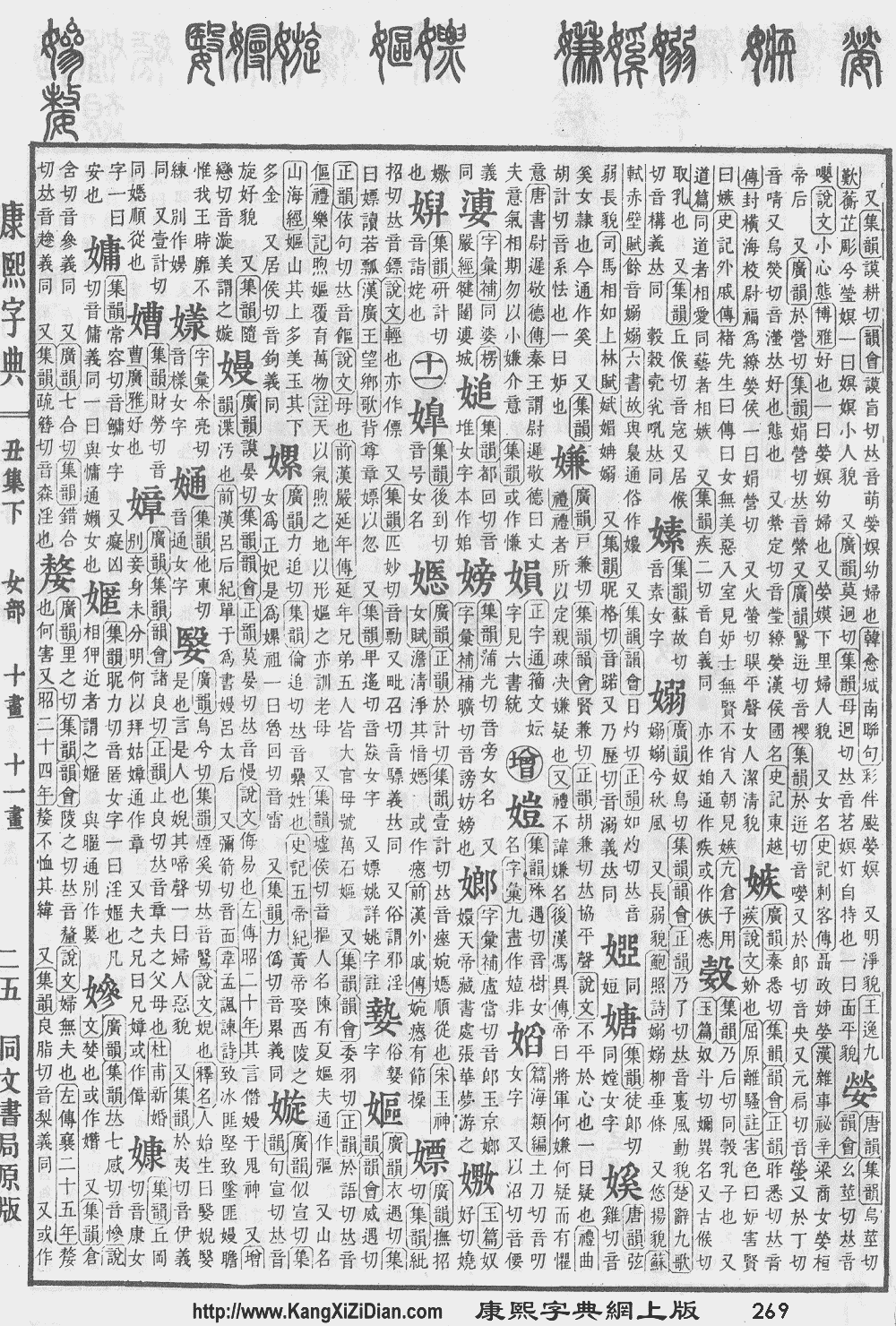
- KangXi: page 269, character 23
- Dai Kanwa Jiten: character 6640
- Dae Jaweon: page 537, character 13
- Hanyu Da Zidian (first edition): volume 2, page 1076, character 4
- Unihan data for U+5AD7
Chinese
| trad. | 嫗 | |
|---|---|---|
| simp. | 妪 | |
Glyph origin
| Historical forms of the character 嫗 |
|---|
| Shuowen Jiezi (compiled in Han) |
| Small seal script |
 |
Characters in the same phonetic series (區) (Zhengzhang, 2003)
Phono-semantic compound (形聲, OC *qos) : semantic 女 (“woman”) + phonetic 區 (OC *qoː, *kʰo).
Etymology
From Proto-Sino-Tibetan *ʔu (“egg; bird”).
Pronunciation 1 is a departing tone derivation from pronunciation 2, literally "the one who is breeding" (Schuessler, 2007).
Pronunciation 1
Compounds
Pronunciation 2
Definitions
嫗
Compounds
|
|
|
References
- “嫗”, in 漢語多功能字庫 (Multi-function Chinese Character Database), 香港中文大學 (the Chinese University of Hong Kong), 2014–
Japanese
Alternative forms
Etymology
Originally /omi1na/. Likely realized as [omina] (see Jōdai Tokushu Kanazukai). The initial /o/ expressed "grown, large" and contrasted with /wo/ "young, youth" found in womina "woman". Contrasts with 翁 (okina).
Vietnamese
This article is issued from Wiktionary. The text is licensed under Creative Commons - Attribution - Sharealike. Additional terms may apply for the media files.