孋
| ||||||||
Translingual
Han character
孋 (Kangxi radical 38, 女+19, 22 strokes, cangjie input 女一一心 (VMMP), four-corner 41411, composition ⿰女麗)
Descendants
References
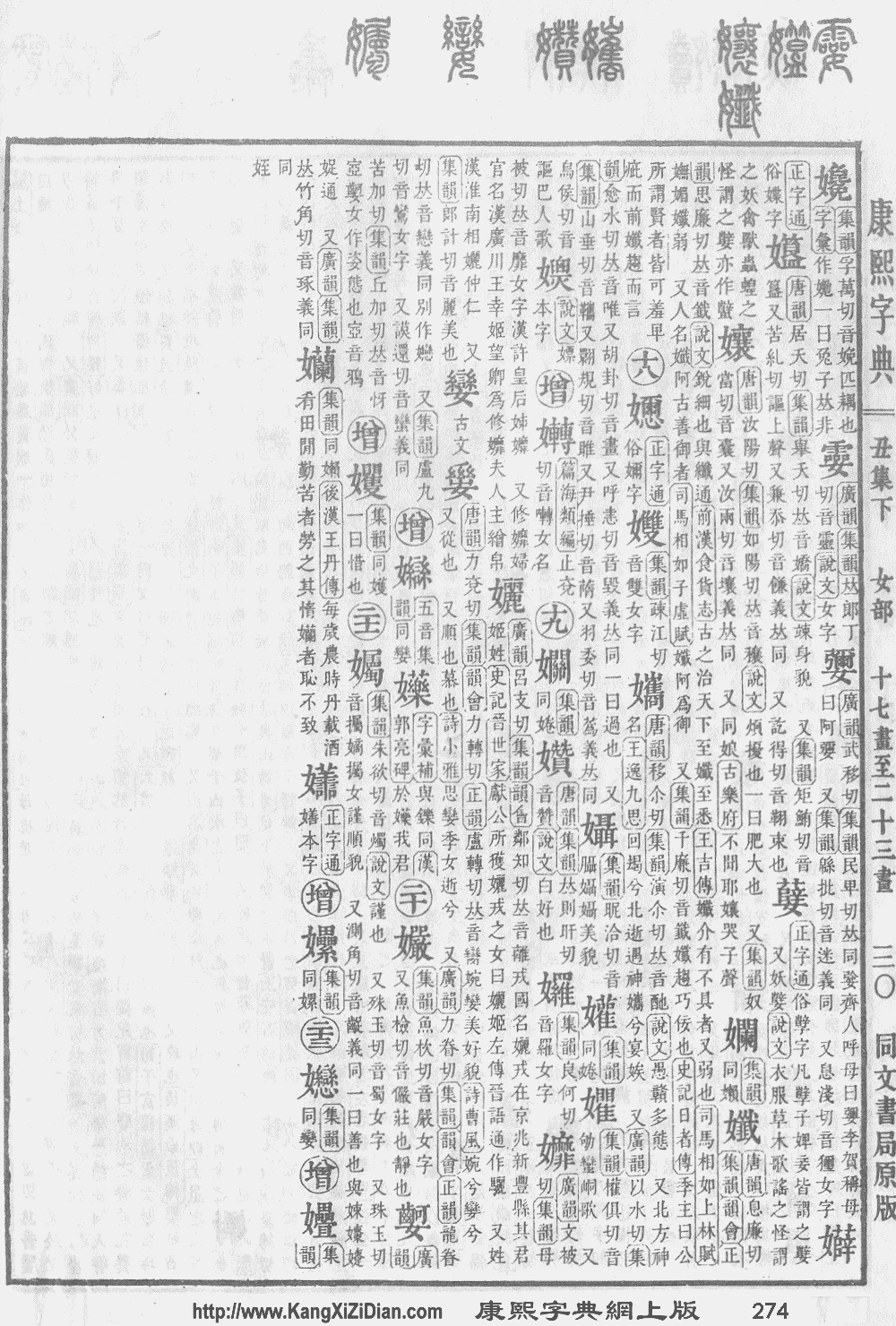
- KangXi: page 274, character 22
- Dai Kanwa Jiten: character 6911
- Dae Jaweon: page 542, character 40
- Hanyu Da Zidian (first edition): volume 2, page 1091, character 5
- Unihan data for U+5B4B
Chinese
| trad. | 孋 | |
|---|---|---|
| simp. | 㛤 | |
Glyph origin
Characters in the same phonetic series (丽) (Zhengzhang, 2003)
| Old Chinese | |
|---|---|
| 灑 | *sreːlʔ, *sreːlʔ, *srelʔ, *srels |
| 籭 | *sreːl, *srel |
| 躧 | *sreːlʔ, *srelʔ |
| 曬 | *sreːls, *srels |
| 廲 | *reːl |
| 驪 | *reːl, *rel |
| 鱺 | *reːlʔ |
| 欐 | *reːlʔ, *reːls, *srel |
| 丽 | *reːls |
| 麗 | *reːls, *rel |
| 儷 | *reːls |
| 鸝 | *rel |
| 酈 | *rel, *reːɡ |
| 孋 | *rel |
| 矖 | *rel, *srelʔ |
| 穲 | *rel |
| 邐 | *relʔ |
| 彲 | *r̥ʰel |
| 釃 | *srel, *srelʔ, *sra |
| 襹 | *srel, *srels |
| 纚 | *srelʔ |
Pronunciation 1
Pronunciation 2
Japanese
Kanji
孋
- This term needs a translation to English. Please help out and add a translation, then remove the text
{{rfdef}}.
This article is issued from Wiktionary. The text is licensed under Creative Commons - Attribution - Sharealike. Additional terms may apply for the media files.