尯
| ||||||||
Translingual
Han character
尯 (Kangxi radical 43, 尢+6, 9 strokes, cangjie input 大山弓一山 (KUNMU), composition ⿺尢危)
Further reading
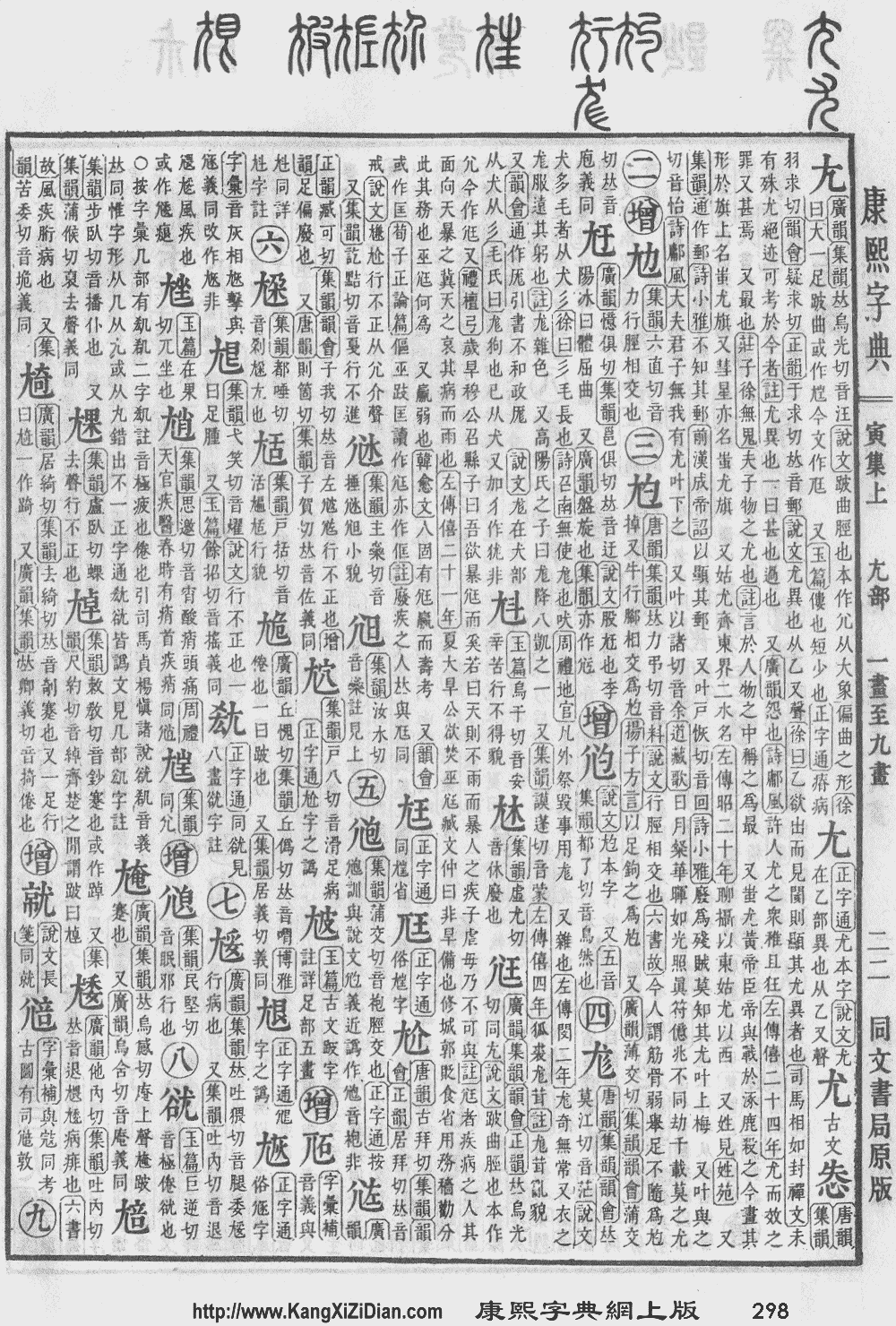
- KangXi: page 298, character 25
- Dai Kanwa Jiten: character 7574
- Dae Jaweon: page 593, character 31
- Hanyu Da Zidian (first edition): volume 1, page 554, character 9
- Unihan data for U+5C2F
Chinese
| simp. and trad. |
尯 | |
|---|---|---|
| alternative forms | 𡯵 𣧼 𥎾 | |
Glyph origin
Phono-semantic compound (形聲) : semantic 尢 (“lame”) + phonetic 危 (OC *ŋrol).
Pronunciation 1
Pronunciation 2
Japanese
Kanji
尯
- This term needs a translation to English. Please help out and add a translation, then remove the text
{{rfdef}}.
Korean
Hanja
尯 (eumhun 고달플 귀 (godalpeul gwi))
尯 (eumhun 고달플 위 (godalpeul wi))
- This term needs a translation to English. Please help out and add a translation, then remove the text
{{rfdef}}.
References
This article is issued from Wiktionary. The text is licensed under Creative Commons - Attribution - Sharealike. Additional terms may apply for the media files.