危
| ||||||||
Translingual
| Stroke order | |||
|---|---|---|---|
 | |||
Han character
危 (Kangxi radical 26, 卩+4, 6 strokes, cangjie input 弓一尸山 (NMSU), four-corner 27212, composition ⿸厃㔾)
Derived characters
References
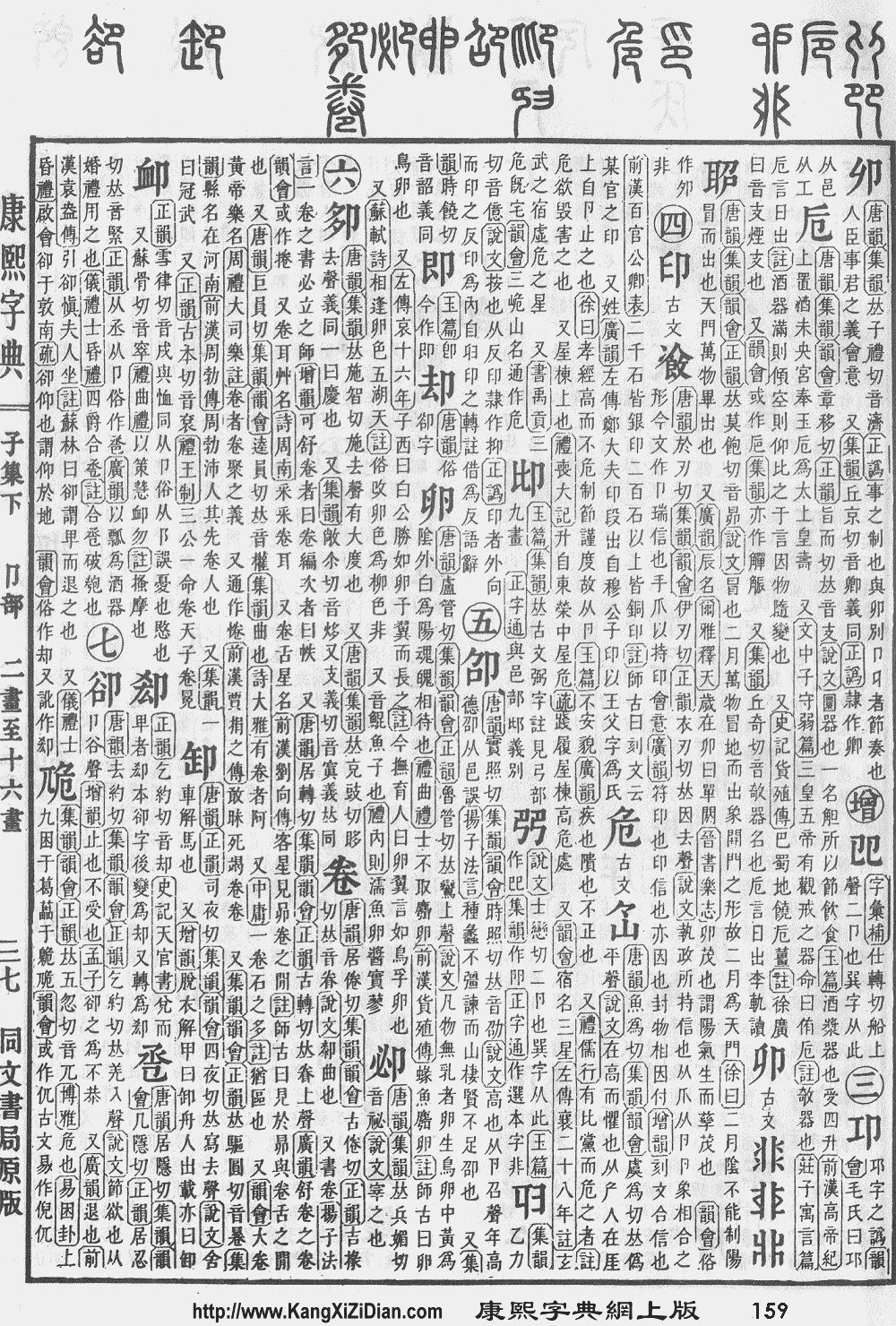
- KangXi: page 159, character 12
- Dai Kanwa Jiten: character 2849
- Dae Jaweon: page 364, character 1
- Hanyu Da Zidian (first edition): volume 1, page 312, character 3
- Unihan data for U+5371
Chinese
| simp. and trad. |
危 | |
|---|---|---|
| alternative forms | 厃 𡴲 𡵁 𡴸 | |
Glyph origin
| Historical forms of the character 危 | ||
|---|---|---|
| Shang | Shuowen Jiezi (compiled in Han) | Liushutong (compiled in Ming) |
| Oracle bone script | Small seal script | Transcribed ancient scripts |
 |
 |
 |
Ideogrammic compound (會意) : 厃 (“person on a cliff or mountain”) + 卩 (“kneeling person”).
Written like 𡴲 during the Warring States period, an ideogrammic compound (會意) : 人 (“person”) + 山 (“mountain”).
Etymology
Starostin reconstructs Proto-Sino-Tibetan *ŋō̆j (~-ō̆l) (“high, rise”) and compares 危 to Burmese ငွား (ngwa:, “be large, great, be high, to project prominently above and beyond others”), Jingpho [script needed] (ŋoi, “to rise, as a hill”); & possibly Proto-Kiranti *ŋo-.
Schuessler (2007) notes that Chinese and Written Burmese can be reconciled by assuming an ST final *-l; furthermore, 危 (OC *ŋoi) may be a vocalic variant of 巍 (OC *ŋui), which in turn is related to 魏 (OC *ŋuih).
Pronunciation 1
Definitions
危
- dangerous
- (literary) precarious; high
- 危峰 ― wēifēng ― towering peak
- dying
- (literary) upright; proper
- 正襟危坐 ― zhèngjīnwēizuò ― to sit straight solemnly
- to endanger; to put in danger
- 危及 ― wēijí ― to endanger
- to fear; to be uneasy
- 人人自危 ― rénrénzìwēi ― everyone feels insecure
- (literary) roof
- (~宿) (astronomy) the Roof, a Chinese constellation near Aquarius and Pegasus
- (Internet slang, ACG) Danger! (Used usually alone by one to warn or tell other participants or viewers of a video, video game, etc. that one or several persons or things are right in danger and dying for help. Originated from a video game.)
- a surname
Compounds
|
|
|
Pronunciation 2
| For pronunciation and definitions of 危 – see 懸 (“(Teochew) high; tall”). (This character, 危, is a variant form of 懸.) |
References
- “危”, in 漢語多功能字庫 (Multi-function Chinese Character Database), 香港中文大學 (the Chinese University of Hong Kong), 2014–
Japanese
| Shinjitai | 危 | |
| Kyūjitai [1][2] |
危󠄁 危+ 󠄁?(Adobe-Japan1) |
 |
| 危󠄄 危+ 󠄄?(Hanyo-Denshi) (Moji_Joho) | ||
| The displayed kanji may be different from the image due to your environment. See here for details. | ||
Readings
- Go-on: ぎ (gi)←ぎ (gi, historical)←ぐゐ (gwi, ancient)
- Kan-on: ぎ (gi)←ぎ (gi, historical)←ぐゐ (gwi, ancient)
- Kan’yō-on: き (ki, Jōyō)
- Kun: あぶない (abunai, 危ない, Jōyō); あやうい (ayaui, 危うい, Jōyō)←あやふし (ayafusi, 危ふし, historical); あやぶむ (ayabumu, 危ぶむ, Jōyō); あやめる (ayameru, 危める); けわしい (kewashī, 危しい)←けはし (kefasi, 危し, historical)