彝
| ||||||||
Translingual
Han character
彝 (Kangxi radical 58, 彐+15, 18 strokes, cangjie input 女一火火廿 (VMFFT), four-corner 27449, composition ⿳彑⿰米糸廾)
References
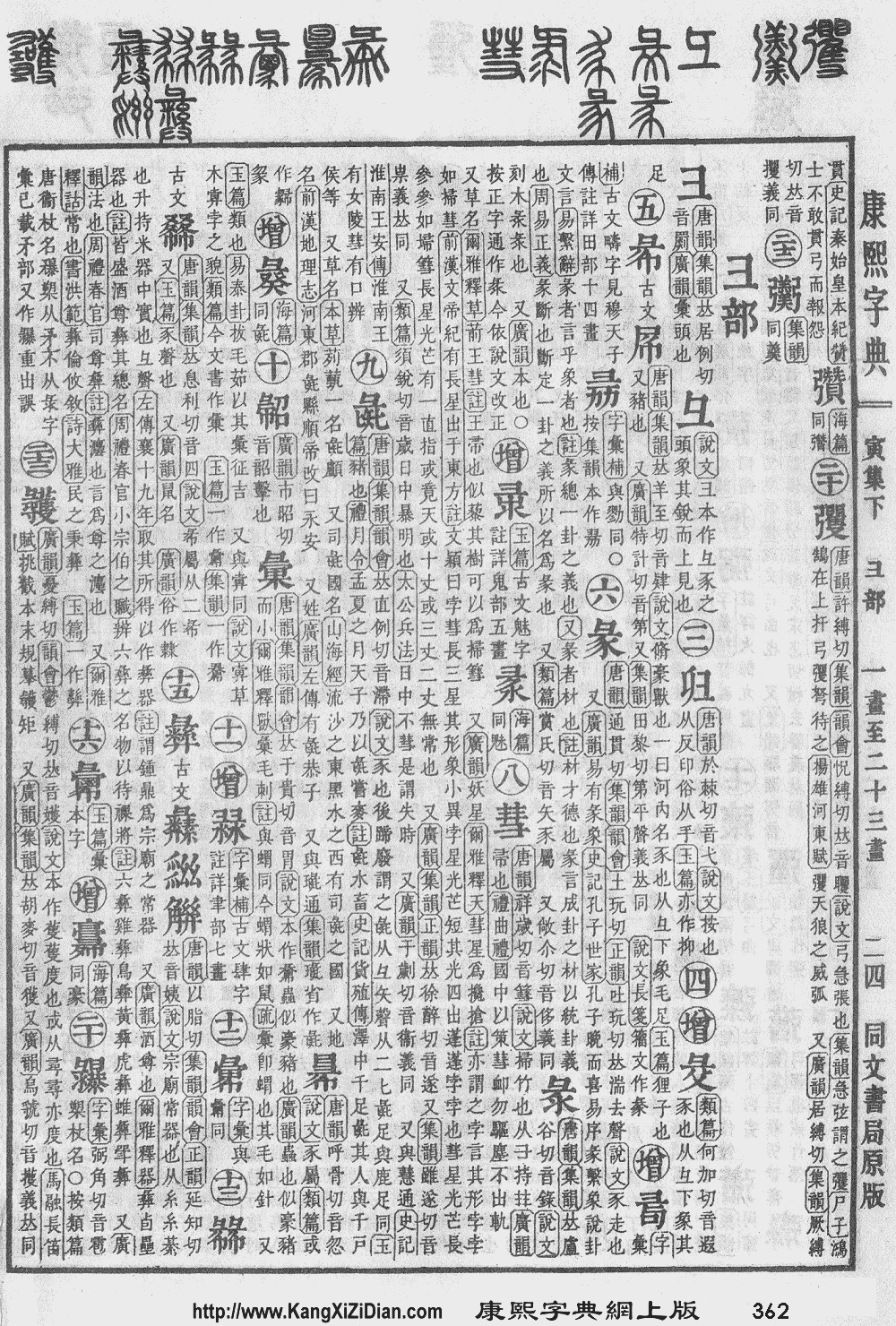
- KangXi: page 362, character 26
- Dai Kanwa Jiten: character 9950
- Hanyu Da Zidian (first edition): volume 2, page 962, character 18
- Unihan data for U+5F5D
Chinese
| trad. | 彝 | |
|---|---|---|
| simp. # | 彝 | |
| alternative forms | ||
Glyph origin
| Historical forms of the character 彝 | |||
|---|---|---|---|
| Shang | Western Zhou | Shuowen Jiezi (compiled in Han) | Liushutong (compiled in Ming) |
| Oracle bone script | Bronze inscriptions | Small seal script | Transcribed ancient scripts |
 |
 |
 |
 |
Ideogrammic compound (會意) and phono-semantic compound (形聲, OC *li) : phonetic 彑 (OC *krads, “head”) + semantic 米 (“rice”) + semantic 糸 (“silk”) + semantic 廾 (“two hands”) – a bird or slave with its wings or hands tied, offered for sacrifice with two hands. The bird or slave's head is represented by 彑, the body now by 米 (no connection to “rice”), the string that ties the wings or hands by 糸, and the two hands by 廾. The 彑 component is stated to be a phonetic in Shuowen.
Pronunciation
Definitions
彝
Compounds
References
- “彝”, in 漢語多功能字庫 (Multi-function Chinese Character Database), 香港中文大學 (the Chinese University of Hong Kong), 2014–
Japanese
Noun
彝 • (i)
Korean
Hanja
彝 (eum 이 (i))
- This term needs a translation to English. Please help out and add a translation, then remove the text
{{rfdef}}.
Vietnamese
Han character
- This term needs a translation to English. Please help out and add a translation, then remove the text
{{rfdef}}.
References
This article is issued from Wiktionary. The text is licensed under Creative Commons - Attribution - Sharealike. Additional terms may apply for the media files.