糸
| ||||||||
| ||||||||
Translingual
| Traditional | 絲 |
|---|---|
| Shinjitai | 糸 |
| Simplified | 丝 |
| Japanese | 糸 |
|---|---|
| Simplified | 糸 |
| Traditional | 糸 |
| Stroke order | |||
|---|---|---|---|
 | |||
| Stroke order | |||
|---|---|---|---|
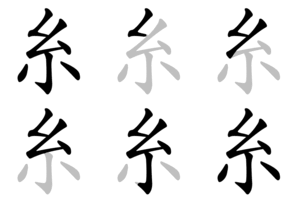 | |||
| Stroke order (alternative) | |||
|---|---|---|---|
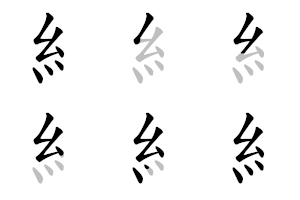 | |||
Han character
糸 (Kangxi radical 120, 糸+0, 6 strokes, cangjie input 女戈火 (VIF), four-corner 22903, composition ⿱幺小)
- Kangxi radical #120, ⽷.
- Shuōwén Jiězì radical №467
Derived characters
References
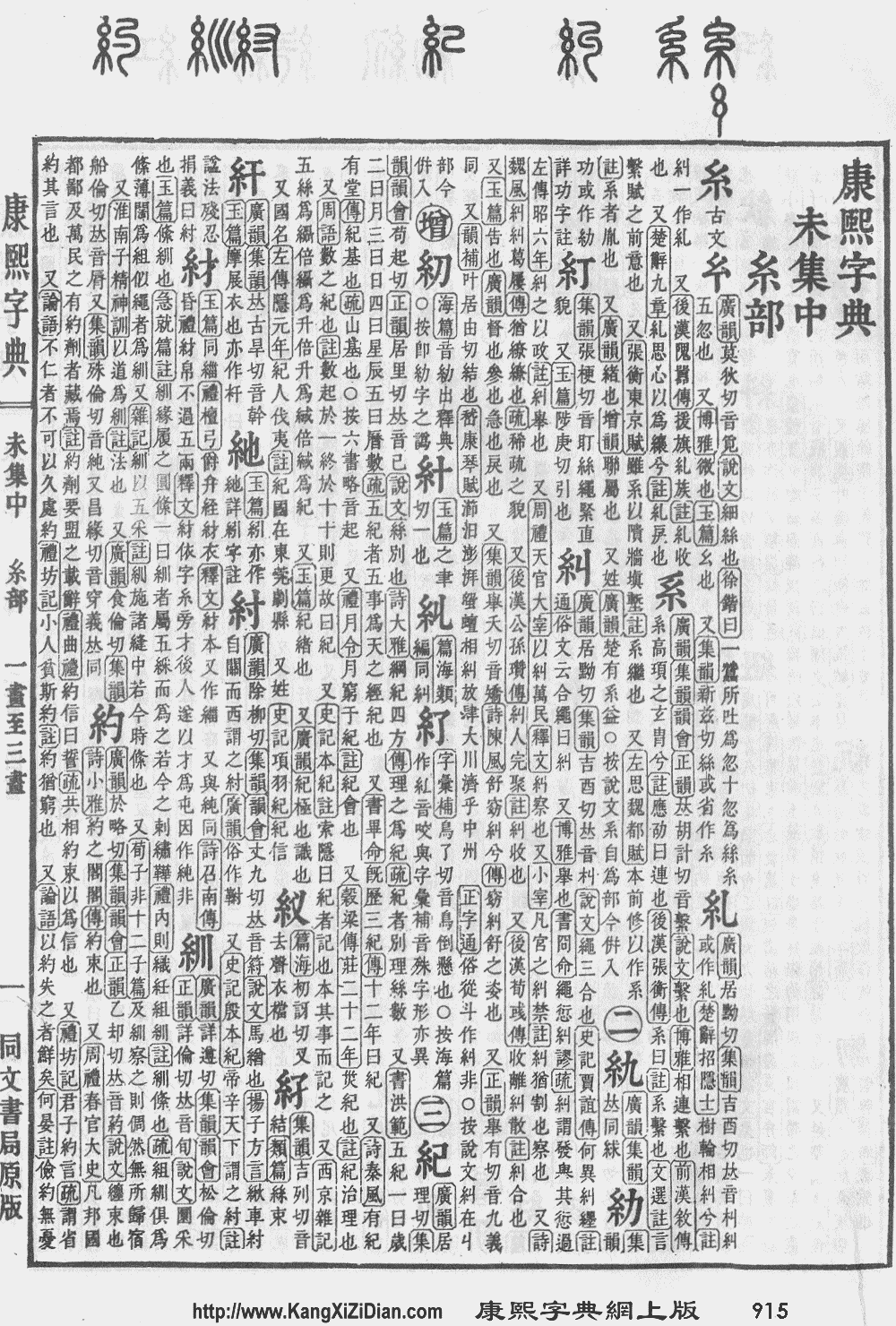
- KangXi: page 915, character 1
- Dai Kanwa Jiten: character 27221
- Dae Jaweon: page 1341, character 36
- Hanyu Da Zidian (first edition): volume 5, page 3361, character 1
- Unihan data for U+7CF8
Usage notes
When used as a radical component on the left, Japanese Kanji and Korean Hanja use a compressed form of 糸 (with 小 on the bottom, but the centre 亅 stroke in 小 is written as 丨 without the bottom hook), which is also the historical form found in the Kangxi dictionary. In traditional Chinese and Vietnamese Nom, the standard written form of the radical is 糹 (with three dots on the bottom), while in simplified Chinese the radical is written 纟 (with a 一 line below 幺 that slants upwards).
Chinese
Glyph origin
| Historical forms of the character 糸 | ||||
|---|---|---|---|---|
| Shang | Western Zhou | Shuowen Jiezi (compiled in Han) | ||
| Bronze inscriptions | Oracle bone script | Bronze inscriptions | Ancient script | Small seal script |
 |
 |
 |
 |
 |
Pronunciation
Japanese
| 糸 | |
| 絲 |
Etymology
| Kanji in this term |
|---|
| 糸 |
| いと Grade: 1 |
| kun’yomi |
| Alternative spelling |
|---|
| 絲 (kyūjitai) |
From Old Japanese, from Proto-Japonic *ito. Cognate with Kunigami 糸 (ひちゅー, hichū).
Korean
Okinawan
Readings
- Kun: いーちゅー (īchū, 糸)
Vietnamese
Han character
- This term needs a translation to English. Please help out and add a translation, then remove the text
{{rfdef}}.
References
This article is issued from Wiktionary. The text is licensed under Creative Commons - Attribution - Sharealike. Additional terms may apply for the media files.