恋
See also: 戀
| ||||||||
Translingual
| Japanese | 恋 |
|---|---|
| Simplified | 恋 |
| Traditional | 戀 |
Han character
恋 (Kangxi radical 61, 心+6, 10 strokes, cangjie input 卜金心 (YCP), four-corner 00333, composition ⿱𰁜心 or ⿱亦心)
Derived characters
- 𢣫 𦃳 𨄄 𪮠 𰰚
Related characters
- 戀 (Traditional form of 恋)
References
- KangXi: page 383, character 36
- Dai Kanwa Jiten: character 10537
- Dae Jaweon: page 714, character 12
- Hanyu Da Zidian (first edition): volume 4, page 2292, character 7
- Unihan data for U+604B
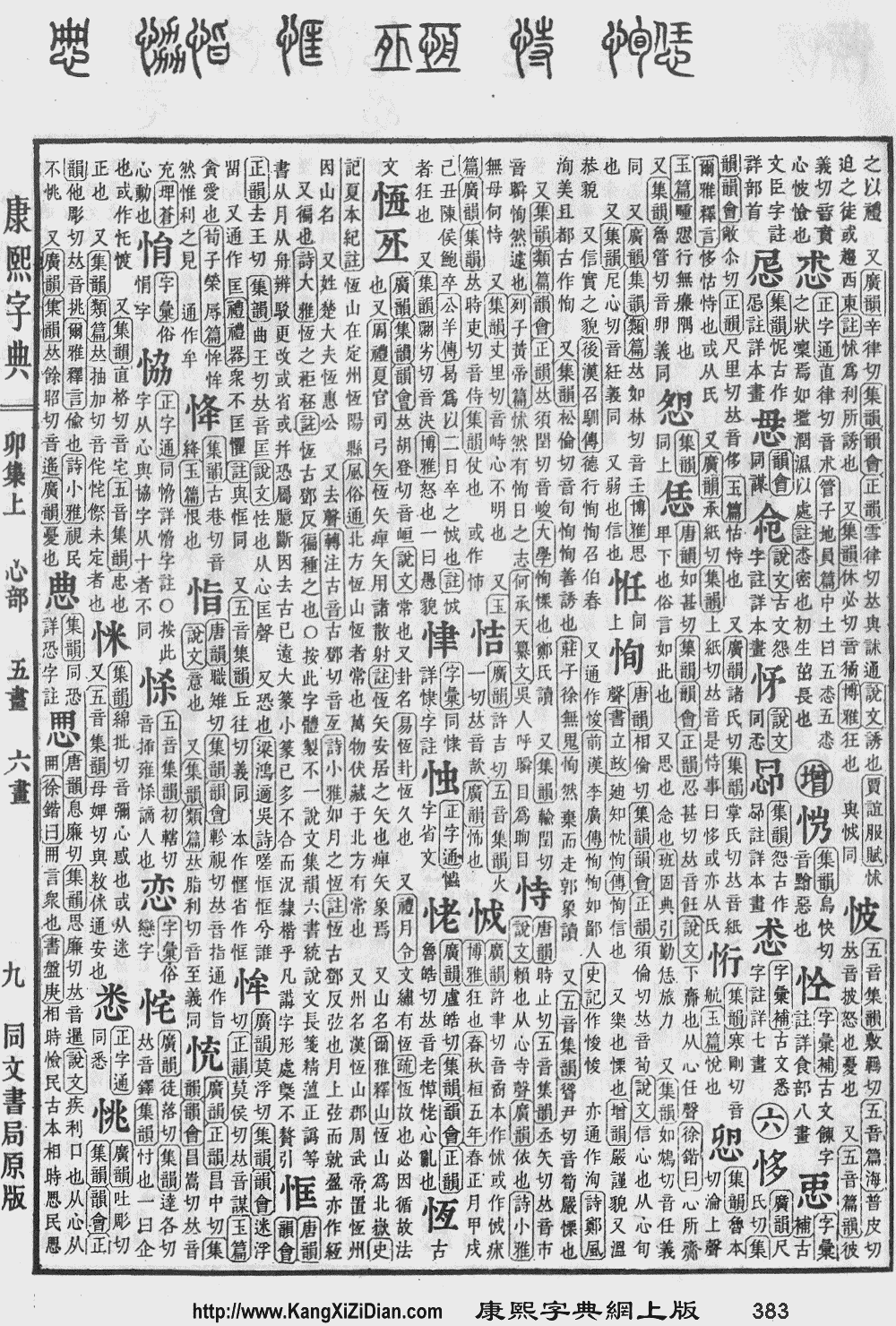
Usage notes
In the Kangxi dictionary (正字通), this character is listed as an unorthodox form (俗字) of 戀.
Chinese
Etymology 1
| For pronunciation and definitions of 恋 – see 戀 (“to love; to long for; to yearn for; to feel attached to”). (This character, 恋, is the simplified and variant form of 戀.) |
Notes:
|
Japanese
| 恋 | |
| 戀 |
Readings
Compounds
Etymology
| Kanji in this term |
|---|
| 恋 |
| こい Grade: S |
| kun’yomi |
| Alternative spelling |
|---|
| 戀 (kyūjitai) |
⟨ko1pi2⟩ → /kʷopʷɨ/ → /kofi/ → /kowi/ → /koi/
From Old Japanese.
The 連用形 (ren'yōkei, “stem or continuative form”) of verb 恋う (kou, “to love, yearn”).
Noun
- love, especially romantic love
- 1086, Goshūi Wakashū (book 14, poem 815; also Hyakunin Isshu, poem 65)
- 恨みわびほさぬ袖だにあるものを恋に朽ちなむ名こそ惜しけれ
- urami wabi hosanu sode dani aru mono o koi ni kuchinan na koso oshikere
- Anger and sorrow have made my never-dry sleeves a complete ruin―but still more hateful to me is love's ruin of my good name.[3]
- 恨みわびほさぬ袖だにあるものを恋に朽ちなむ名こそ惜しけれ
- 1086, Goshūi Wakashū (book 14, poem 815; also Hyakunin Isshu, poem 65)
- longing, yearning
- c. 1005–07, Shūi Wakashū (book 11, poem 622; also Hyakunin Isshu, poem 40)
- しのぶれど色に出でにけりわが恋は物や思ふと人の問ふまで
- shinoburedo iro ni idenikeri waga koi wa mono ya omou to hito no tou made
- Even though I hide it, it shows all over my face, such is my longing so that people ask me "What are you thinking about?"[4]
- しのぶれど色に出でにけりわが恋は物や思ふと人の問ふまで
- c. 1005–07, Shūi Wakashū (book 11, poem 622; also Hyakunin Isshu, poem 40)
Derived terms
Derived terms
- 恋しい (koishii)
- 恋する (koisuru)
- 恋歌 (koiuta)
- 恋占い (koi-uranai)
- 恋歌 (koika)
- 恋風 (koikaze)
- 恋活 (koikatsu)
- 恋心 (koigokoro)
- 恋路 (koiji)
- 恋塚 (koizuka)
- 恋疲れ (koizukare)
- 恋妻 (koizuma)
- 恋仲 (koinaka)
- 恋猫 (koineko)
- 恋の悩み (koi no nayami)
- 恋の闇 (koi no yami)
- 恋人 (koibito)
- 恋文 (koibumi)
- 恋水 (koimizu)
- 恋物語 (koi monogatari)
- 恋敵 (koigataki)
- 恋病 (koiyamai)
- 恋煩い, 恋患い (koiwazurai)
- 色恋 (irokoi)
- 片恋 (katakoi)
- 妻恋 (tsumagoi)
- 初恋 (hatsukoi)
- 秘恋 (himegoi)
- 諸恋 (morogoi)
Proverbs
- 恋に上下の隔てなし (koi ni jōge no hedate nashi)
- 恋は曲者 (koi wa kusemono)
- 恋は思案の外 (koi wa shian no hoka)
- 恋は盲目 (koi wa mōmoku, “love is blind”)
- 恋は闇 (koi wa yami, “love is dark → love is blind”)
See also
- 愛 (ai)
References
- 2006, 大辞林 (Daijirin), Third Edition (in Japanese), Tōkyō: Sanseidō, →ISBN
- 1998, NHK日本語発音アクセント辞典 (NHK Japanese Pronunciation Accent Dictionary) (in Japanese), Tōkyō: NHK, →ISBN
- Steven D. Carter (1991) Traditional Japanese Poetry: An Anthology, illustrated edition, Stanford University Press, →ISBN, page 227
- Joshua S. Mostow (1996) Pictures of the Heart: The Hyakunin Isshu in Word and Image, illustrated edition, University of Hawaii Press, →ISBN, page 260
Korean
This article is issued from Wiktionary. The text is licensed under Creative Commons - Attribution - Sharealike. Additional terms may apply for the media files.