旧
| ||||||||
Translingual
| Stroke order | |||
|---|---|---|---|
 | |||
| Japanese | 旧 |
|---|---|
| Simplified | 旧 |
| Traditional | 舊 |
Glyph origin
Variant of 臼.
The reformative usage in simplified Chinese and Japanese that replaced 舊 can be analysed either as from an elimination of 雈 with glyphic alteration from 臼 to 旧 or as using a homophonic character.
Han character
旧 (Kangxi radical 72, 日+1, 5 strokes, cangjie input 中日 (LA), composition ⿰丨日)
References
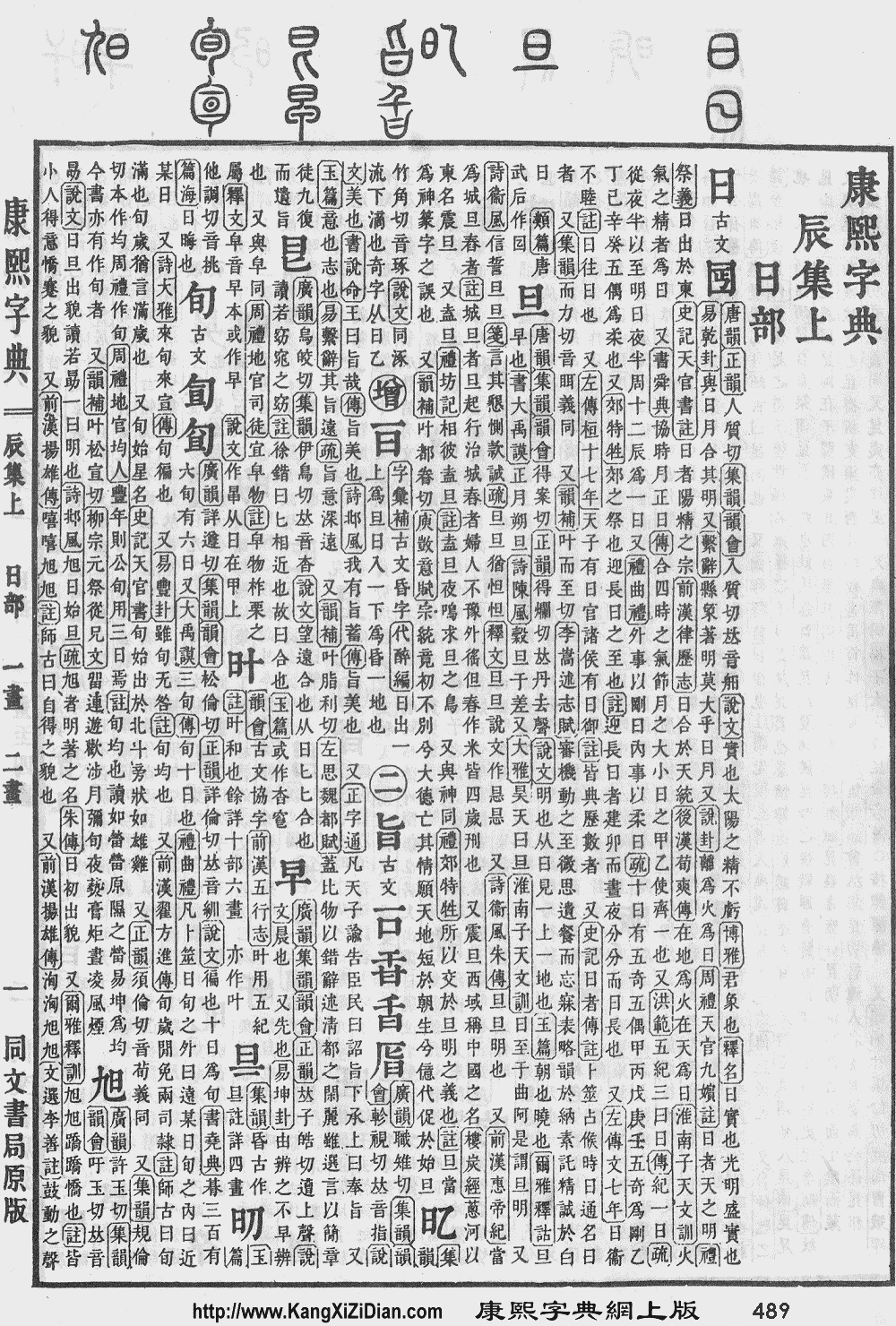
- KangXi: not present, would follow page 489, character 5
- Dai Kanwa Jiten: character 13737
- Dae Jaweon: page 850, character 4
- Hanyu Da Zidian (first edition): volume 2, page 1483, character 2
- Unihan data for U+65E7
Chinese
Etymology 1
| For pronunciation and definitions of 旧 – see 舊 (“old; former; past; old; used; worn; etc.”). (This character, 旧, is the simplified and variant form of 舊.) |
Notes:
|
Etymology 2
| For pronunciation and definitions of 旧 – see 臼 (“mortar; etc.”). (This character, 旧, is a variant form of 臼.) |
Etymology 3
| For pronunciation and definitions of 旧 – see 舅 (“maternal uncle; brother-in-law; etc.”). (This character, 旧, is a variant form of 舅.) |
Japanese
| 旧 | |
| 舊 |
Readings
Compounds
Compounds
- 旧式 (kyūshiki): old type
- 旧制 (kyūsei): old system
- 旧姓 (kyūsei): former surname
- 旧態 (kyūtai): old state of affairs
- 旧派 (kyūha): the old school
- 旧約 (kyūyaku): Old Testament
- 旧来 (kyūrai): traditional
- 旧里 (kyūri): hometown
- 旧暦 (kyūreki): Japan's old lunisolar calendar;
- 旧居 (kyūkyo): former residence
- 旧株 (kyūkabu): old stock
- 旧弊 (kyūhei): old evil
- 旧軍人 (kyūgunjin): ex-soldier
- 旧正月 (kyūshōgatsu): lunisolar New Year
- 旧世界 (kyūsekai): the old world
- 旧保守 (kyūhoshu): paleoconservative
- 懐旧 (kaikyū): nostalgia
- 復旧 (fukkyū): recover
- 旧に復する (kyū ni fukusuru): be restored to a former state
Noun
- old things, original state, former state, old times
- the old calendar based on a lunar system
旧 • (furu)
- used item, secondhand item
Prefix
This article is issued from Wiktionary. The text is licensed under Creative Commons - Attribution - Sharealike. Additional terms may apply for the media files.