机

See also: 機
机 U+673A, 机
CJK UNIFIED IDEOGRAPH-673A
← 朹
[U+6739]
CJK Unified Ideographs 朻 →
[U+673B]

Translingual

Stroke order
0 strokes
Japanese 机∣機
Simplified 机
Traditional 机∣機

Han character

机 (Kangxi radical 75, 木+2, 6 strokes, cangjie input 木竹弓 (DHN), four-corner 47910, composition ⿰木几)

Derived characters

  • 𣌯, 𦊵, 𪳴, 𩍊

References

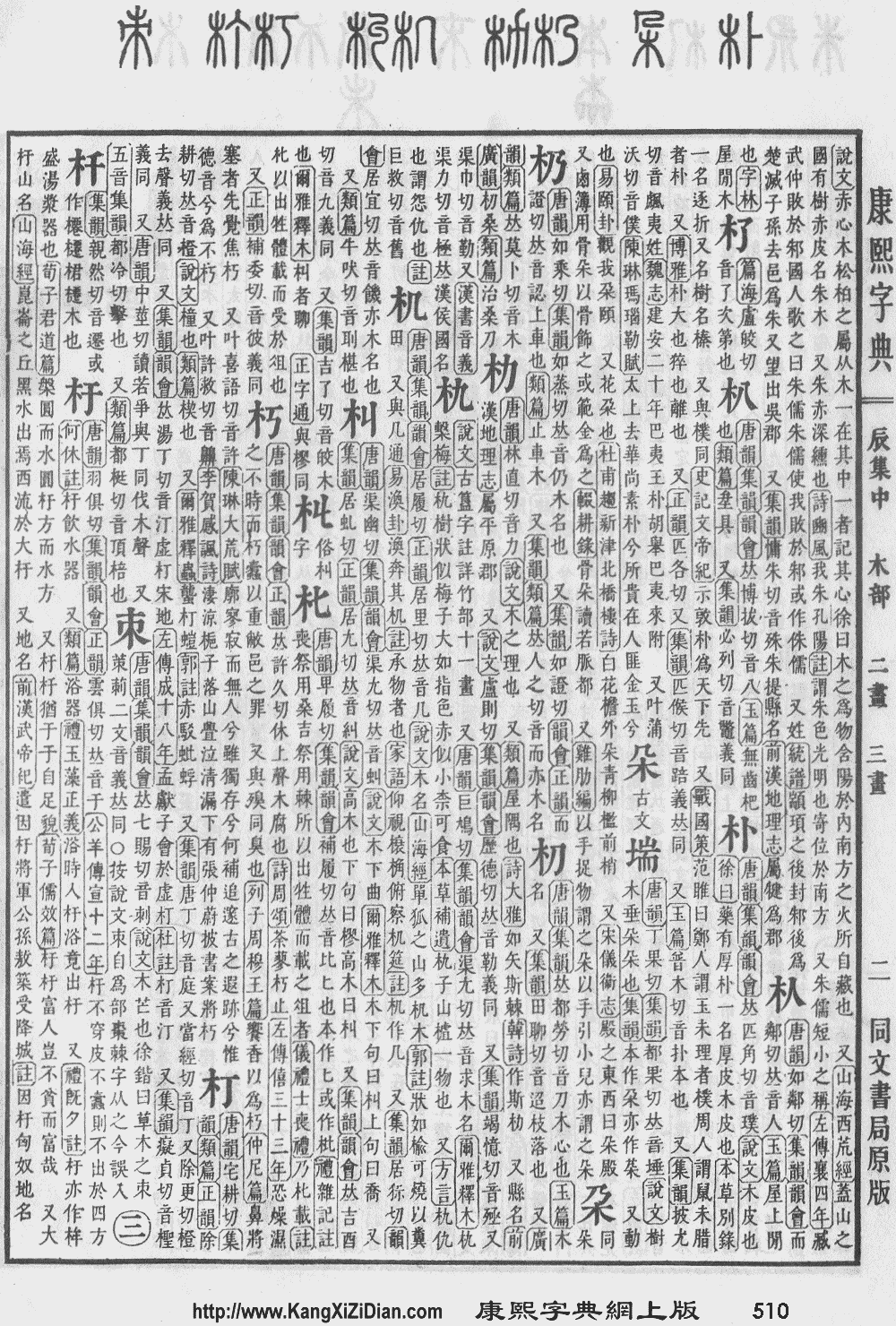
  • KangXi: page 510, character 12
  • Dai Kanwa Jiten: character 14435
  • Hanyu Da Zidian (first edition): volume 2, page 1155, character 4
  • Unihan data for U+673A

Usage notes

Note that in Japanese, traditional Chinese, and Korean, both 机 and 機 are used with separate meanings (机: desk and 機: machine; airplane; chance) while in simplified Chinese, 机 is the simplified form of 機/机 (jī).

Chinese

Glyph origin

Phono-semantic compound (形聲, OC *kril, *krilʔ) : semantic 木 (“tree; wood”) + phonetic 几 (OC *krilʔ).

Etymology 1

For pronunciation and definitions of 机 – see 機 (“weaving machine; spinning machine; machine; apparatus; device; etc.”).
(This character, 机, is the simplified and variant form of 機.)
Notes:

Etymology 2

simp. and trad.
机

Pronunciation


Note: gei2 - variant.

Rime
Character 机 机
Reading # 1/2 2/2
Initial (聲) 見 (28) 見 (28)
Final (韻) 脂 (15) 脂 (15)
Tone (調) Level (Ø) Rising (X)
Openness (開合) Open Open
Division (等) III III
Fanqie 居夷切 居履切
Reconstructions
Zhengzhang
Shangfang
/kiɪ/ /kiɪX/
Pan
Wuyun
/ki/ /kiX/
Shao
Rongfen
/kjɪ/ /kjɪX/
Edwin
Pulleyblank
/ki/ /kiX/
Li
Rong
/ki/ /kiX/
Wang
Li
/ki/ /kiX/
Bernard
Karlgren
/ki/ /kiX/
Expected
Mandarin
Reflex
jī jǐ
Expected
Cantonese
Reflex
gei1 gei2
Baxter–Sagart system 1.1 (2014)
Character 机
Reading # 1/1
Modern
Beijing
(Pinyin)
jī
Middle
Chinese
‹ kijX ›
Old
Chinese
/*krəjʔ/
English small table, stool

Notes for Old Chinese notations in the Baxter–Sagart system:

* Parentheses "()" indicate uncertain presence;
* Square brackets "[]" indicate uncertain identity, e.g. *[t] as coda may in fact be *-t or *-p;
* Angle brackets "<>" indicate infix;
* Hyphen "-" indicates morpheme boundary;

* Period "." indicates syllable boundary.
Zhengzhang system (2003)
Character 机 机
Reading # 1/2 2/2
No. 5758 5761
Phonetic
component
几 几
Rime
group
脂 脂
Rime
subdivision
1 1
Corresponding
MC rime
飢 几
Old
Chinese
/*kril/ /*krilʔ/

Definitions

机

  1. Alternative form of 几 (jī, “small table; stool”).
  2. † alder
  3. a surname

Pronunciation


Definitions

机

  1. † chopping board

Japanese

Kanji

机

(grade 6 “Kyōiku” kanji)

  1. desk, table

Readings

Compounds

Etymology

Kanji in this term
机
つくえ
Grade: 6
kun’yomi
Alternative spellings
つくえ
案

(This etymology is missing or incomplete. Please add to it, or discuss it at the Etymology scriptorium.)

Pronunciation

  • (Tokyo) つくえ [tsùkúé] (Heiban – [0])[1]
  • IPA(key): [t͡sɨᵝkɯ̟ᵝe̞]

Noun

机(つくえ) • (tsukue) 

  1. desk; table
    机(つくえ)の上(うえ)に本(ほん)が三(さん)冊(さつ)ある。
    Tsukue no ue ni hon ga sansatsu aru.
    There are three books on the desk.

Usage notes

In pre-WWII literature, the historical kana spelling was mistaken to be つくゑ.

References

  1. 2006, 大辞林 (Daijirin), Third Edition (in Japanese), Tōkyō: Sanseidō, →ISBN

Korean

Hanja

机 • (gwe) (hangeul 궤, revised gwe, McCune–Reischauer kwe, Yale kwey)

  1. desk

Vietnamese

Han character

机: Hán Nôm readings: cơ

  1. This term needs a translation to English. Please help out and add a translation, then remove the text {{rfdef}}.
This article is issued from Wiktionary. The text is licensed under Creative Commons - Attribution - Sharealike. Additional terms may apply for the media files.