沐

沐 U+6C90, 沐
CJK UNIFIED IDEOGRAPH-6C90
← 沏
[U+6C8F]
CJK Unified Ideographs 沑 →
[U+6C91]

Translingual

Han character

沐 (Kangxi radical 85, 水+4, 7 strokes, cangjie input 水木 (ED), four-corner 34190, composition ⿰氵木)

References

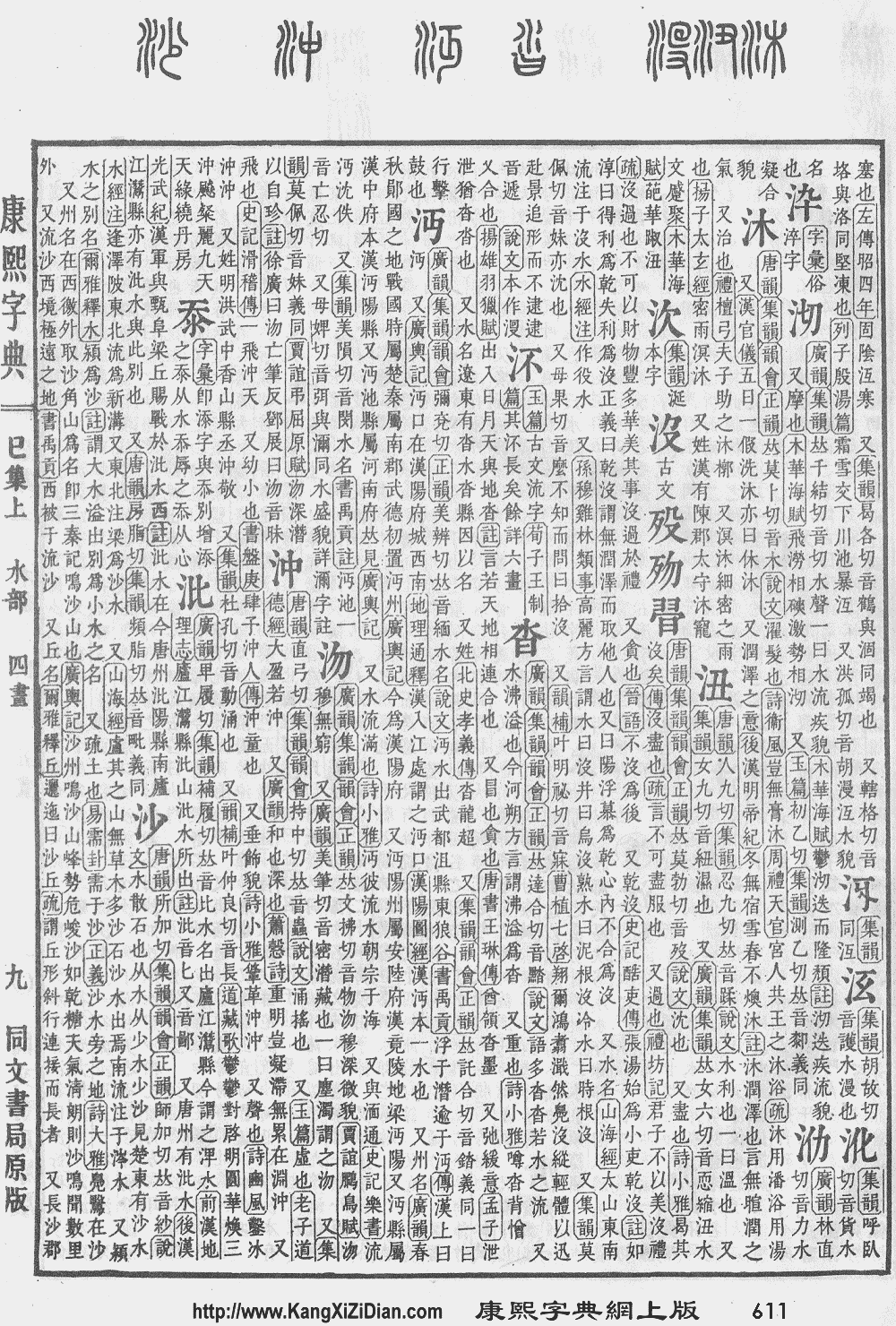
  • KangXi: page 611, character 7
  • Dai Kanwa Jiten: character 17201
  • Dae Jaweon: page 1003, character 11
  • Hanyu Da Zidian (first edition): volume 3, page 1558, character 7
  • Unihan data for U+6C90

Chinese

simp. and trad.
沐

Glyph origin

Pronunciation


Rime
Character 沐
Reading # 1/1
Initial (聲) 明 (4)
Final (韻) 東 (3)
Tone (調) Checked (Ø)
Openness (開合) Open
Division (等) I
Fanqie 莫卜切
Reconstructions
Zhengzhang
Shangfang
/muk̚/
Pan
Wuyun
/muk̚/
Shao
Rongfen
/muk̚/
Edwin
Pulleyblank
/məwk̚/
Li
Rong
/muk̚/
Wang
Li
/muk̚/
Bernard
Karlgren
/muk̚/
Expected
Mandarin
Reflex
mù
Expected
Cantonese
Reflex
muk6
Zhengzhang system (2003)
Character 沐
Reading # 1/1
No. 9328
Phonetic
component
木
Rime
group
屋
Rime
subdivision
0
Corresponding
MC rime
木
Old
Chinese
/*moːɡ/

Definitions

沐

  1. to bathe; to shower
  2. to cleanse
  3. to receive
  4. to be given

Compounds

  • 沐浴春風/沐浴春风
  • 沐浴鹽/沐浴盐
  • 沐雨櫛風/沐雨栉风
  • 湯沐/汤沐
  • 湯沐邑/汤沐邑
  • 雨沐風餐/雨沐风餐
  • 風櫛雨沐/风栉雨沐
  • 餐風沐雨/餐风沐雨
  • 齋戒沐浴/斋戒沐浴 (zhāijièmùyù)
  • 齋沐/斋沐

Japanese

Kanji

沐

(uncommon “Hyōgai” kanji)

  1. to wash

Readings

  • Go-on: もく (moku)
  • Kan-on: ぼく (boku)
  • Kun: あらう (arau, 沐う); もくする (mokusuru, 沐する)

Korean

Hanja

沐 • (mok) (hangeul 목, revised mok, McCune–Reischauer mok, Yale mok)

  1. This term needs a translation to English. Please help out and add a translation, then remove the text {{rfdef}}.

Vietnamese

Han character

沐: Hán Nôm readings: múc, móc, mốc, mộc

  1. This term needs a translation to English. Please help out and add a translation, then remove the text {{rfdef}}.
This article is issued from Wiktionary. The text is licensed under Creative Commons - Attribution - Sharealike. Additional terms may apply for the media files.