濃

See also: 浓
濃 U+6FC3, 濃
CJK UNIFIED IDEOGRAPH-6FC3
← 濂
[U+6FC2]
CJK Unified Ideographs 濄 →
[U+6FC4]

Translingual

Han character

濃 (Kangxi radical 85, 水+13, 16 strokes, cangjie input 水廿田女 (ETWV), four-corner 35132, composition ⿰氵農)

Descendants

Derived characters

  • 𤒚

References

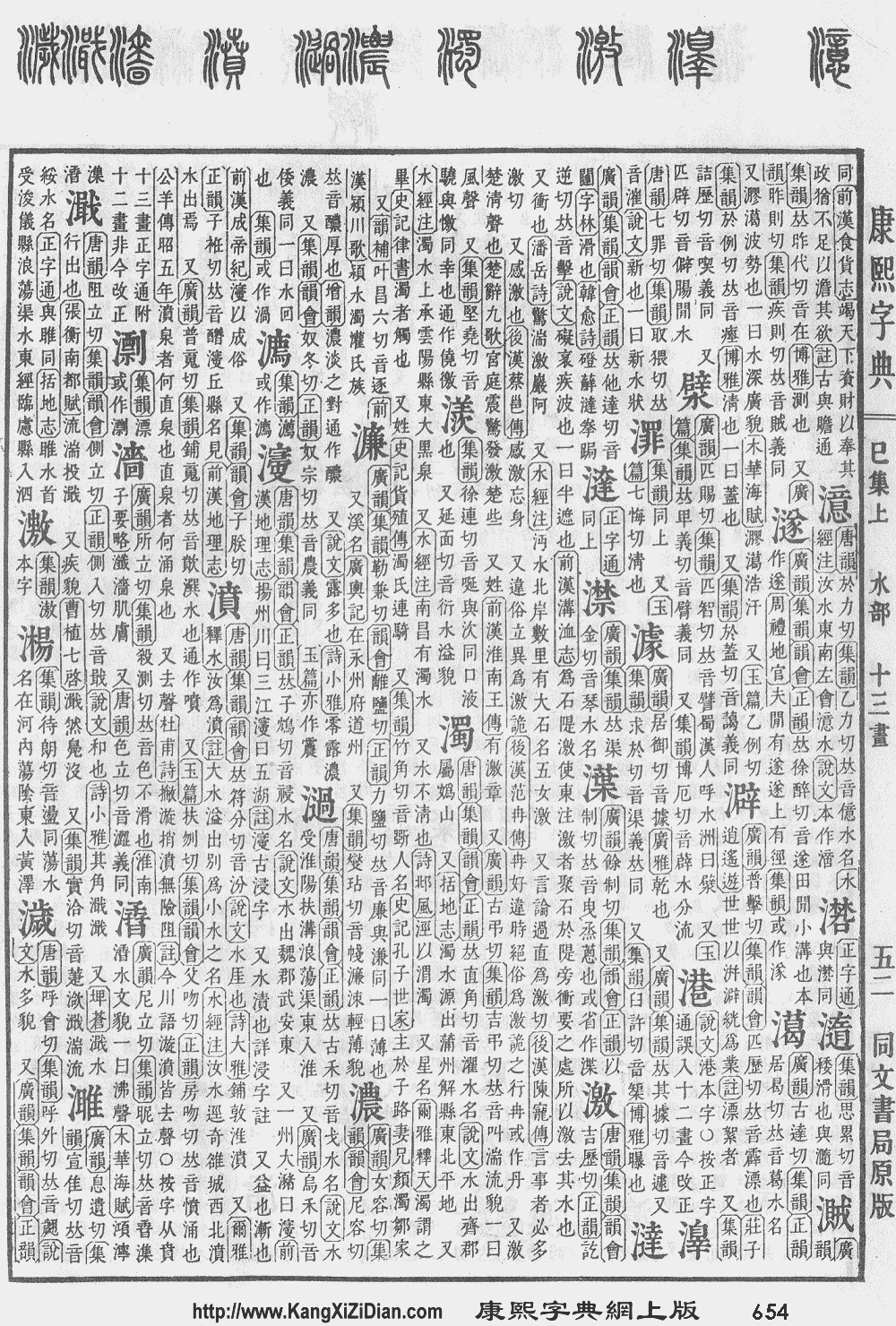
  • KangXi: page 654, character 21
  • Dai Kanwa Jiten: character 18442
  • Dae Jaweon: page 1064, character 18
  • Hanyu Da Zidian (first edition): volume 3, page 1756, character 3
  • Unihan data for U+6FC3

Chinese

trad. 濃
simp. 浓

Glyph origin

Phono-semantic compound (形聲, OC *noŋ) : semantic 氵 (“water”) + phonetic 農 (OC *nuːŋ).

Etymology

From Proto-Sino-Tibetan *s-naːŋ (“heavy; thick, viscous”).

Pronunciation


Note:
  • Meixian:
    • nung2 - literary;
    • ngiung2 - vernacular.

Rime
Character 濃
Reading # 1/1
Initial (聲) 娘 (12)
Final (韻) 鍾 (7)
Tone (調) Level (Ø)
Openness (開合) Open
Division (等) III
Fanqie 女容切
Reconstructions
Zhengzhang
Shangfang
/ɳɨoŋ/
Pan
Wuyun
/ɳioŋ/
Shao
Rongfen
/nioŋ/
Edwin
Pulleyblank
/ɳuawŋ/
Li
Rong
/nioŋ/
Wang
Li
/nĭwoŋ/
Bernard
Karlgren
/ni̯woŋ/
Expected
Mandarin
Reflex
nóng
Expected
Cantonese
Reflex
nung4
Baxter–Sagart system 1.1 (2014)
Character 濃
Reading # 1/1
Modern
Beijing
(Pinyin)
nóng
Middle
Chinese
‹ nrjowng ›
Old
Chinese
/*n<r>oŋ/
English thick (esp. as a liquid); strong (drink)

Notes for Old Chinese notations in the Baxter–Sagart system:

* Parentheses "()" indicate uncertain presence;
* Square brackets "[]" indicate uncertain identity, e.g. *[t] as coda may in fact be *-t or *-p;
* Angle brackets "<>" indicate infix;
* Hyphen "-" indicates morpheme boundary;

* Period "." indicates syllable boundary.
Zhengzhang system (2003)
Character 濃
Reading # 1/1
No. 9577
Phonetic
component
農
Rime
group
東
Rime
subdivision
0
Corresponding
MC rime
醲
Old
Chinese
/*noŋ/

Definitions

濃

  1. thick; concentrated
  2. (of colors) deep
    Synonym: 深 (shēn)
    Antonyms: 淺/浅 (qiǎn), 淡 (dàn)
  3. (of beverage) strong; concentrated

Compounds

  • 信濃川/信浓川
  • 戰雲濃密/战云浓密
  • 淡妝濃抹/淡妆浓抹
  • 濃厚/浓厚 (nónghòu)
  • 濃墨/浓墨
  • 濃妝/浓妆 (nóngzhuāng)
  • 濃妝淡抹/浓妆淡抹
  • 濃妝豔抹/浓妆艳抹 (nóngzhuāngyànmǒ)
  • 濃妝豔服/浓妆艳服
  • 濃妝豔裹/浓妆艳裹
  • 濃妝豔飾/浓妆艳饰
  • 濃密/浓密 (nóngmì)
  • 濃度/浓度 (nóngdù)
  • 濃快/浓快

Japanese

Kanji

濃

(common “Jōyō” kanji)

  1. dark
  2. thick

Readings

Etymology 1

Kanji in this term
濃
のう
Grade: S
kan’yōon

Pronunciation

  • IPA(key): [no̞ː]

Affix

濃(のう) • (nō) 

  1. dark color

Etymology 2

Kanji in this term
濃
こ
Grade: S
kun’yomi

Pronunciation

  • IPA(key): [ko̞]

Prefix

濃(こ) • (ko-) 

  1. dark color

Korean

Hanja

濃 (eumhun 짙을 농 (jiteul nong))

  1. This term needs a translation to English. Please help out and add a translation, then remove the text {{rfdef}}.

Compounds

Vietnamese

Han character

濃: Hán Nôm readings: nùng, nống, nồng, nông

  1. This term needs a translation to English. Please help out and add a translation, then remove the text {{rfdef}}.
This article is issued from Wiktionary. The text is licensed under Creative Commons - Attribution - Sharealike. Additional terms may apply for the media files.