甪
| ||||||||
Translingual
Han character
甪 (Kangxi radical 101, 用+1, 6 strokes, cangjie input 竹月手 (HBQ), four-corner 27220, composition ⿱丿用)
References
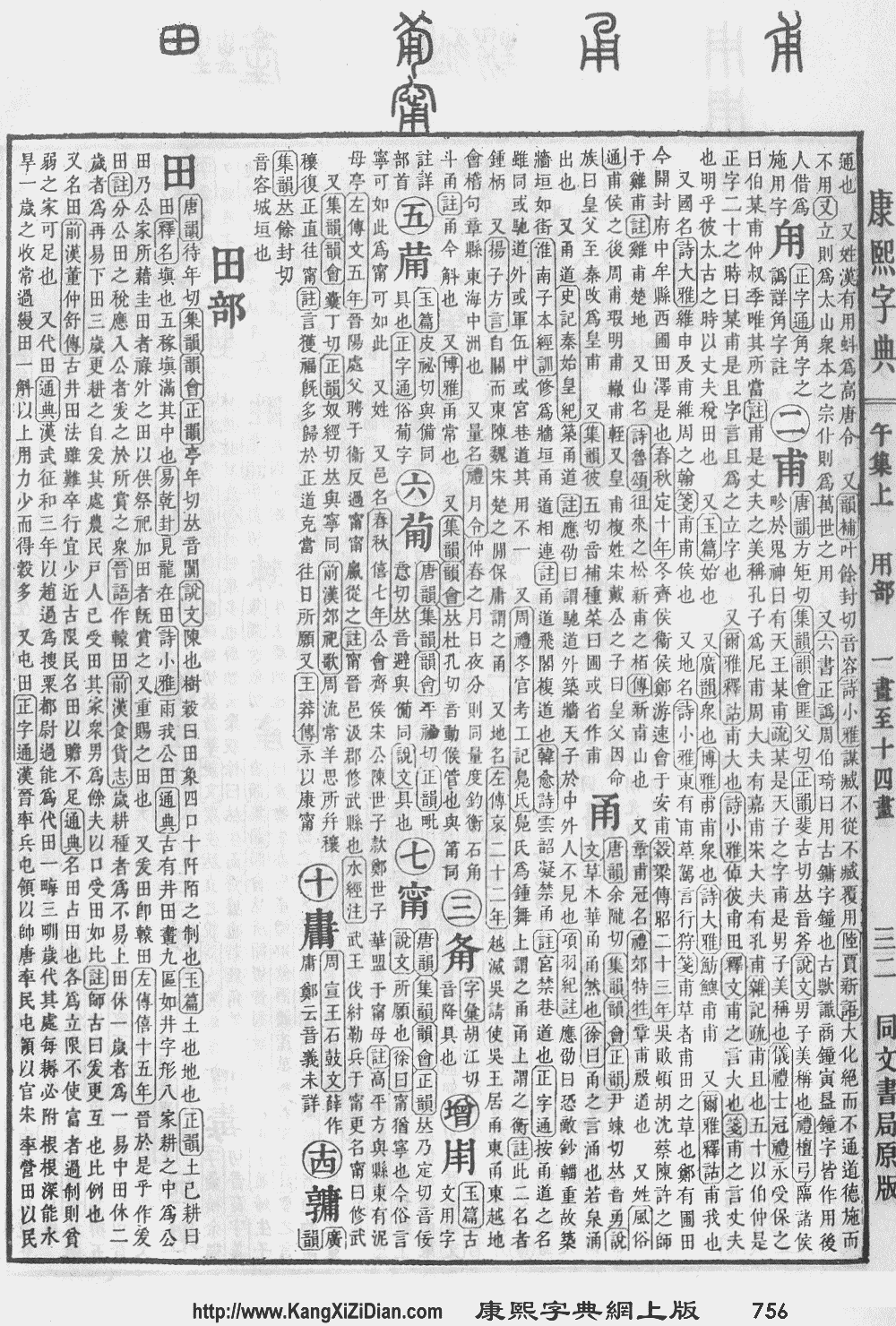
- KangXi: page 756, character 1
- Dai Kanwa Jiten: character 21705
- Dae Jaweon: page 1166, character 3
- Hanyu Da Zidian (first edition): volume 1, page 38, character 6
- Unihan data for U+752A
Chinese
Pronunciation
Definitions
甪
Etymology 2
| trad. | 甪 | |
|---|---|---|
| simp. # | 甪 | |
| alternative forms | 黜 | |
(This etymology is missing or incomplete. Please add to it, or discuss it at the Etymology scriptorium. Particularly: “Is it related to Cantonese 甩 (lat1) and Hakka 㪐 (lut)?”)
Pronunciation
Definitions
甪 (Min Nan)
Japanese
Kanji
甪
- This term needs a translation to English. Please help out and add a translation, then remove the text
{{rfdef}}.
This article is issued from Wiktionary. The text is licensed under Creative Commons - Attribution - Sharealike. Additional terms may apply for the media files.