黜
| ||||||||
Translingual
Han character
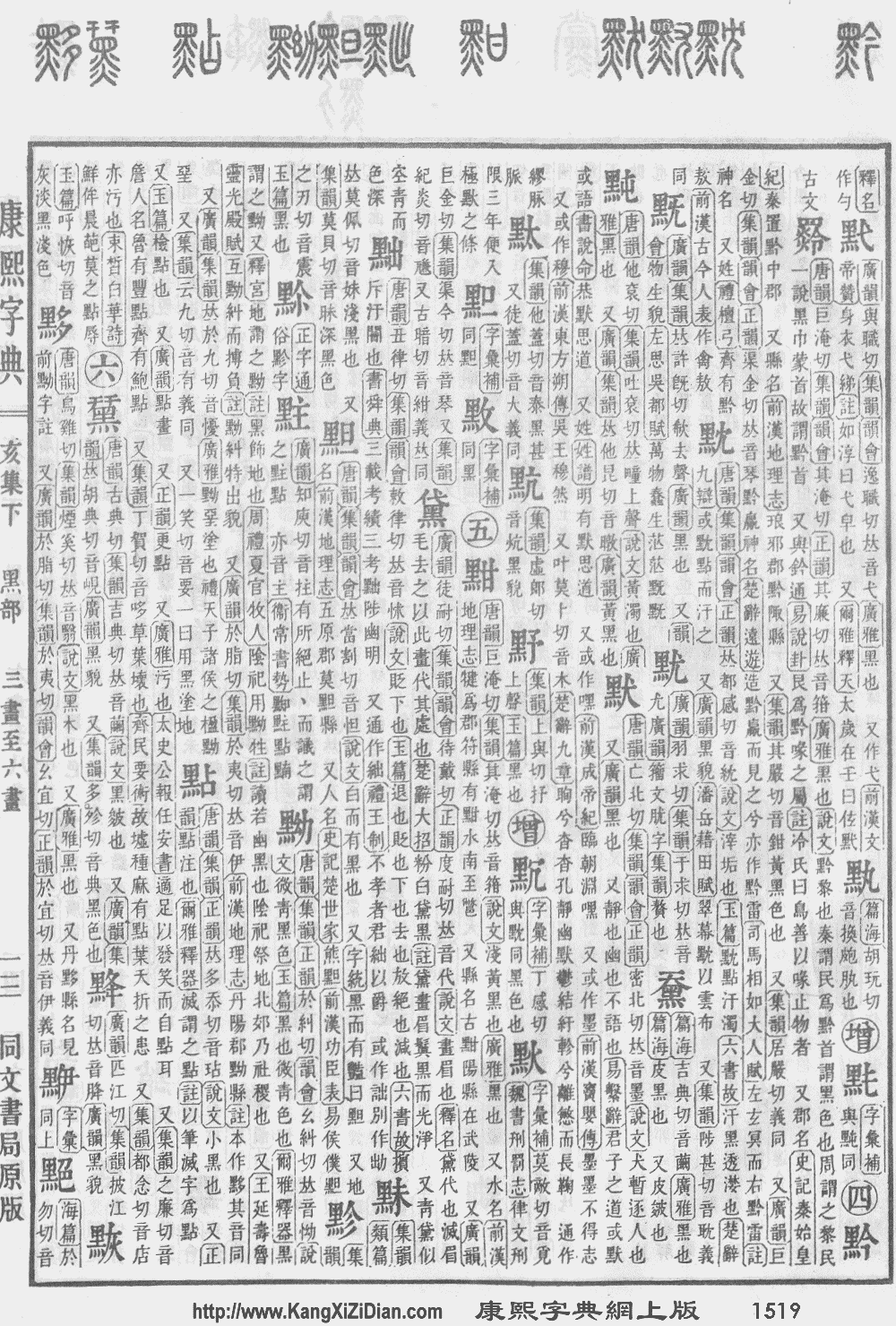
黜 (Kangxi radical 203, 黑+5, 17 strokes, cangjie input 田火山山 (WFUU), four-corner 62372, composition ⿰黑出)
References
- KangXi: page 1519, character 21
- Dai Kanwa Jiten: character 48076
- Dae Jaweon: page 2053, character 9
- Hanyu Da Zidian (first edition): volume 7, page 4747, character 10
- Unihan data for U+9EDC
Chinese
| trad. | 黜 | |
|---|---|---|
| simp. # | 黜 | |
Glyph origin
| Historical forms of the character 黜 |
|---|
| Shuowen Jiezi (compiled in Han) |
| Small seal script |
 |
Characters in the same phonetic series (出) (Zhengzhang, 2003)
| Old Chinese | |
|---|---|
| 聉 | *r̥ʰuːlʔ, *ŋrɯd, *ʔr'uːd, *ŋruːd |
| 贅 | *kljods |
| 祟 | *sqʰluds |
| 出 | *kʰljuds, *kʰljud |
| 茁 | *ʔl'ɯd, *skruːd, *skrod, *skrud |
| 欪 | *qʰlɯd, *l̥ʰud |
| 貀 | *ŋr'uːd |
| 袦 | *ŋr'oːd |
| 咄 | *ʔl'oːd, *ʔl'uːd |
| 柮 | *sɡloːd, *ʔl'uːd |
| 拙 | *kljod |
| 炪 | *kljod, *l̥ʰud |
| 掘 | *ɡlod, *ɡlud |
| 鈯 | *l'uːd |
| 啒 | *kluːd, *qʰluːd |
| 淈 | *kluːd, *ɡluːd |
| 窟 | *kʰluːd |
| 泏 | *kʰluːd, *ʔl'ud |
| 堀 | *kʰluːd, *ɡlud |
| 胐 | *kʰluːd |
| 窋 | *ʔl'ud |
| 絀 | *ʔl'ud |
| 黜 | *l̥ʰud |
| 屈 | *klud, *kʰlud |
| 趉 | *klud |
| 鶌 | *klud |
| 詘 | *kʰlud |
| 倔 | *ɡlud |
| 崛 | *ɡlud, *ŋɡlud |
Phono-semantic compound (形聲, OC *l̥ʰud) : semantic 黑 (“black”) + phonetic 出 (OC *kʰljuds, *kʰljud).
Etymology
From 出 (to come out) with a causative *-r- infix (Schuessler, 2007).
Pronunciation
References
- “黜”, in 漢語多功能字庫 (Multi-function Chinese Character Database), 香港中文大學 (the Chinese University of Hong Kong), 2014–
Japanese
Kanji
黜
- This term needs a translation to English. Please help out and add a translation, then remove the text
{{rfdef}}.
Korean
Hanja
黜 • (chul) (hangeul 출, revised chul, McCune–Reischauer ch'ul, Yale chwul)
- This term needs a translation to English. Please help out and add a translation, then remove the text
{{rfdef}}.
Vietnamese
This article is issued from Wiktionary. The text is licensed under Creative Commons - Attribution - Sharealike. Additional terms may apply for the media files.