秫
| ||||||||
| ||||||||
Translingual
Han character
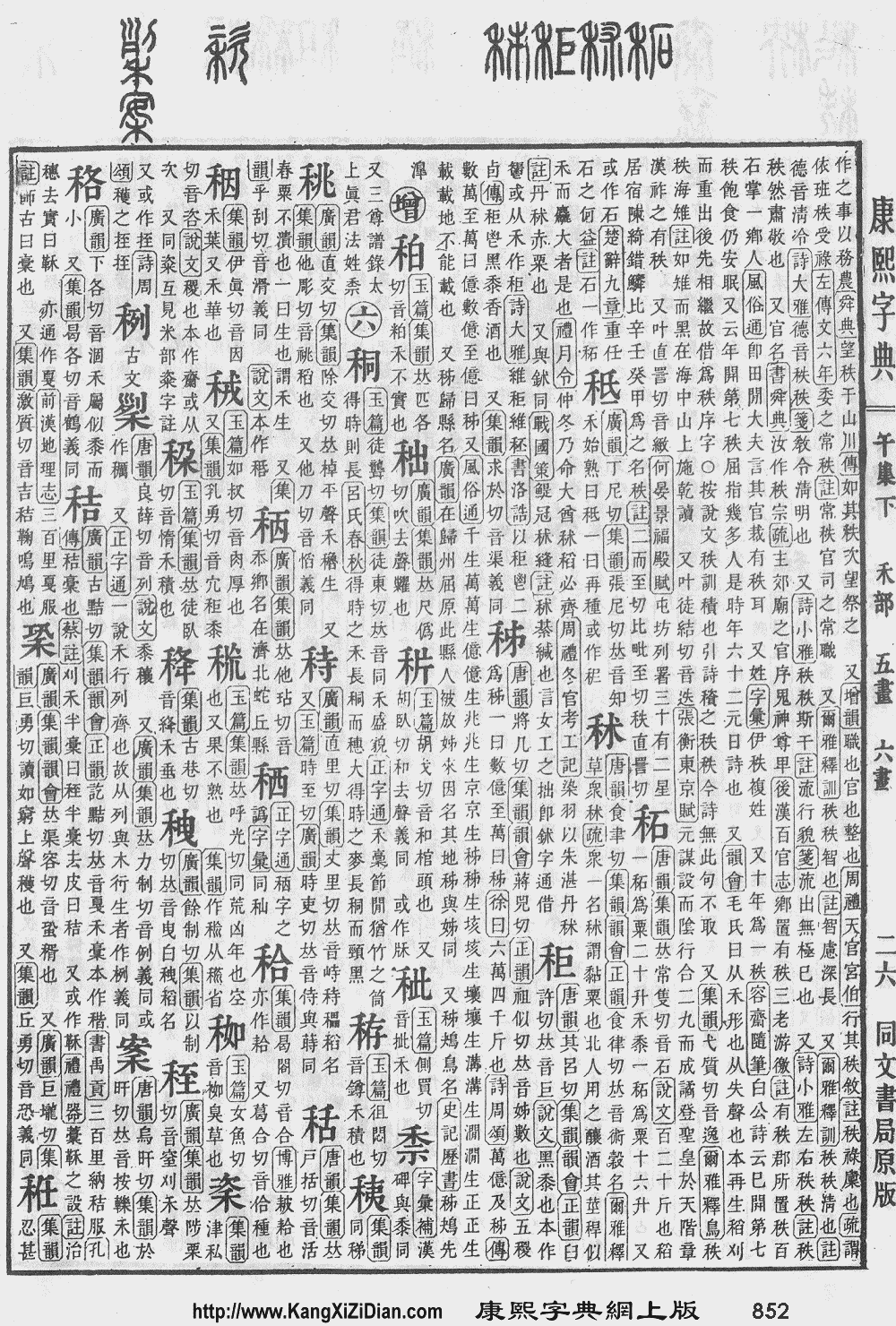
秫 (Kangxi radical 115, 禾+5, 10 strokes, cangjie input 竹木戈木 (HDID) or 竹木戈十金 (HDIJC), four-corner 23934, composition ⿰禾术(G) or ⿰禾朮(HTJKV))
Derived characters
References
- KangXi: page 852, character 3
- Dai Kanwa Jiten: character 25001
- Dae Jaweon: page 1276, character 6
- Hanyu Da Zidian (first edition): volume 4, page 2598, character 2
- Unihan data for U+79EB
- Unihan data for U+2F957
Chinese
| trad. | 秫 | |
|---|---|---|
| simp. # | 秫 | |
| alternative forms | 朮/术 | |
Glyph origin
| Historical forms of the character 秫 | ||||
|---|---|---|---|---|
| Shang | Warring States | Shuowen Jiezi (compiled in Han) | Liushutong (compiled in Ming) | |
| Oracle bone script | Chu slip and silk script | Qin slip script | Small seal script | Transcribed ancient scripts |
 |
 |
 |
 |
 |
Characters in the same phonetic series (朮) (Zhengzhang, 2003)
Phono-semantic compound (形聲, OC *ɦljud) and ideogrammic compound (會意) : semantic 禾 (“grain”) + phonetic 朮 (OC *l'ud, *ɦljud, “glutinous millet”). Originally written 朮 (not to be confused with 术).
Etymology 1
Area word (Schuessler, 2007); compare:
- Proto-Hmong-Mien *mblut (“glutinous; sticky”) (Schuessler, 2007; Ratliff, 2010; Baxter and Sagart, 2014);
- Proto-Austronesian *-lit (“caulk; adhesive material”) > Proto-Malayo-Polynesian *bulit (“glue; paste; stick; caulk”) (Ratliff, 2010);
- Proto-Austronesian *puluC (“Caesar weed, a mucilaginous plant”) (Sagart, 1993).
Pronunciation
Definitions
秫
Pronunciation
Compounds
|
|
Korean
Etymology
From Middle Chinese 秫 (MC ʑiuɪt̚).
Pronunciation
- (SK Standard/Seoul) IPA(key): [t͡ɕʰuɭ]
- Phonetic hangul: [출]
Hanja
Wikisource 秫 (eumhun 차조 출 (chajo chul))
- This term needs a translation to English. Please help out and add a translation, then remove the text
{{rfdef}}.
Compounds
- 출곡 (秫縠, chulgok)
- 출도 (秫稻, chuldo)
This article is issued from Wiktionary. The text is licensed under Creative Commons - Attribution - Sharealike. Additional terms may apply for the media files.