絶
| ||||||||
Translingual
| Traditional | 絕 |
|---|---|
| Shinjitai | 絶 |
| Simplified | 绝 |
Han character
絶 (Kangxi radical 120, 糸+6, 12 strokes, cangjie input 女火弓日山 (VFNAU), composition ⿰糹色)
See also
- 𠾼
References
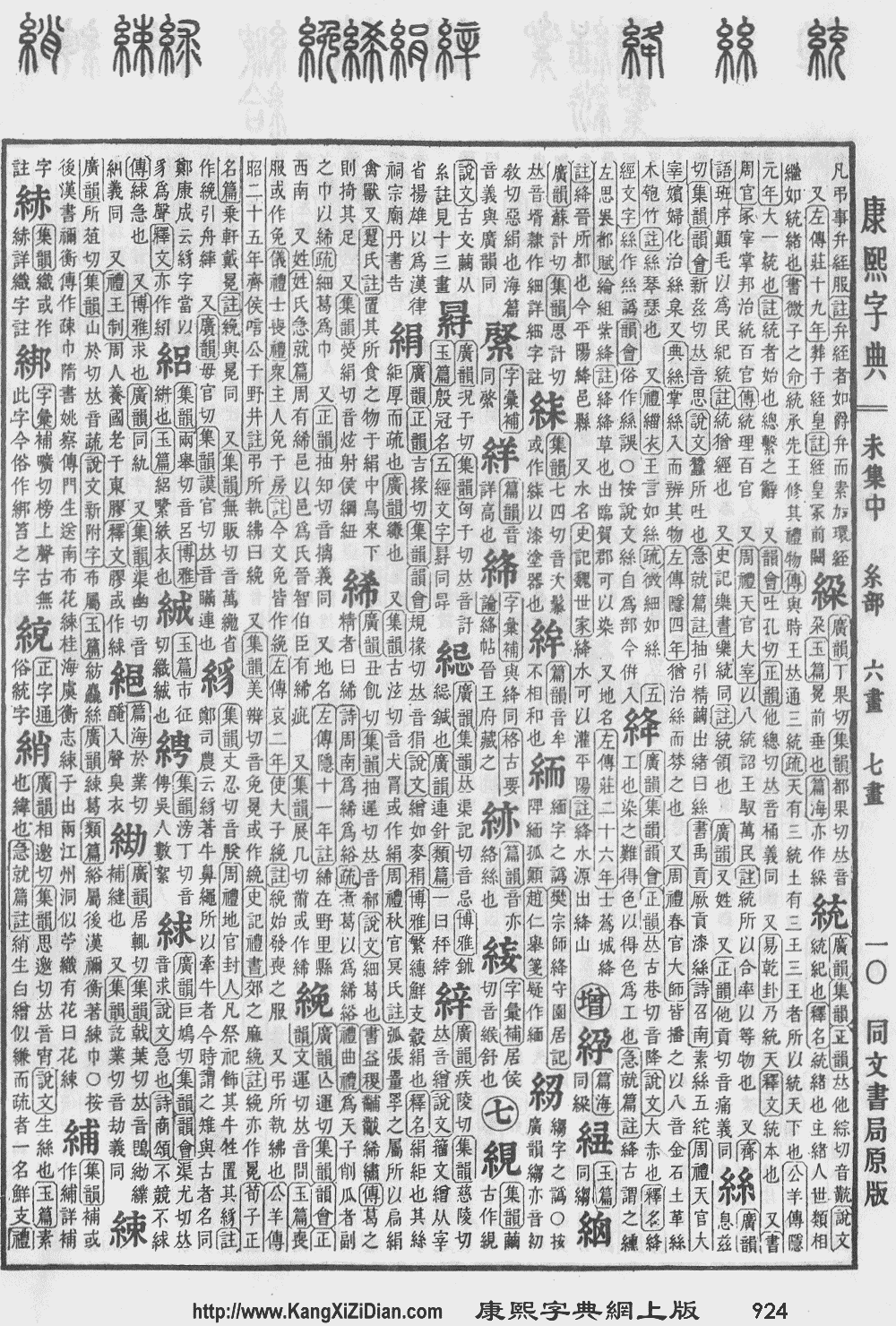
- KangXi: not present, would follow page 924, character 16
- Dai Kanwa Jiten: character 49469
- Hanyu Da Zidian (first edition): volume 5, page 3396, character 4
- Unihan data for U+7D76
Chinese
| For pronunciation and definitions of 絶 – see 絕 (“to break off; to cut off; to sever; to terminate; to discontinue; to break off; etc.”). (This character, 絶, is a variant form of 絕.) |
Japanese
| 絶 | |
| 絕 |
Korean
Compounds
- 근절 (根絶, geunjeol, “eradication, extermination, annihilation”)
- 절벽 (絶壁, jeolbyeok, “a precipice (a very steep cliff)”)
- 거절 (拒絶, geojeol, “refusal”)
Vietnamese
This article is issued from Wiktionary. The text is licensed under Creative Commons - Attribution - Sharealike. Additional terms may apply for the media files.