絕
| ||||||||
Translingual
| Traditional | 絕 |
|---|---|
| Shinjitai | 絶 |
| Simplified | 绝 |
Han character
絕 (Kangxi radical 120, 糸+6, 12 strokes, cangjie input 女火尸竹山 (VFSHU), four-corner 27917, composition ⿰糹⿱刀巴)
Related characters
- 絶 (Japanese kanji. Also the preferred form for traditional Chinese in mainland China)
- 绝 (Simplified Chinese)
References
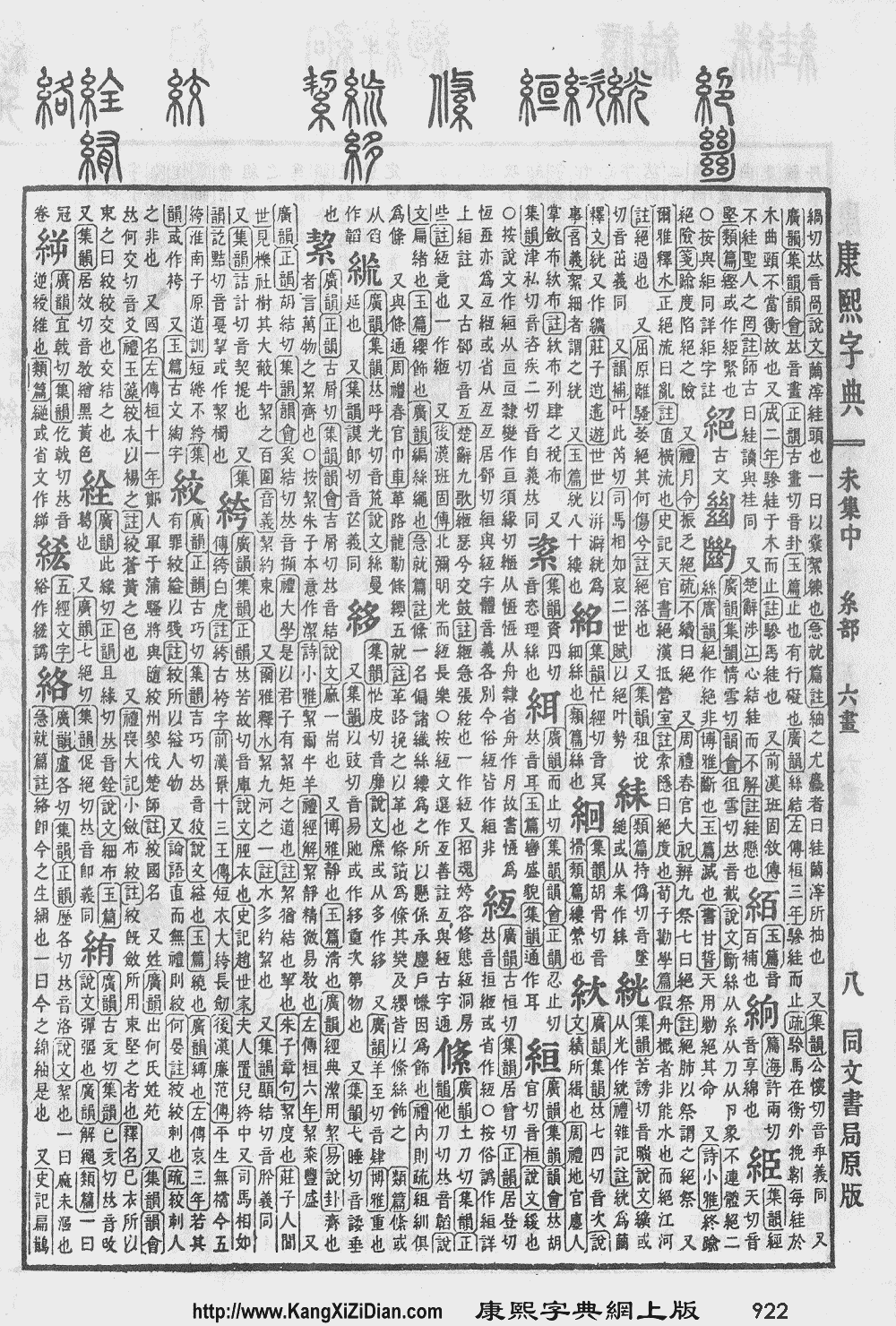
- KangXi: page 922, character 4
- Dai Kanwa Jiten: character 27407
- Dae Jaweon: page 1355, character 9
- Hanyu Da Zidian (first edition): volume 5, page 3396, character 4
- Unihan data for U+7D55
Chinese
| trad. | 絕/絶 | |
|---|---|---|
| simp. | 绝 | |
| alternative forms | 㔃/𫦌 𢇍 ancient 𠤉 ancient 撧/𪮖 𢴭 | |
Glyph origin
| Historical forms of the character 絕 | ||||
|---|---|---|---|---|
| Shang | Western Zhou | Warring States | Shuowen Jiezi (compiled in Han) | Liushutong (compiled in Ming) |
| Oracle bone script | Bronze inscriptions | Chu slip and silk script | Small seal script | Transcribed ancient scripts |
 |
 |
 |
 |
 |
Characters in the same phonetic series (絕) (Zhengzhang, 2003)
Originally ideogrammic compound (會意) : 刀 (“knife”) + 幺 (“silk”) or ideogrammic compound (會意) : 刀 (“knife”) + 𢆶 (“silk”) — to cut silk threads.
Now phono-semantic compound (形聲) : semantic 糹/纟 (“silk”) + semantic 刀 (“knife”) + phonetic 巴 (卪).
Pronunciation
Definitions
絕
- to break off; to cut off; to sever
- 鍾子期死,伯牙破琴絕弦,終身不復鼓琴,以為世無足復為鼓琴者。 [Classical Chinese, trad.]
- From: Lü Buwei, Master Lü's Spring and Autumn Annals, 239 BCE
- Zhōng Zǐqī sǐ, Bó Yá pò qín jué xián, zhōngshēn bù fù gǔqín, yǐwèi shì wú zú fù wéi gǔqín zhě. [Pinyin]
- (please add an English translation of this example)
钟子期死,伯牙破琴绝弦,终身不复鼓琴,以为世无足复为鼓琴者。 [Classical Chinese, simp.]
- to terminate; to discontinue; to break off
- to exhaust; to use up
- 彈盡糧絕/弹尽粮绝 ― dànjìnliángjué ― to have used up all ammunition and food supply
- 話不要說得太絕。/话不要说得太绝。 ― Huà bùyào shuō dé tài jué. ― Don’t say anything uncompromising.
- 自以為尚遲,疾走不休,絕力而死。 [Classical Chinese, trad.]
- From: Zhuangzi, circa 3rd – 2nd centuries BCE
- Zì yǐwéi shàng chí, jí zǒu bùxiū, jué lì ér sǐ. [Pinyin]
- He thought he was going too slow, and ran on with all his speed without stopping, till his strength was exhausted and he died.
自以为尚迟,疾走不休,绝力而死。 [Classical Chinese, simp.]
- superb; peerless; matchless
- desperate; dangerous without a way out
- 絕地無留 [Classical Chinese, trad.]
- From: The Art of War, circa 5th century BCE
- juédì wú liú [Pinyin]
- Do not linger in dangerously isolated positions.
绝地无留 [Classical Chinese, simp.]
- extremely; most
- (used before a negative) absolutely; definitely; certainly
- to die
- (literary) to cross; to traverse; to pass
- (poetry) jueju; quatrain
- (literary) faraway; distant; remote
Synonyms
- (to break off):
- (to terminate):
Synonyms of 絕
- (to exhaust):
- (absolutely): 絕對/绝对 (juéduì), 千萬/千万 (qiānwàn), 萬萬/万万 (wànwàn), (Cantonese) 千祈 (cin1 kei4), (Min Nan) 千千 (sian-sian)
- (to die):
Synonyms of 絕
|
|
|
Compounds
Derived terms from 絕
|
|
|
References
- “絕”, in 漢語多功能字庫 (Multi-function Chinese Character Database), 香港中文大學 (the Chinese University of Hong Kong), 2014–
Japanese
| 絶 | |
| 絕 |
Kanji
絕
- This term needs a translation to English. Please help out and add a translation, then remove the text
{{rfdef}}.
Usage notes
This character has never been used in modern Japanese. The current form is 絶.
Vietnamese
This article is issued from Wiktionary. The text is licensed under Creative Commons - Attribution - Sharealike. Additional terms may apply for the media files.