罅
| ||||||||
Translingual
Han character
罅 (Kangxi radical 121, 缶+11, 17 strokes, cangjie input 人山卜心木 (OUYPD), four-corner 81749, composition ⿰缶虖)
Derived characters
References
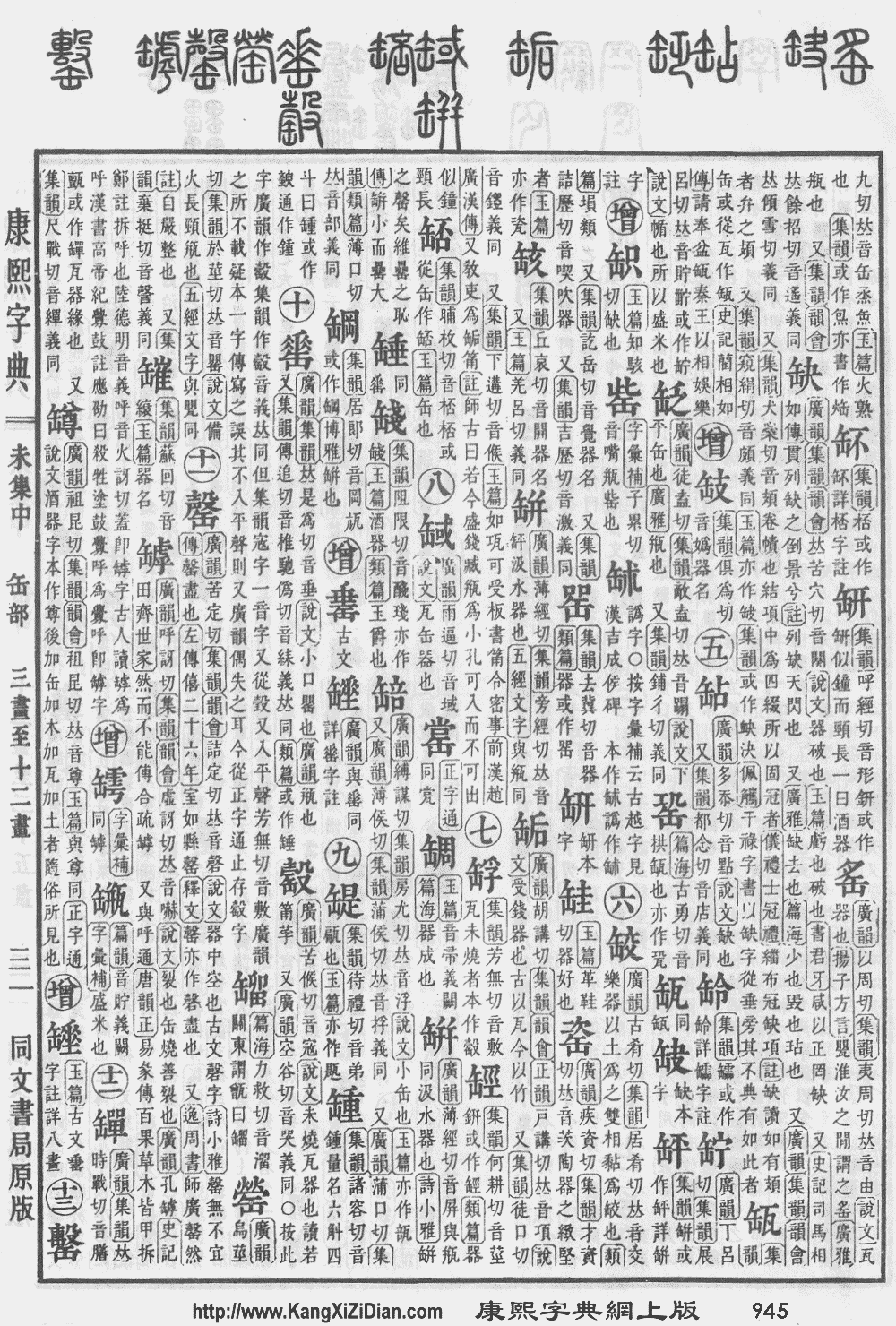
- KangXi: page 945, character 47
- Dai Kanwa Jiten: character 28169
- Dae Jaweon: page 1386, character 20
- Hanyu Da Zidian (first edition): volume 5, page 2938, character 16
- Unihan data for U+7F45
Chinese
Glyph origin
Etymology 1
| trad. | 罅 | |
|---|---|---|
| simp. # | 罅 | |
| alternative forms | 鏬 | |
(This etymology is missing or incomplete. Please add to it, or discuss it at the Etymology scriptorium. Particularly: “are the Cantonese and Hakka readings related?”)
Pronunciation
Definitions
罅
- crack; gap; rift; split (Classifier: 條/条 c)
- 喺A環同B環之間有條罅,呢條罅係由天文學家卡西尼發現,因此命名為卡西尼環縫。 [Cantonese, trad.]
- From: 2006, Cantonese Wikipedia, 土星 (tou2 sing1)
- hai2 ei1 waan4 tung4 bi1 waan4 zi1 gaan1 jau5 tiu4 laa3, nei1 tiu4 laa3 hai6 jau4 tin1 man4 hok6 gaa1 kaa1 sai1 nei4 faat3 jin6, jan1 ci2 ming6 ming4 wai4 kaa1 sai1 nei4 waan4 fung4. [Jyutping]
- There is a gap in between the A Ring and B Ring; this gap was discovered by the astronomer Cassini and is thus named the Cassini Division.
喺A环同B环之间有条罅,呢条罅系由天文学家卡西尼发现,因此命名为卡西尼环缝。 [Cantonese, simp.]
Synonyms
Dialectal synonyms of 縫 (“gap; crack”) [map]
Compounds
Pronunciation
Pronunciation
Japanese
Etymology
| Kanji in this term |
|---|
| 罅 |
| ひび Hyōgaiji |
| kun’yomi |
(This etymology is missing or incomplete. Please add to it, or discuss it at the Etymology scriptorium.)
This article is issued from Wiktionary. The text is licensed under Creative Commons - Attribution - Sharealike. Additional terms may apply for the media files.