脷
| ||||||||
Translingual
Han character
脷 (Kangxi radical 130, 肉+7, 11 strokes, cangjie input 月竹木弓 (BHDN), composition ⿰⺼利)
References
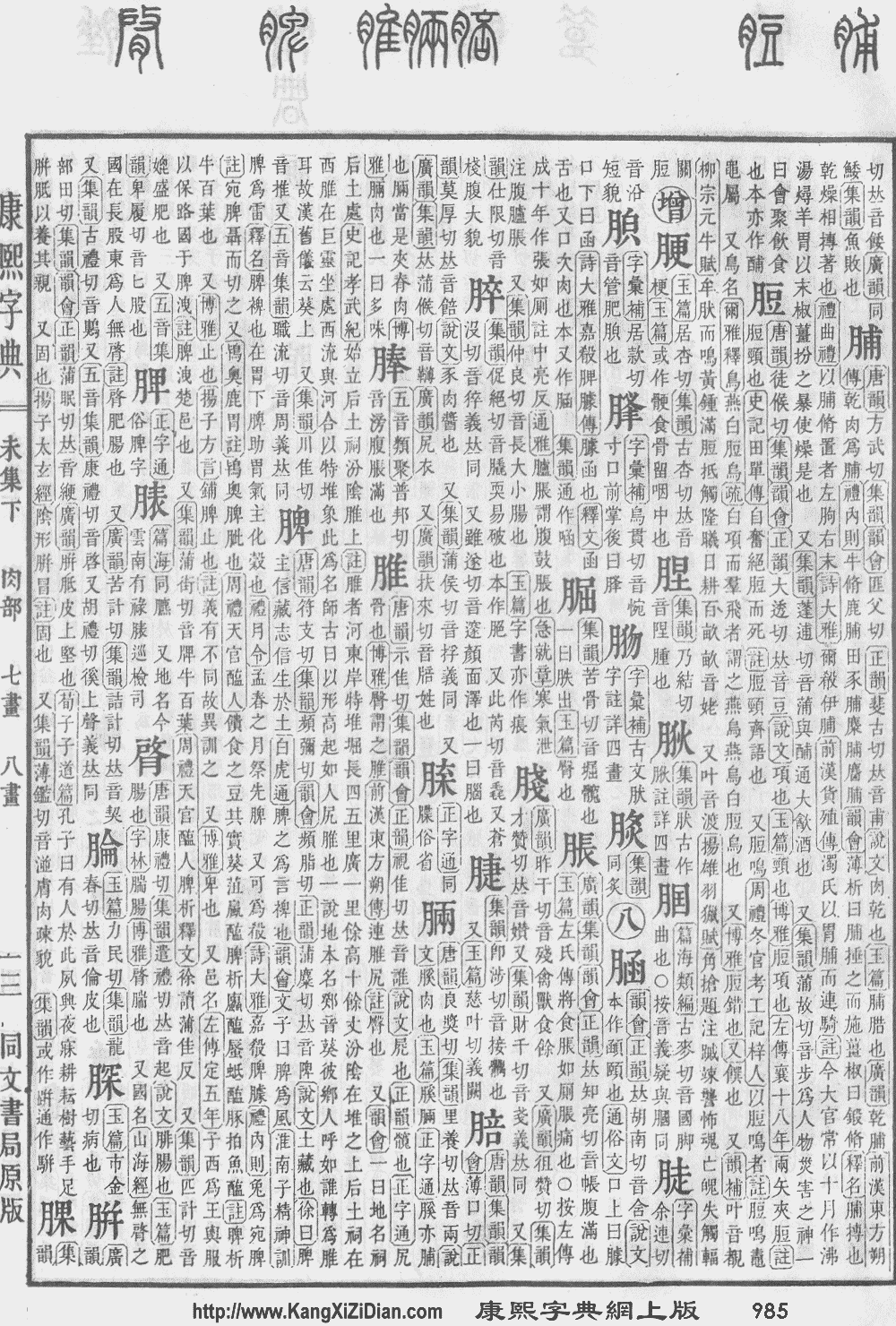
- KangXi: not present, would follow page 985, character 11
- Hanyu Da Zidian (first edition): volume 3, page 2078, character 10
- Unihan data for U+8137
Chinese
| trad. | 脷 | |
|---|---|---|
| simp. # | 脷 | |
| alternative forms | 利 | |
Glyph origin
Phono-semantic compound (形聲) : semantic ⺼ (“meat”) + phonetic 利. Specialization of 利 (“benefit; profit”).
Etymology
From 利 (“benefit; profit”), used as a euphemism for 舌 (sit6, “tongue”), which is homophonous to 折, 蝕/蚀 (sit6, “to be at a loss”).
Alternatively, it may be from 舐 (OC *ɦljeʔ, “to lick”), preserving the Old Chinese initial *l- (Schuessler, 2007).
Pronunciation
Definitions
脷
Synonyms
Dialectal synonyms of 舌頭 (“tongue”) [map]
This article is issued from Wiktionary. The text is licensed under Creative Commons - Attribution - Sharealike. Additional terms may apply for the media files.