臱
| ||||||||
Translingual
Han character
臱 (Kangxi radical 132, 自+9, 15 strokes, cangjie input 竹山十金尸 (HUJCS), composition ⿳自穴方)
References
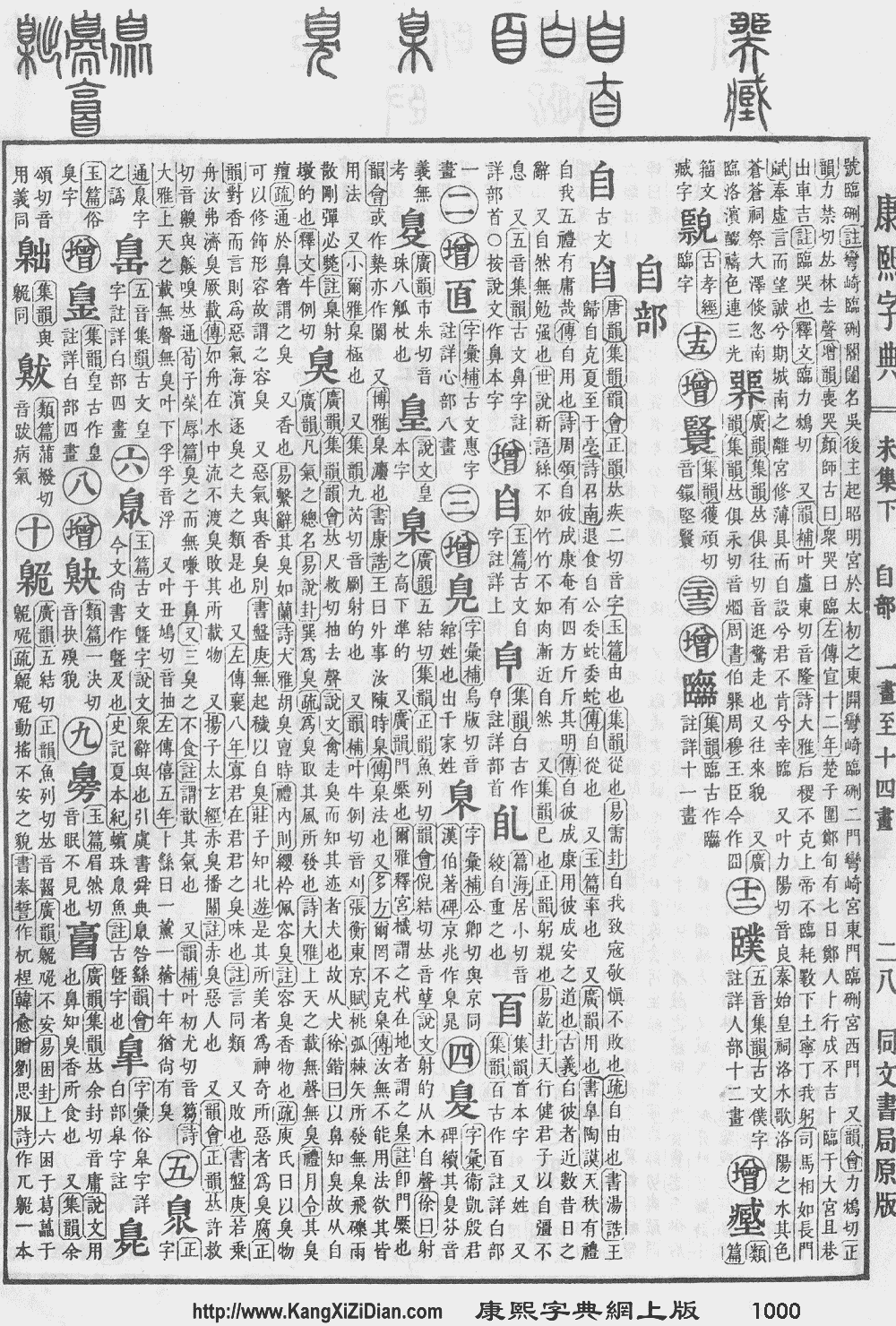
- KangXi: page 1000, character 28
- Dai Kanwa Jiten: character 30124
- Dae Jaweon: page 1457, character 3
- Hanyu Da Zidian (first edition): volume 5, page 3048, character 20
- Unihan data for U+81F1
Chinese
| trad. | 臱 | |
|---|---|---|
| simp. # | 臱 | |
Glyph origin
| Historical forms of the character 臱 | ||
|---|---|---|
| Western Zhou | Shuowen Jiezi (compiled in Han) | Liushutong (compiled in Ming) |
| Bronze inscriptions | Small seal script | Transcribed ancient scripts |
 |
 |
 |
Pronunciation
Etymology 2
| For pronunciation and definitions of 臱 – see 籩 (“bamboo container for food in ancient China”). (This character, 臱, is recorded in one or more historical dictionaries as an ancient form of 籩.) |
References
Japanese
Kanji
臱
- This term needs a translation to English. Please help out and add a translation, then remove the text
{{rfdef}}.
This article is issued from Wiktionary. The text is licensed under Creative Commons - Attribution - Sharealike. Additional terms may apply for the media files.