荳
See also: 豆
| ||||||||
Translingual
Han character
荳 (Kangxi radical 140, 艸+7, 10 strokes, cangjie input 廿一口廿 (TMRT), four-corner 44108, composition ⿱艹豆)
References
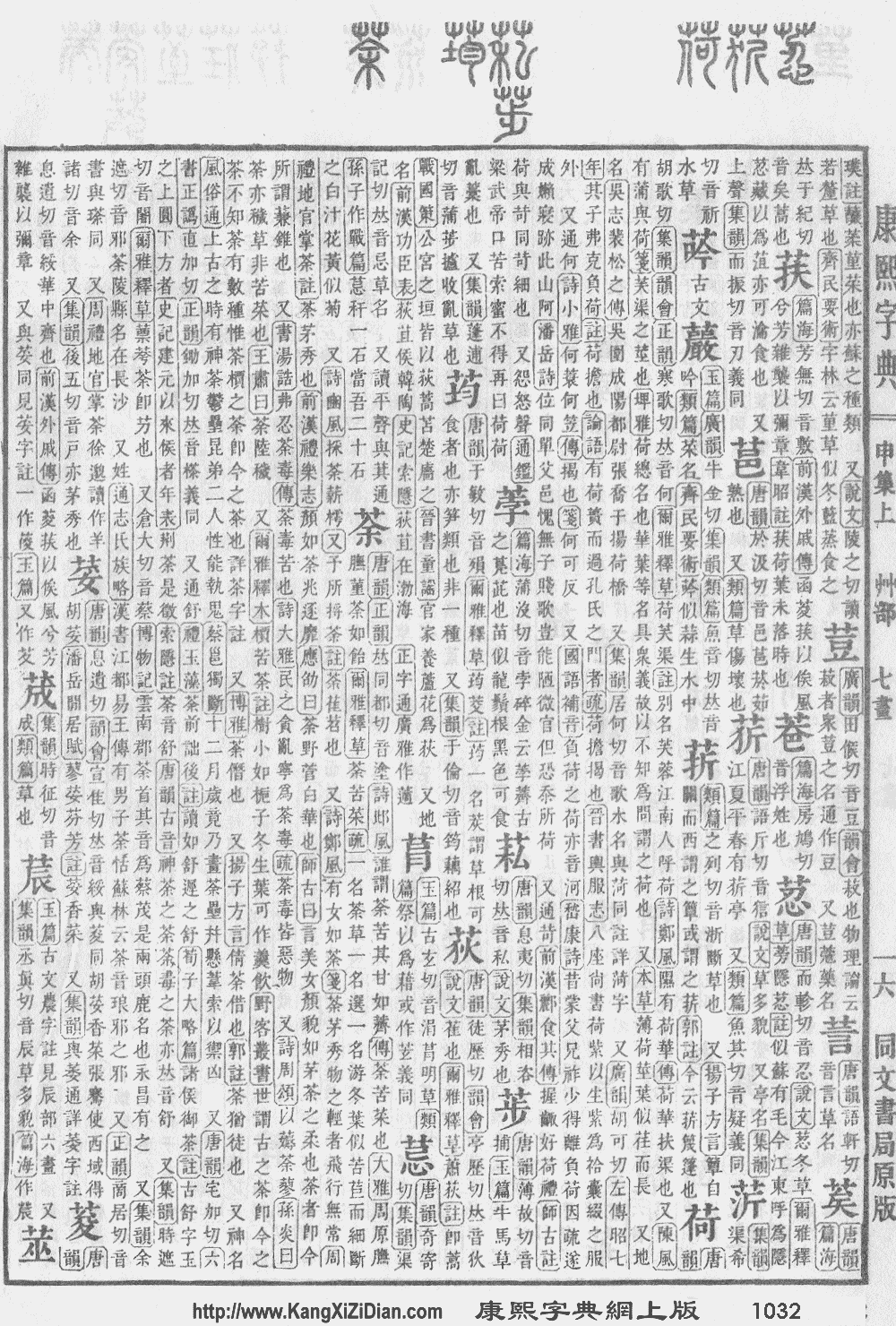
- KangXi: page 1032, character 1
- Dai Kanwa Jiten: character 30989
- Dae Jaweon: page 1491, character 16
- Hanyu Da Zidian (first edition): volume 5, page 3215, character 11
- Unihan data for U+8373
Chinese
Glyph origin
Characters in the same phonetic series (豆) (Zhengzhang, 2003)
Phono-semantic compound (形聲, OC *doːs) and ideogrammic compound (會意) : semantic 艹 (“grass”) + phonetic 豆 (OC *doːs, “bean”).
Japanese
Compounds
- 肉荳蒄
Korean
Vietnamese
This article is issued from Wiktionary. The text is licensed under Creative Commons - Attribution - Sharealike. Additional terms may apply for the media files.