號
See also: 号
| ||||||||
Translingual
| Japanese | 号 |
|---|---|
| Simplified | 号 |
| Traditional | 號 |
Han character
號 (Kangxi radical 141, 虍+7, 13 strokes, cangjie input 口尸卜心弓 (RSYPN) or 口尸卜心山 (RSYPU), four-corner 61211, composition ⿰号虎)
References
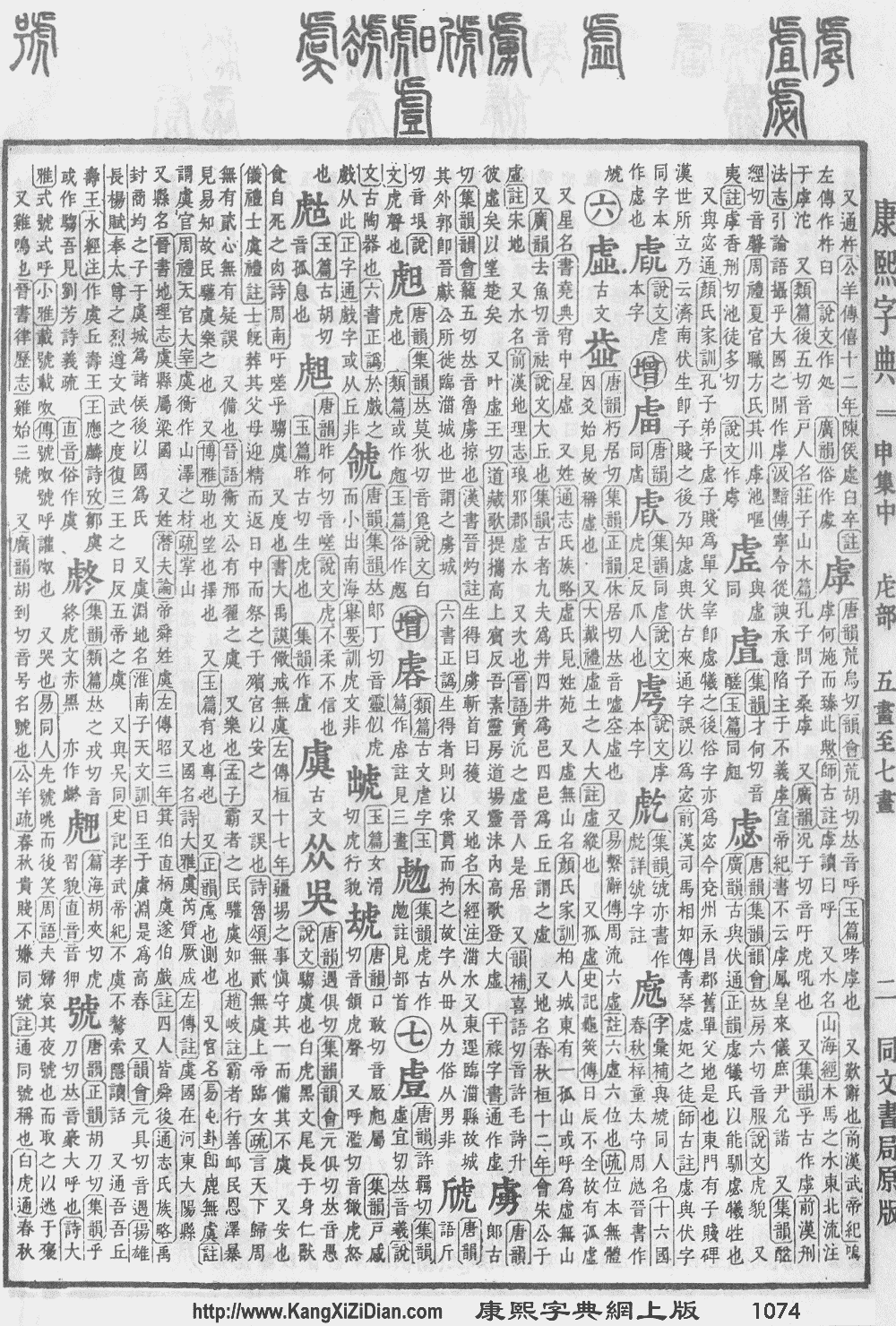
- KangXi: page 1074, character 29
- Dai Kanwa Jiten: character 32726
- Dae Jaweon: page 1543, character 7
- Hanyu Da Zidian (first edition): volume 4, page 2824, character 4
- Unihan data for U+865F
Chinese
| trad. | 號 | |
|---|---|---|
| simp. | 号 | |
| alternative forms | 𠳯 虠 | |
Glyph origin
Characters in the same phonetic series (号) (Zhengzhang, 2003)
Phono-semantic compound (形聲, OC *ɦlaːw, *ɦlaːws) : phonetic 号 (OC *ɦlaːws) + semantic 虎.
Etymology
From Proto-Sino-Tibetan *(g/k)aw (“to call”) (Schuessler, 2007, STEDT). Compare Kinnauri ku, Anong go, and Burmese ခေါ် (hkau). The extension of the meaning ‘shout, call’ to ‘ask, request’ is parallel to 呼 (hū).
Pronunciation 1 is the exopassive derivation of pronunciation 2, literally "what is called".
Pronunciation 1
Definitions
號
- name; alias
- (specifically) art name
- to order; to command
- shop; store
- mark; symbol
- number
- day of the month
- (music) brass wind instrument
- (typography) hao
- See also: 字號
- (Internet) account
- (Central Plains Mandarin, Lanyin Mandarin, Sichuanese) to correct; to mark (school work)
Synonyms
- (day of the month): 日 (rì)
Compounds
Derived terms from 號
|
|
|
Pronunciation 2
Definitions
號
Compounds
References
- “號”, in 漢語多功能字庫 (Multi-function Chinese Character Database), 香港中文大學 (the Chinese University of Hong Kong), 2014–
- Dictionary of Chinese Character Variants (教育部異體字字典), A03612
- “Entry #10008”, in 臺灣閩南語常用詞辭典 [Dictionary of Frequently-Used Taiwan Minnan] (in Chinese and Min Nan), Ministry of Education, R.O.C., 2011.
Japanese
| 号 | |
| 號 |
Korean
Etymology 1
From Middle Chinese 號 (MC ɦɑuH, “name; command”).
| Historical readings |
|---|
|
Pronunciation
- (SK Standard/Seoul) IPA(key): [ɸʷo̞(ː)]
- Phonetic hangul: [호(ː)]
- Though still prescribed in Standard Korean, most speakers in both Koreas no longer distinguish vowel length.
Compounds
Compounds
- 구호 (口號, guho)
- 기호 (記號, giho)
- 번호 (番號, beonho)
- 부호 (符號, buho)
- 암호 (暗號, amho)
- 연호 (年號, yeonho)
- 칭호 (稱號, chingho)
- 상호 (商號, sangho)
- 국호 (國號, gukho)
- 명호 (名號, myeongho)
- 호령 (號令, horyeong)
- 호실 (號室, hosil)
- 호수 (號數, hosu)
- 자호 (自號, jaho)
- 호각 (號角, hogak)
- 군호 (軍號, gunho)
- 등호 (等號, deungho)
- 아호 (雅號, aho)
- 신호 (信號, sinho)
- 통호 (通號, tongho)
- 법호 (法號, beopho)
- 신호등 (信號燈, sinhodeung)
- 적신호 (赤信號, jeoksinho)
- 청신호 (靑信號, cheongsinho)
Etymology 2
From Middle Chinese 號 (MC ɦɑu, “shout; cry”).
| Historical readings |
|---|
|
Pronunciation
- (SK Standard/Seoul) IPA(key): [ɸʷo̞(ː)]
- Phonetic hangul: [호(ː)]
- Though still prescribed in Standard Korean, most speakers in both Koreas no longer distinguish vowel length.
Vietnamese
This article is issued from Wiktionary. The text is licensed under Creative Commons - Attribution - Sharealike. Additional terms may apply for the media files.