倒
| ||||||||
Translingual
Han character
倒 (Kangxi radical 9, 人+8, 10 strokes, cangjie input 人一土弓 (OMGN), four-corner 22200, composition ⿰亻到)
Derived characters
- 𨃫, 𪝻
References
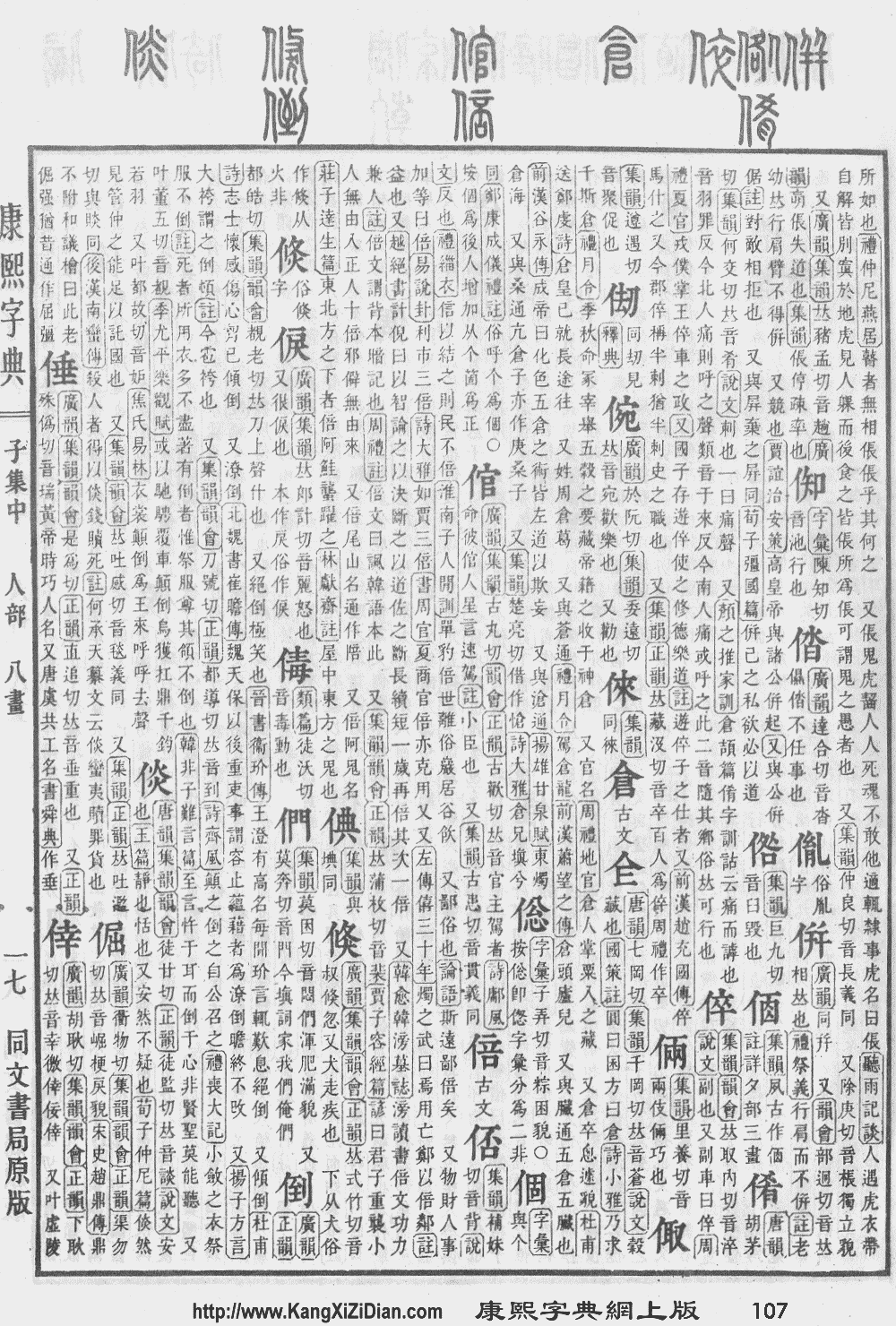
- KangXi: page 107, character 27
- Dai Kanwa Jiten: character 767
- Dae Jaweon: page 229, character 7
- Hanyu Da Zidian (first edition): volume 1, page 174, character 2
- Unihan data for U+5012
Chinese
| simp. and trad. |
倒 | |
|---|---|---|
Glyph origin
| Historical forms of the character 倒 | |
|---|---|
| Shuowen Jiezi (compiled in Han) | |
| Small seal script | |
 | |
| |
|
References: Mostly from Richard Sears' Chinese Etymology site (authorisation),
|
Characters in the same phonetic series (刀) (Zhengzhang, 2003)
| Old Chinese | |
|---|---|
| 刀 | *taːw |
| 忉 | *taːw |
| 魛 | *taːw |
| 舠 | *taːw |
| 朷 | *taːw, *moːɡ |
| 叨 | *tuːw, *l̥ʰaːw |
| 倒 | *taːwʔ, *taːws |
| 到 | *taːws |
| 菿 | *taːws, *rtaːwɢ |
| 鞀 | *deːw |
| 鳭 | *rteːw, *teːw |
| 灱 | *hreːw |
| 菬 | *sdew, *tjewʔ |
| 超 | *tʰew |
| 怊 | *tʰew, *tʰjew |
| 欩 | *tʰew |
| 召 | *dews, *djews |
| 昭 | *tjew |
| 招 | *tjew |
| 鉊 | *tjew |
| 沼 | *tjewʔ |
| 照 | *tjews |
| 詔 | *tjews |
| 炤 | *tjews |
| 弨 | *tʰjew, *tʰjewʔ |
| 眧 | *tʰjewʔ |
| 韶 | *djew |
| 佋 | *djew, *djewʔ |
| 軺 | *djew, *lew |
| 玿 | *djew |
| 柖 | *djew |
| 紹 | *djewʔ |
| 袑 | *djewʔ |
| 綤 | *djewʔ |
| 邵 | *djews |
| 劭 | *djews |
| 卲 | *djews |
| 刁 | *teːw |
| 芀 | *teːw, *deːw |
| 貂 | *teːw |
| 蛁 | *teːw |
| 迢 | *deːw |
| 苕 | *deːw |
| 髫 | *deːw |
| 岧 | *deːw |
Phono-semantic compound (形聲, OC *taːwʔ, *taːws) : semantic 亻 + phonetic 到 (OC *taːws).
Pronunciation 1
Definitions
倒
- to fall; to fall over; to fall down
- to collapse; to fall in
- to lie down; to recline
- to fail; to be on the decline
- to be damaged; to malfunction
- to go bankrupt; to close down
- to sell out; to sell up; to give up for money
- to buy and resell for a profit
- to stop; to discontinue
- to move; to move around
- to change; to switch over
- (Cantonese) to pour out; to tip; to dump
- (neologism, slang) to be astonished (to the extent that one feels dizzy and falls); to be left speechless
- (Southwestern Mandarin) This term needs a translation to English. Please help out and add a translation, then remove the text
{{rfdef}}.
Synonyms
Dialectal synonyms of 躺 (“to lie; to recline”) [map]
| Variety | Location | Words |
|---|---|---|
| Formal (Written Standard Chinese) | 躺 | |
| Mandarin | Beijing | 躺, 歪 |
| Taiwan | 躺 | |
| Jinan | 躺 | |
| Xi'an | 睡, 躺 | |
| Wuhan | 睡 | |
| Chengdu | 躺, 睡 | |
| Guilin | 躺 | |
| Yangzhou | 躺, 睡 | |
| Hefei | 睡, 躺 | |
| Singapore | 躺 | |
| Cantonese | Guangzhou | 瞓 |
| Hong Kong | 瞓 | |
| Yangjiang | 睡 | |
| Singapore (Guangfu) | 瞓 | |
| Gan | Nanchang | 睏 |
| Hakka | Meixian | 眠, 抗 |
| Miaoli (N. Sixian) | 睡 | |
| Pingtung (Neipu; S. Sixian) | 眠 | |
| Hsinchu County (Zhudong; Hailu) | 睡 | |
| Taichung (Dongshi; Dabu) | 睡 | |
| Hsinchu County (Qionglin; Raoping) | 睡 | |
| Jin | Taiyuan | 躺, 睡 |
| Min Bei | Jian'ou | 倒 |
| Min Dong | Fuzhou | 倒 |
| Min Nan | Xiamen | 倒 |
| Quanzhou | 倒 | |
| Zhangzhou | 倒 | |
| Penang (Hokkien) | 倒 | |
| Singapore (Hokkien) | 倒 | |
| Chaozhou | 倒 | |
| Wu | Suzhou | 睏 |
| Wenzhou | 翻, 倒 | |
| Xiang | Changsha | 睏 |
| Shuangfeng | 睏 | |
Compounds
Derived terms from 倒
|
|
|
Pronunciation 2
Definitions
倒
- to put upside down; to invert; to be inverted
- to reverse; to move backwards; to turn back
- upside down; inverted; flipped; reversed
- to pour out; to dump; to empty
- to cast; to mould
- contrary to expectation; conversely; on the contrary; instead
- particle indicating contrast; but; however
- particle used after a ‹verb + 得› structure to indicate it is contrary to the actual situation, implying blame; then
- particle used in a subordinate clause at the beginning of a sentence to indicate concession; quite
- particle used in an imperative sentence to indicate impatience
- particle used to soften the tone
- (Min Nan) left (direction)
Synonyms
Dialectal synonyms of 左 (“left”) [map]
Antonyms
(left): (Min Nan) 正 (chiàⁿ, “right”)
Compounds
Derived terms from 倒
|
|
|
References
- “倒”, in 漢語多功能字庫 (Multi-function Chinese Character Database), 香港中文大學 (the Chinese University of Hong Kong), 2014–
Japanese
Korean
Vietnamese
Han character
- This term needs a translation to English. Please help out and add a translation, then remove the text
{{rfdef}}.
This article is issued from Wiktionary. The text is licensed under Creative Commons - Attribution - Sharealike. Additional terms may apply for the media files.