衹

See also: 祗, 祇, 秖, and 只
衹 U+8879, 衹
CJK UNIFIED IDEOGRAPH-8879
← 衸
[U+8878]
CJK Unified Ideographs 衺 →
[U+887A]

Translingual

Han character

衹 (Kangxi radical 145, 衣+4, 10 strokes, cangjie input 中竹女心 (LHVP), four-corner 32240, composition ⿰衤氏)

References

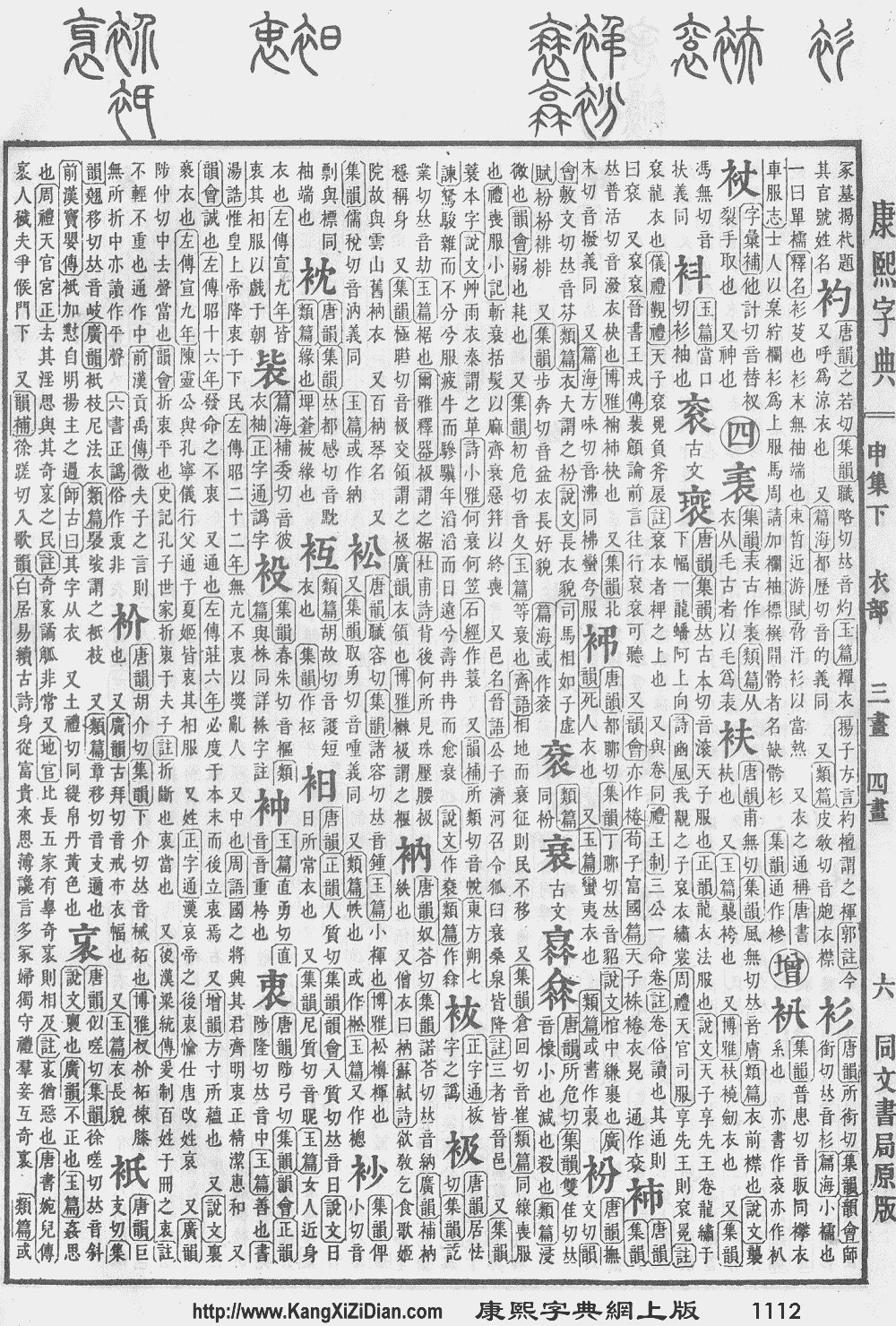
  • KangXi: page 1112, character 30
  • Dai Kanwa Jiten: character 34141
  • Dae Jaweon: page 1578, character 14
  • Hanyu Da Zidian (first edition): volume 5, page 3079, character 8
  • Unihan data for U+8879

Chinese

Glyph origin

Etymology 1

trad. 只*/衹
simp. 只*
For pronunciation and definitions of 衹 – see 只 (“only; just; simply; merely; originally; at first; etc.”).
(This character, 衹, is a variant form of 只.)

Etymology 2

simp. and trad.
衹

Pronunciation


Rime
Character 衹
Reading # 2/2
Initial (聲) 群 (30)
Final (韻) 支 (11)
Tone (調) Level (Ø)
Openness (開合) Open
Division (等) III
Fanqie 巨支切
Reconstructions
Zhengzhang
Shangfang
/ɡiᴇ/
Pan
Wuyun
/ɡiɛ/
Shao
Rongfen
/ɡjɛ/
Edwin
Pulleyblank
/giə̆/
Li
Rong
/ɡie/
Wang
Li
/ɡǐe/
Bernard
Karlgren
/gie̯/
Expected
Mandarin
Reflex
qí
Expected
Cantonese
Reflex
kei4
Zhengzhang system (2003)
Character 衹
Reading # 2/2
No. 11527
Phonetic
component
氏
Rime
group
支
Rime
subdivision
0
Corresponding
MC rime
祇
Old
Chinese
/*ɡe/

Definitions

衹

  1. Used in 衹衼 (“clothing worn by monks and nuns”).
  2. Alternative form of 祇 (qí).

Etymology 3

For pronunciation and definitions of 衹 – see 緹 (“reddish color, red, brown”).
(This character, 衹, is a variant form of 緹.)

Japanese

Kanji

衹

(uncommon “Hyōgai” kanji)

  1. This term needs a translation to English. Please help out and add a translation, then remove the text {{rfdef}}.

Readings

  • On (unclassified): き (ki), ぎ (gi), し (shi), てい (tei), たい (tai)
  • Kun: たまたま (tamatama)
This article is issued from Wiktionary. The text is licensed under Creative Commons - Attribution - Sharealike. Additional terms may apply for the media files.