覡

See also: 觋
覡 U+89A1, 覡
CJK UNIFIED IDEOGRAPH-89A1
← 覠
[U+89A0]
CJK Unified Ideographs 覢 →
[U+89A2]

Translingual

Han character

覡 (Kangxi radical 147, 見+7, 14 strokes, cangjie input 一人月山山 (MOBUU), four-corner 16110, composition ⿰巫見)

  1. wizard

References

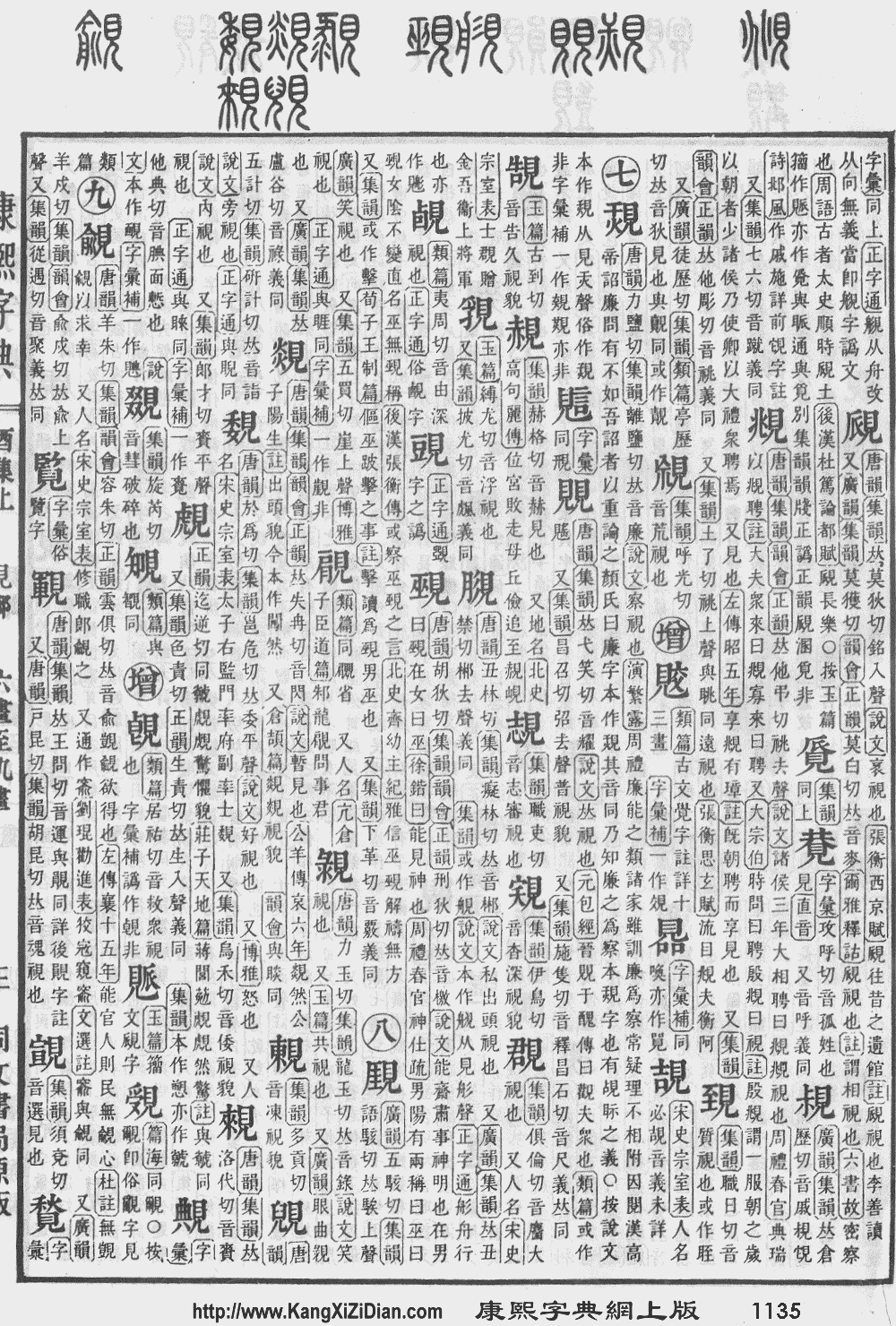
  • KangXi: page 1135, character 23
  • Dai Kanwa Jiten: character 34875
  • Dae Jaweon: page 1602, character 2
  • Hanyu Da Zidian (first edition): volume 6, page 3668, character 17
  • Unihan data for U+89A1

Chinese

Glyph origin

Ideogrammic compound (會意) : 巫 (“shaman”) + 見 (“to see”).

Etymology 1

trad. 覡
simp. 觋
alternative forms 擊/击

Pronunciation


Rime
Character 覡
Reading # 1/1
Initial (聲) 匣 (33)
Final (韻) 青 (127)
Tone (調) Checked (Ø)
Openness (開合) Open
Division (等) IV
Fanqie 胡狄切
Baxter hek
Reconstructions
Zhengzhang
Shangfang
/ɦek̚/
Pan
Wuyun
/ɦek̚/
Shao
Rongfen
/ɣɛk̚/
Edwin
Pulleyblank
/ɦɛjk̚/
Li
Rong
/ɣek̚/
Wang
Li
/ɣiek̚/
Bernard
Karlgren
/ɣiek̚/
Expected
Mandarin
Reflex
xí
Expected
Cantonese
Reflex
jik6
Zhengzhang system (2003)
Character 覡
Reading # 1/1
No. 13398
Phonetic
component
覡
Rime
group
錫
Rime
subdivision
0
Corresponding
MC rime
檄
Old
Chinese
/*ɡeːɡ/
Notes 或雲見亦聲

Definitions

覡

  1. (literary) male shaman; wizard

Compounds

Etymology 2

trad. 覡
simp. 觋
alternative forms 醒 Cantonese

Pronunciation


Definitions

覡

  1. (Cantonese, Hakka) sorcery; witchcraft

Compounds

  • 問覡/问觋
  • 覡公/觋公
  • 覡婆/觋婆

Japanese

Kanji

覡

(uncommon “Hyōgai” kanji)

  1. medium, diviner

Readings

Etymology 1

Kanji in this term
覡
かんなぎ
Hyōgaiji
kun’yomi
For pronunciation and definitions of 覡 – see the following entry.
【巫かんなぎ】J
[noun] (archaic) a medium or shaman, usually female, who acts as a medium between humans and the spirits or gods, helping to communicate between the two and to calm any supernatural or spiritual upset
Alternative spelling
覡
(This term, 覡, is an alternative spelling of the above term.)

Etymology 2

Kanji in this term
覡
こうなぎ
Hyōgaiji
kun’yomi
For pronunciation and definitions of 覡 – see the following entry.
【巫こうなぎ】J
[noun] (archaic, possibly obsolete) a medium or shaman, usually female, who acts as a medium between humans and the spirits or gods, helping to communicate between the two and to calm any supernatural or spiritual upset
Alternative spelling
覡
(This term, 覡, is an alternative spelling of the above term.)

Etymology 3

Kanji in this term
覡
みこ
Hyōgaiji
kun’yomi
For pronunciation and definitions of 覡 – see the following entry.
【巫女みこ】
[noun] An unmarried woman who serves at a Shintō shrine, helping to receive visitors and performing 神楽 (kagura) dances at ceremonies, among other responsibilities. A shrine maid.
[noun] An unmarried woman who serves a deity as a medium to convey oracles.
Alternative spellings
神子, 神巫, 覡, 巫
(This term, 覡, is an alternative spelling of the above term.)

Korean

Hanja

覡 • (gyeok) (hangeul 격, revised gyeok, McCune–Reischauer kyŏk, Yale kyek)

  1. This term needs a translation to English. Please help out and add a translation, then remove the text {{rfdef}}.
This article is issued from Wiktionary. The text is licensed under Creative Commons - Attribution - Sharealike. Additional terms may apply for the media files.