諛
See also: 谀
| ||||||||
Translingual
Han character
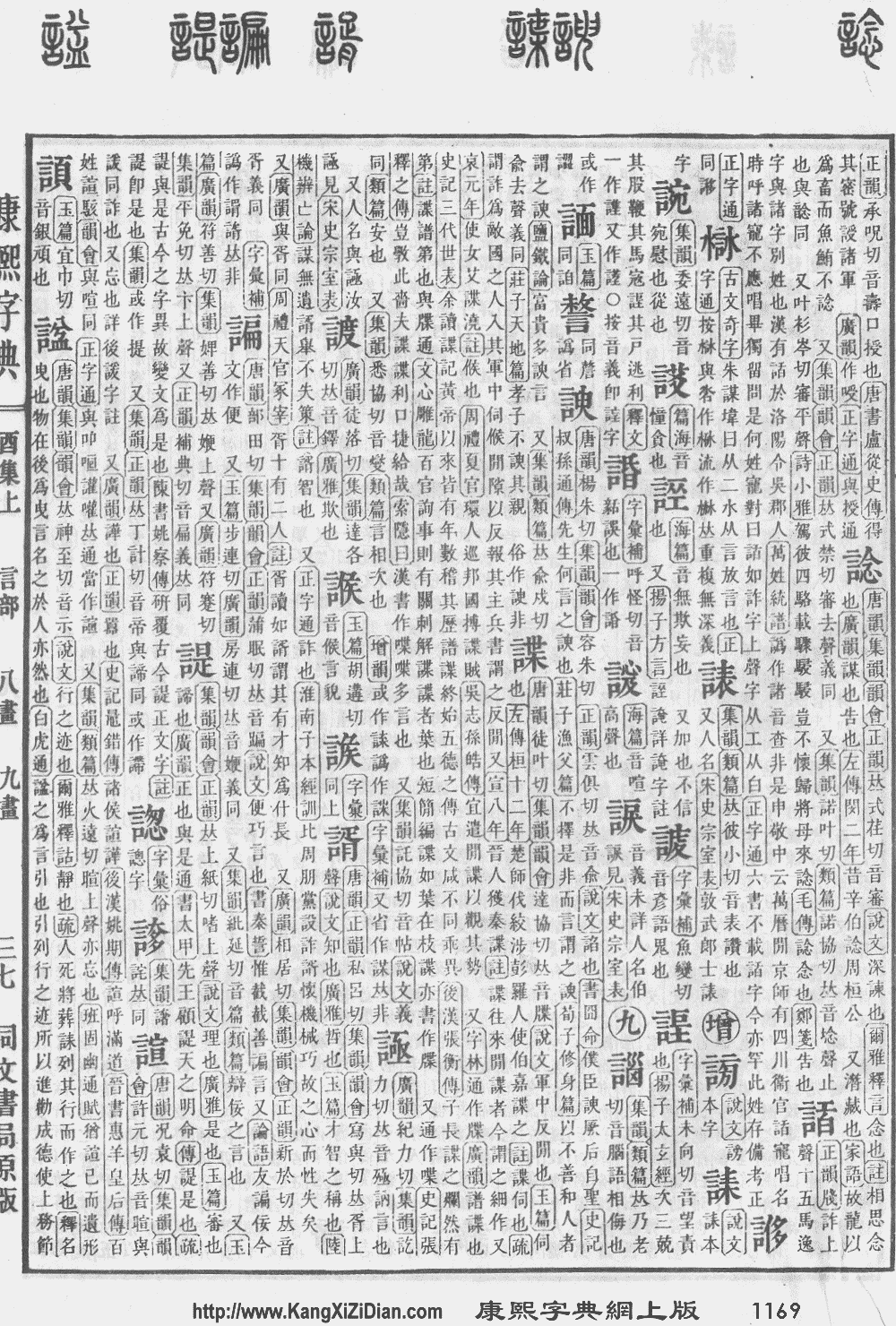
諛 (Kangxi radical 149, 言+9, 16 strokes, cangjie input 卜口竹X人 (YRHXO), four-corner 07637, composition ⿰訁臾)
References
- KangXi: page 1169, character 19
- Dai Kanwa Jiten: character 35696
- Dae Jaweon: page 1635, character 8
- Hanyu Da Zidian (first edition): volume 6, page 3987, character 5
- Unihan data for U+8ADB
Chinese
| trad. | 諛 | |
|---|---|---|
| simp. | 谀 | |
Glyph origin
Characters in the same phonetic series (臾) (Zhengzhang, 2003)
Phono-semantic compound (形聲, OC *lo) : semantic 言 + phonetic 臾 (OC *ɡruds, *lo).
Pronunciation
Definitions
諛
- † to flatter; to truckle; to toady to
- 僕臣正,厥后克正;僕臣諛,厥后自聖。 [Classical Chinese, trad.]
- From: The Book of Documents, circa 4th – 3rd century BCE
- Púchén zhèng, jué hòu kè zhèng; púchén yú, jué hòu zì shèng. [Pinyin]
- When these household officers are correct, the sovereign will be correct;
When they are flatterers, the sovereign will consider himself a sage.
仆臣正,厥后克正;仆臣谀,厥后自圣。 [Classical Chinese, simp.]- 謂己道人,則勃然作色;謂己諛人,則怫然作色。而終身道人也,終身諛人也。 [Classical Chinese, trad.]
- From: Zhuangzi, circa 3rd – 2nd centuries BCE
- Wèi jǐ dào rén, zé bórán zuòsè; wèi jǐ yú rén, zé fúrán zuòsè. Ér zhōngshēn dào rén yě, zhōngshēn yú rén yě. [Pinyin]
- Tell a man that he is merely following (the opinions) of another, and at once he flushes with anger.
Tell a man that he is flatterer of others, and immediately he flushes with anger.
And yet all his life he is merely following others, and flattering them.
谓己道人,则勃然作色;谓己谀人,则怫然作色。而终身道人也,终身谀人也。 [Classical Chinese, simp.]
- † flattery; toadying words
- † (ideophonic) kind; gentle; meek
Compounds
Japanese
Korean
Hanja
諛 • (yu) (hangeul 유, revised yu, McCune–Reischauer yu, Yale yu)
- This term needs a translation to English. Please help out and add a translation, then remove the text
{{rfdef}}.
Vietnamese
This article is issued from Wiktionary. The text is licensed under Creative Commons - Attribution - Sharealike. Additional terms may apply for the media files.