以
| ||||||||
Translingual
| Stroke order | |||
|---|---|---|---|
 | |||
| Stroke order | |||
|---|---|---|---|
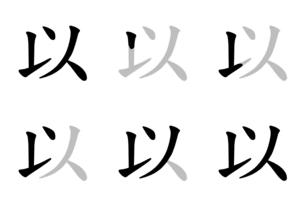 | |||
Han character
以 (Kangxi radical 9, 人+3 in traditional Chinese, Japanese and Korean, 人+2 in simplified Chinese, 5 strokes in traditional Chinese, Japanese and Korean, 4 strokes in simplified Chinese, cangjie input 女戈人 (VIO), four-corner 28100, composition ⿲𠄌丶人 or ⿲⿱丨㇀丶人)
Descendants
- い (Hiragana character derived from Man'yōgana)
- 𛀆
References
- KangXi: page 94, character 1
- Dai Kanwa Jiten: character 388
- Dae Jaweon: page 199, character 1
- Hanyu Da Zidian (first edition): volume 1, page 105, character 7
- Unihan data for U+4EE5
Chinese
| trad. | 以 | |
|---|---|---|
| simp. # | 以 | |
| alternative forms | 㠯 㕥 | |
Glyph origin
| Historical forms of the character 以 | ||||||||||||||||||||||||||||||||||||||||||||||||||||||||||||||||||||||||||||||||||||||||||||||||||||||||||||||||
|---|---|---|---|---|---|---|---|---|---|---|---|---|---|---|---|---|---|---|---|---|---|---|---|---|---|---|---|---|---|---|---|---|---|---|---|---|---|---|---|---|---|---|---|---|---|---|---|---|---|---|---|---|---|---|---|---|---|---|---|---|---|---|---|---|---|---|---|---|---|---|---|---|---|---|---|---|---|---|---|---|---|---|---|---|---|---|---|---|---|---|---|---|---|---|---|---|---|---|---|---|---|---|---|---|---|---|---|---|---|---|---|---|
| Shang | Western Zhou | Warring States | Shuowen Jiezi (compiled in Han) | Liushutong (compiled in Ming) | ||||||||||||||||||||||||||||||||||||||||||||||||||||||||||||||||||||||||||||||||||||||||||||||||||||||||||||
| Bronze inscriptions | Oracle bone script | Bronze inscriptions | Chu slip and silk script | Qin slip script | Small seal script | Transcribed ancient scripts | ||||||||||||||||||||||||||||||||||||||||||||||||||||||||||||||||||||||||||||||||||||||||||||||||||||||||||
 |
 |
 |
 |
 |
 |
 | ||||||||||||||||||||||||||||||||||||||||||||||||||||||||||||||||||||||||||||||||||||||||||||||||||||||||||
||||||
|
References: Mostly from Richard Sears' Chinese Etymology site (authorisation),
| ||||||||||||||||||||||||||||||||||||||||||||||||||||||||||||||||||||||||||||||||||||||||||||||||||||||||||||||||


Pictogram (象形) – a person (人) carrying something. It is often simplified to 㠯 in pre-Qin ancient scripts.
Etymology 1
From Proto-Sino-Tibetan *la-k (“to take; to fetch”) (Schuessler, 2007; STEDT). Cognate with 式 (OC *hljɯɡ, “model; form; rule”), 試 (OC *hljɯɡs, “to test; to try”).
Pronunciation
Definitions
以
- a preposition that expresses a boundary in time, orientation, direction or quantity
- by; with; by means of
- 以少勝多/以少胜多 ― yǐ shǎo shèng duō ― to defeat (enemy troops) with a force inferior in number
- 以德報怨/以德报怨 ― yǐdébàoyuàn ― to return good for evil (literally, “to recompense injury with kindness”)
- 以賣衣服為生/以卖衣服为生 ― yǐ mài yīfú wéi shēng ― to make a living by selling clothes
- 以大局為重/以大局为重 ― yǐ dàjú wéi zhòng ― to focus on the big picture (literally, “to treat the big picture as [something] serious”)
- 投我以木瓜,報之以瓊琚。 [Pre-Classical Chinese, trad.]
- From: The Classic of Poetry, c. 11th – 7th centuries BCE, translated based on James Legge's version
- Tóu wǒ yǐ mùguā, bào zhī yǐ qióngjū. [Pinyin]
- There was presented to me a papaya,
And I returned for it a beautiful Ju-gem.
投我以木瓜,报之以琼琚。 [Pre-Classical Chinese, simp.]- 3月21日,公司正式宣布,向文萊衛生部捐贈價值100萬美元的醫療物資和設備,以實際行動支持文萊抗疫。 [MSC, trad.]
- From: 孙广勇; 赵益普 (7 April 2020), ““我们对加强文中互利合作充满信心”——中企为促进文莱经济稳定和发展作出贡献”, in People's Daily, page 17
- 3 yuè 21 rì, gōngsī zhèngshì xuānbù, xiàng Wénlái wèishēng bù juānzèng jiàzhí 100 wàn měiyuán de yīliáo wùzī hé shèbèi, yǐ shíjì xíngdòng zhīchí wénlái kàngyì. [Pinyin]
- (please add an English translation of this example)
3月21日,公司正式宣布,向文莱卫生部捐赠价值100万美元的医疗物资和设备,以实际行动支持文莱抗疫。 [MSC, simp.]
- according to
- 以大小排列 ― yǐ dàxiǎo páiliè ― to arrange by size
- 物以類聚/物以类聚 ― wùyǐlèijù ― birds of a feather flock together (lit. things will be gathered together according to category)
- 禮法以時而定,制令各順其宜,兵甲器備各便其用。 [Classical Chinese, trad.]
- From: The Book of Lord Shang, circa 3rd century BCE
- Lǐfǎ yǐ shí ér dìng, zhìlìng gè shùn qí yí, bīngjiǎ qìbèi gè biàn qí yòng. [Pinyin]
- As rites and laws were fixed in accordance with what was opportune, regulations and orders were all expedient, and weapons, armour, implements and equipment were all practical
礼法以时而定,制令各顺其宜,兵甲器备各便其用。 [Classical Chinese, simp.]
- so as to; in order to
- 以正視聽/以正视听 ― yǐzhèngshìtīng ― in order to ensure a correct understanding of the facts
- 以防萬一/以防万一 ― yǐfángwànyī ― just in case (literally, “to protect against a contingency”)
- 市民對惡劣天氣要作出適當的預防措施,以減低可能引致的人命傷亡及財物損失。 [MSC, trad.]
- Shìmín duì èliè tiānqì yào zuòchū shìdāng de yùfáng cuòshī, yǐ jiǎndī kěnéng yǐnzhì de rénmìng shāngwáng jí cáiwù sǔnshī. [Pinyin]
- The public should take appropriate preventive measures against severe weather in order to minimize possible loss of life, injury and property damage.
市民对恶劣天气要作出适当的预防措施,以减低可能引致的人命伤亡及财物损失。 [MSC, simp.]
- because; because of
- 勿以善小而不為/勿以善小而不为 ― wù yǐ shàn xiǎo ér bù wéi ― do not fail to commit a good act just because it is small in scale.
- 子曰:「君子不以言舉人,不以人廢言。」 [Classical Chinese, trad.]
- From: The Analects of Confucius, c. 475 – 221 BCE, translated based on James Legge's version
- Zǐ yuē: “Jūnzǐ bù yǐ yán jǔ rén, bù yǐ rén fèi yán.” [Pinyin]
- The Master said, "The superior man does not promote a man simply on account of his words, nor does he put aside good words because of the man."
子曰:“君子不以言举人,不以人废言。” [Classical Chinese, simp.]
- (literary) therefore; thus
- 昔吾有先正,其言明且清,國家以寧,都邑以成,庶民以生。 [Classical Chinese, trad.]
- From: The Book of Rites, c. 4th – 2nd century BCE
- Xī wú yǒu xiānzhèng, qí yán míng qiě qīng, guójiā yǐ níng, dōuyì yǐ chéng, shùmín yǐ shēng. [Pinyin]
- Once we had that former premier, His words were wise and pure; The states and clans by him were (therefore) at rest, The chief cities and towns by him were (therefore) well regulated, All the people by him (therefore) enjoyed their life.
昔吾有先正,其言明且清,国家以宁,都邑以成,庶民以生。 [Classical Chinese, simp.]
- to use
- 我辭禮矣,彼則以之。猶有鬼神,於彼加之。 [Classical Chinese, trad.]
- From: Commentary of Zuo, c. 4th century BCE, translation from Zuozhuan: Commentary on the "Spring and Autumn Annals" (2017), by Stephen Durrant, Wai-yee Li and David Schaberg
- Wǒ cí lǐ yǐ, bǐ zé yǐ zhī. Yóu yǒu guǐshén, yú bǐ jiā zhī. [Pinyin]
- We had already declined the ritual, but they used it nonetheless. If there are indeed ghosts and spirits, they will inflict the consequences on them.”
我辞礼矣,彼则以之。犹有鬼神,于彼加之。 [Classical Chinese, simp.]
- (literary) to consider as
- 臣誠知不如徐公美,臣之妻私臣,臣之妾畏臣,臣之客欲有求於臣,皆以美於徐公。 [Classical Chinese, trad.]
- From: Zhanguo Ce, circa 5th – 3rd centuries BCE
- Chén chéng zhī bùrú Xú gōng měi, chén zhī qī sī chén, chén zhī qiè wèi chén, chén zhī kè yù yǒu qiú yú chén, jiē yǐ měi yú Xú gōng. [Pinyin]
- (please add an English translation of this example)
臣诚知不如徐公美,臣之妻私臣,臣之妾畏臣,臣之客欲有求于臣,皆以美于徐公。 [Classical Chinese, simp.]
- Short for 以色列 (Yǐsèliè, “Israel”).
- a surname
- (~母) (Chinese linguistics) the Middle Chinese initial of 以 (MC jɨX), equivalent to the 4th 等 (děng) of the initial 喻 (MC jɨoH)
Compounds
|
|
|
Etymology 2
| For pronunciation and definitions of 以 – see 似 (“to be like; to be similar to; to resemble; etc.”). (This character, 以, is a variant form of 似.) |
References
- “以”, in 漢語多功能字庫 (Multi-function Chinese Character Database), 香港中文大學 (the Chinese University of Hong Kong), 2014–
Japanese
Readings
Prefix
以 • (i-)
- from (this reference point) and (more)
- 以後 ― igo ― from now on
- その以後 ― sono igo ― from then on; since then
- この日以後 ― kono hi igo ― from this day on; ever since this day
- 2008 March 15, “ジャンク・ウォリアー [Junk Warrior]”, in STARTER DECK, Konami:
- 「ジャンク・シンクロン」+チューナー以外のモンスター1体以上
- “Janku Shinkuron” purasu Chūnā igai no monsutā ittai ijō
- “Junk Synchron” plus 1 or more non-Tuner monsters
- 「ジャンク・シンクロン」+チューナー以外のモンスター1体以上
- 2017 March 25, “リンク・スパイダー [Link Spider]”, in STARTER DECK, Konami:
- 通常モンスター1体
①:1ターンに1度、自分メインフェイズに発動できる。手札からレベル4以下の通常モンスター1体をこのカードのリンク先に特殊召喚する。- Tsūjō Monsutā ittai
Ichi: Ittān ni ichi-do, jibun Mein Feizu ni hatsudō dekiru. tefuda kara Reberu yon ika no Tsūjō Monsutā ittai o kono kādo no rinku-saki ni Tokushu Shōkan suru. - 1 or more Normal Monsters
1: Once per turn, can be activated during your Main Phase. Special Summons 1 Normal Monster of Level 4 or lower from your hand to where this card is linked to.
- Tsūjō Monsutā ittai
- 通常モンスター1体
- by, with, by means of
- Synonym: …をもって (… o motte)
Usage notes
- An expression prefixed with 以 means "from this reference point, and more". It can only be translated upon contexts. The reference point can be understood as "now", "here", "this", or aforementioned.
- 以上 (ijō): "or more/higher/above"; literally "from this point, and anything more/higher/above"
- 以下 (ika): "or less/lower/below"; literally "from this point, and anything less/lower/below"
- 以内 (inai): "within"; literally "from this range, and anything within"
- 以外 (igai): "outside, other than"; literally "from this range, and anything outside"
- 以前 (izen): "ago"; literally "from this point, and anything before"
- 以後 (igo): "later; ever since"; literally "from this point, and anything later"
Korean
Hanja
Vietnamese
Han character
- This term needs a translation to English. Please help out and add a translation, then remove the text
{{rfdef}}.