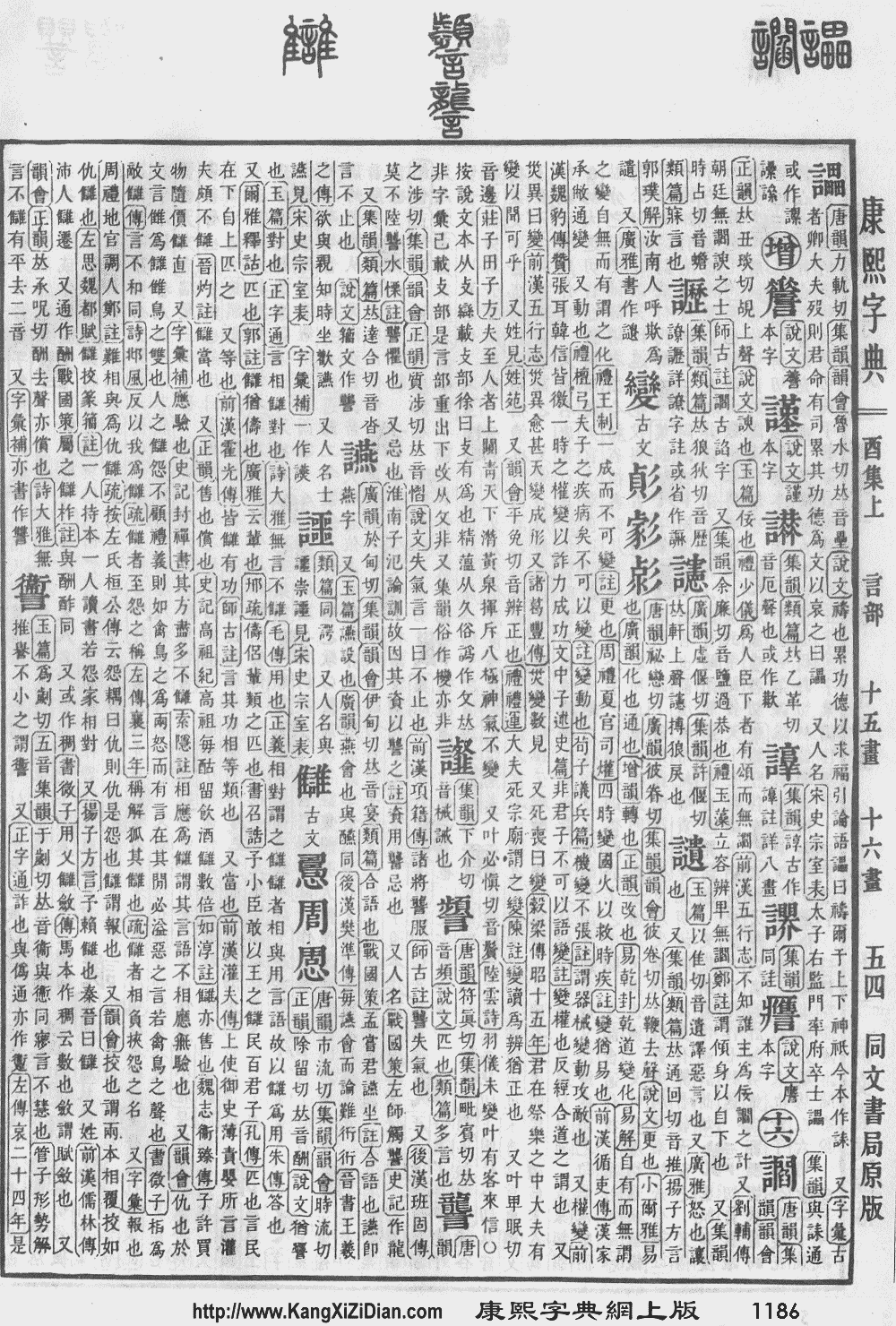
讋

See also: 詟
讋 U+8B8B, 讋
CJK UNIFIED IDEOGRAPH-8B8B
← 變
[U+8B8A]
CJK Unified Ideographs 讌 →
[U+8B8C]

Translingual

Han character

讋 (Kangxi radical 149, 言+16, 23 strokes, cangjie input X卜心卜一 (XYPYM) or 卜心卜一口 (YPYMR), four-corner 01601, composition ⿱龍言)

  1. fear
  2. envy
  3. loquacious, talkative

References

  • KangXi: page 1186, character 18
  • Dai Kanwa Jiten: character 36120
  • Dae Jaweon: page 1650, character 5
  • Hanyu Da Zidian (first edition): volume 6, page 4031, character 9
  • Unihan data for U+8B8B

Chinese

trad. 讋
simp. 詟
alternative forms 𪚥
𮙇

Pronunciation


Rime
Character 讋
Reading # 1/1
Initial (聲) 章 (23)
Final (韻) 鹽 (155)
Tone (調) Checked (Ø)
Openness (開合) Open
Division (等) III
Fanqie 之涉切
Reconstructions
Zhengzhang
Shangfang
/t͡ɕiᴇp̚/
Pan
Wuyun
/t͡ɕiɛp̚/
Shao
Rongfen
/t͡ɕjæp̚/
Edwin
Pulleyblank
/ciap̚/
Li
Rong
/t͡ɕiɛp̚/
Wang
Li
/t͡ɕĭɛp̚/
Bernard
Karlgren
/t͡ɕi̯ɛp̚/
Expected
Mandarin
Reflex
zhe
Expected
Cantonese
Reflex
zip3
Zhengzhang system (2003)
Character 讋
Reading # 1/1
No. 16956
Phonetic
component
讋
Rime
group
盍
Rime
subdivision
3
Corresponding
MC rime
讋
Old
Chinese
/*ʔljob/

Definitions

讋

  1. (literary) fear
  2. (literary) to be afraid; to be frightened
  3. (obsolete) loquacious; talkative

Compounds

  • 觸讋/触詟
  • 讋服/詟服
  • 陸讋水慄/陆詟水栗

Japanese

Kanji

讋

(uncommon “Hyōgai” kanji)

  1. fear
  2. envy
  3. loquacious

Readings

  • On (unclassified): しょう (shō); とう (tō); どう (dō)
  • Kun: おそれる (osoreru)
This article is issued from Wiktionary. The text is licensed under Creative Commons - Attribution - Sharealike. Additional terms may apply for the media files.